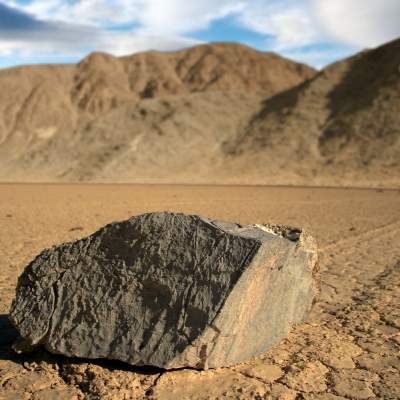
In Death Valley, stones wander. A boulder of a few hundred kilograms can leave a long scrape across a dry lakebed and end up dozens of meters from where it started, with no witnesses and no obvious push.
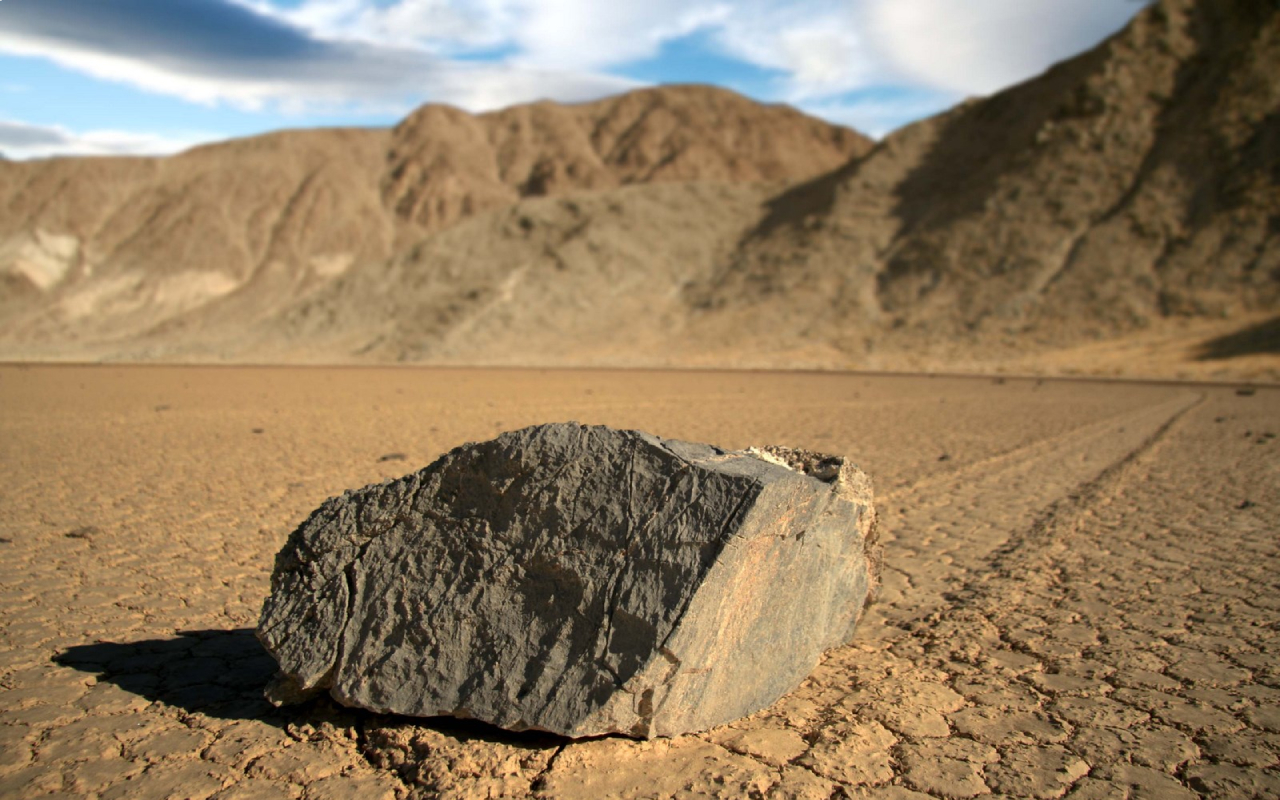
The stage is Racetrack Playa, a flat dry lake where every mark shows.
Hundreds of rocks sit still for years, then suddenly set off. Some travel more than 400 meters before they stop again.
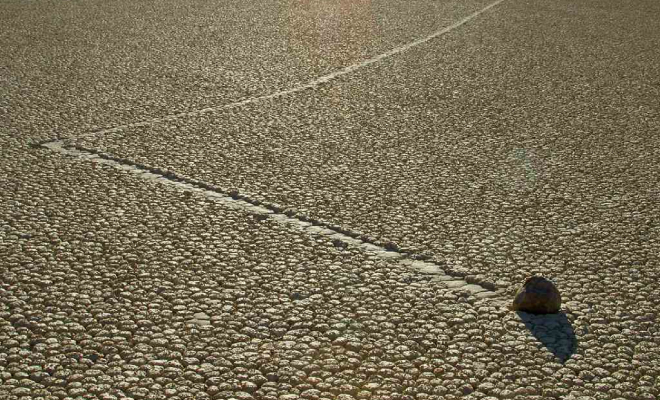
They do not tumble or bounce. They slide, often keeping the same face up for the whole trip, at only a few meters per minute.
How scientists finally caught them moving
The answer is less mystical than old theories, and still striking. In the 2010s geologist Richard Norris and colleagues put GPS tags and cameras on the playa and waited. Motion showed up only in a narrow weather window.
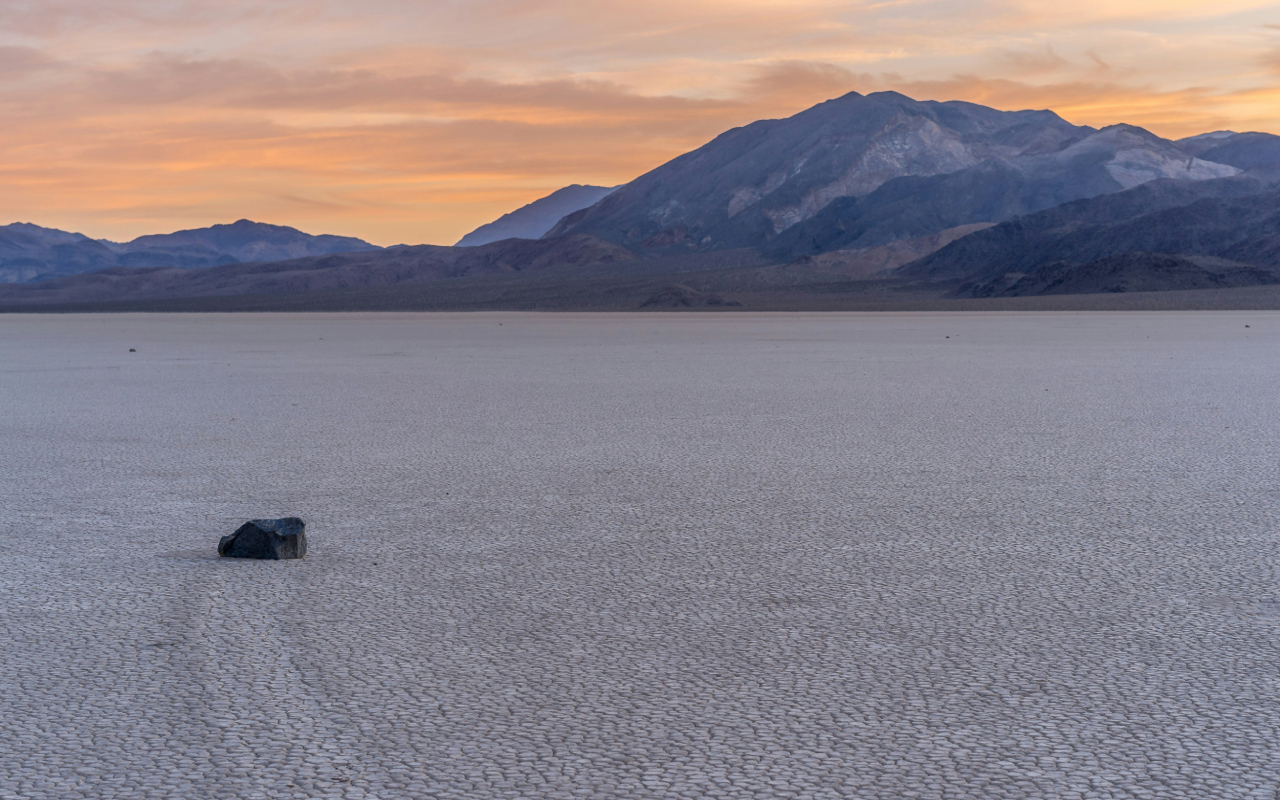
Rain comes first, rare in this desert, and leaves a thin sheet of water. Overnight that sheet freezes into ice only a few millimeters thick. At dawn the ice cracks into large panels. Wind then shoves the panels, and the panels shove the rocks across the soft wet clay.
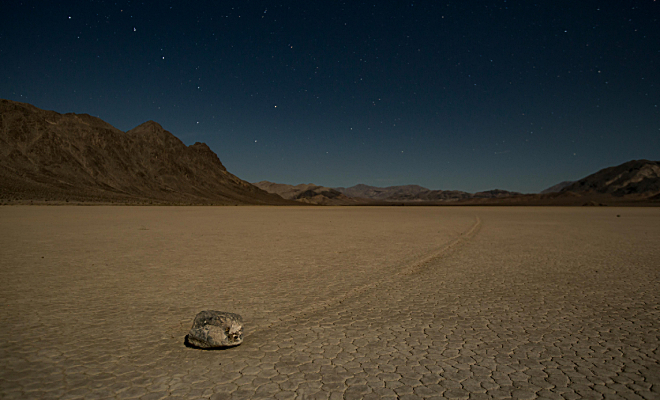
From the ground it looks almost still: centimeters per second. Over a few hours the same gentle shove can move a heavy boulder tens of meters. Several stones often move together, which is why trails look synchronized.
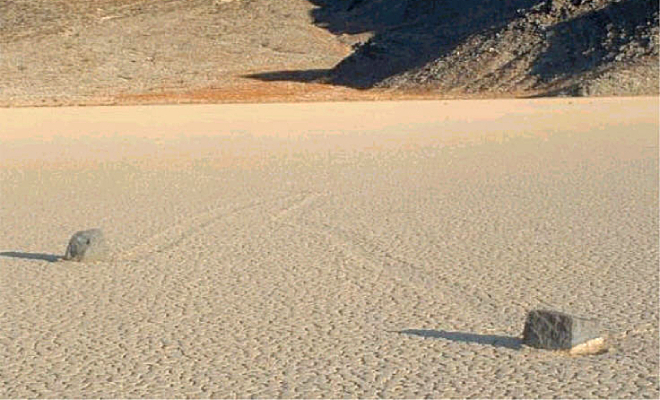
Shape matters as much as weight. Flatter rocks glide farther in straight lines. Angular ones wander and leave crooked tracks on the slick clay.
By 2026 field observations treat this ice-and-wind model as the settled explanation. Seeing it live is another matter. The right mix of rain, overnight freeze, and morning wind may arrive only every few years, which is why the mystery lasted so long.
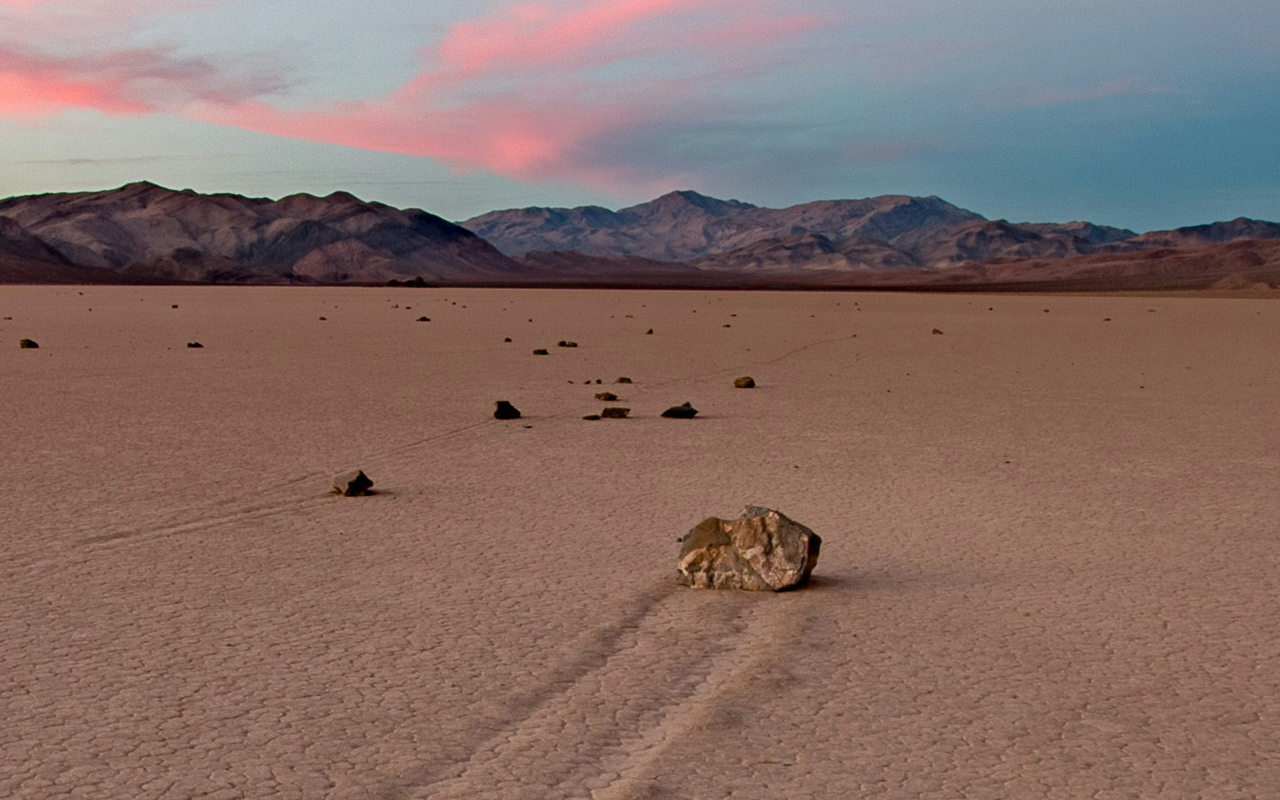
Trail directions also shift with the seasons as prevailing winds change, so the playa keeps redrawing its map. No ghosts required: a few millimeters of ice, a bit of wind, and a lot of patience. It still looks as if someone rearranges the stones overnight for the morning crowd.