Jeanne and Susan are identical twins who were 61 at the time of the study, yet the gap in how they looked was so clear that specialists put it at more than 11 years. With the same genes and a similar childhood, their faces began to “diverge” over time, and the cause was not chance but everyday habits stacked across decades.
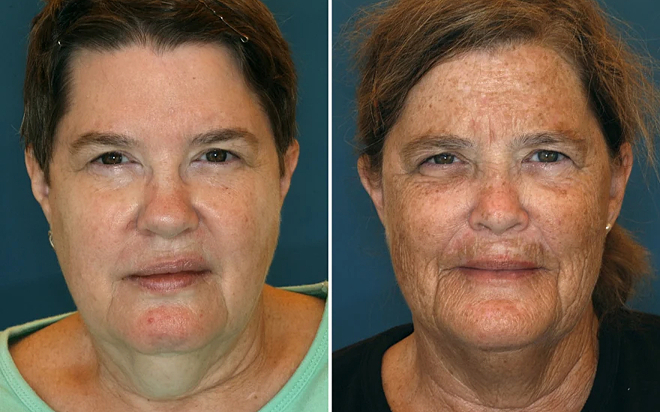
That split is rare even in twin studies, where the talk is usually a few years. With Jeanne and Susan the effect was almost theatrical and quickly became one of the clearest examples of lifestyle shaping aging.
Their habits started to differ fairly early. Susan smoked for about 16 years and spent a lot of time in the sun from a young age. Later she moved to the Florida coast and did not hold back on tanning. Jeanne, by contrast, tried to avoid direct sun and took gentler care of her skin overall.
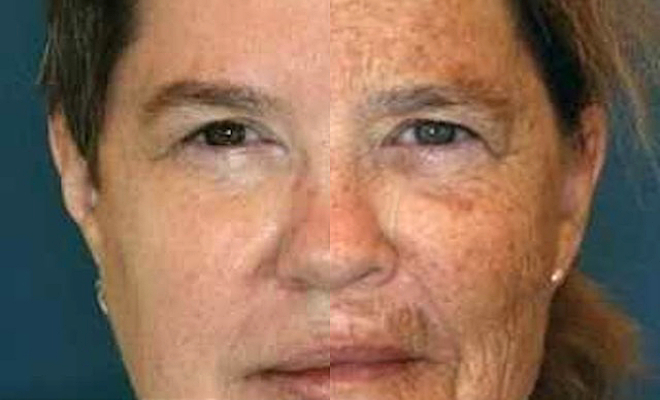
The result looks almost like a textbook plate. Susan shows deep wrinkles, pigment spots, and loss of skin density: classic photoaging. Ultraviolet breaks down collagen and cuts elasticity, and by modern estimates it drives about 80% of visible age change.

Smoking amplifies the effect. It worsens skin blood flow and speeds aging, so the face loses freshness faster and looks drier. Another factor: Susan weighed about 7 kilograms less than her sister. We now know that less subcutaneous fat can visually sharpen age changes and make facial features look harsher.

Jeanne does not look younger than her age, but her aging reads much softer: fewer hard wrinkles, a more even tone, and better facial structure. Those are the differences twin studies most often catch, when everyday habits show their cumulative effect.
Such cases show up regularly in scientific papers because they let you literally see how an aging gap forms. The main takeaway stays simple: genetics sets the starting conditions, but the outcome depends heavily on how someone lives year after year.