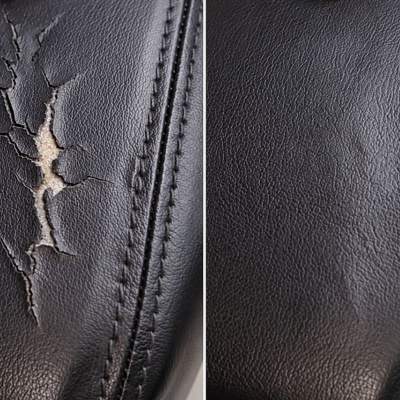
A torn leather seat usually feels like a death sentence: live with the scuffs or prepare for a full reupholstery. But in some cases you really do not need to replace the covering entirely. A craftsman showed the local-repair technique on video, after which the old damage is little more than a memory.
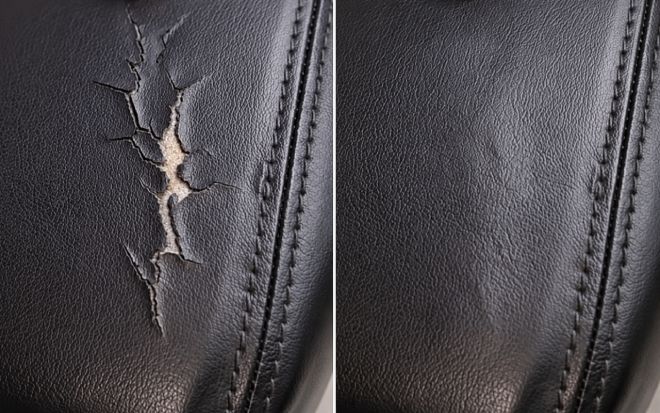
First the damaged area is cleaned and the edges of the tear are carefully trimmed. Loose pieces of leather are removed, the surface is lightly abraded with fine grit, and degreased. It is important not to overdo it: an overly aggressive solvent can damage the coating itself.
If the problem is not a small scuff but a through-cut or hole, a thin reinforcing mesh is inserted under the upholstery. It becomes the internal base of the repair and keeps the compound from sinking into the seat padding.
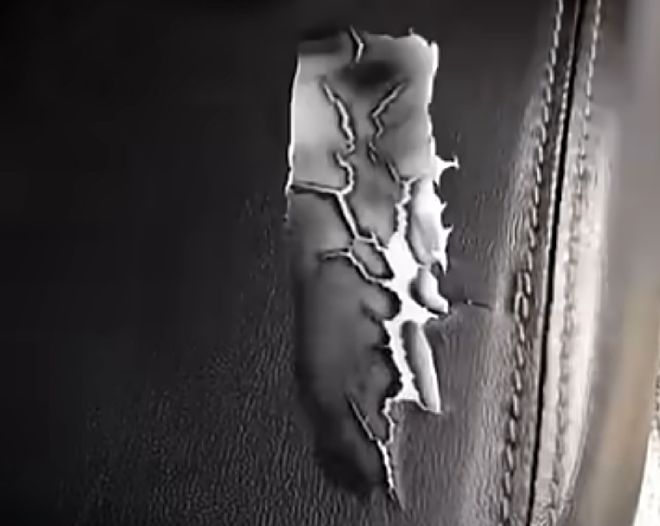
Then comes the most unusual part of the process. A special heat-activated compound is applied to the mesh, covered with a protective Teflon pad, and heated. Under temperature it turns into an adhesive layer and fixes the reinforcing base. Professional repair uses dedicated heat tools, though a similar principle appears in DIY repair kits.
After that, the damaged spot is not simply painted over. It is filled with an elastic repair compound, leveled, and the surface pattern is restored. Texture often gives away a repair more than color: a smooth patch in the middle of leather with a distinct grain will be obvious at once.
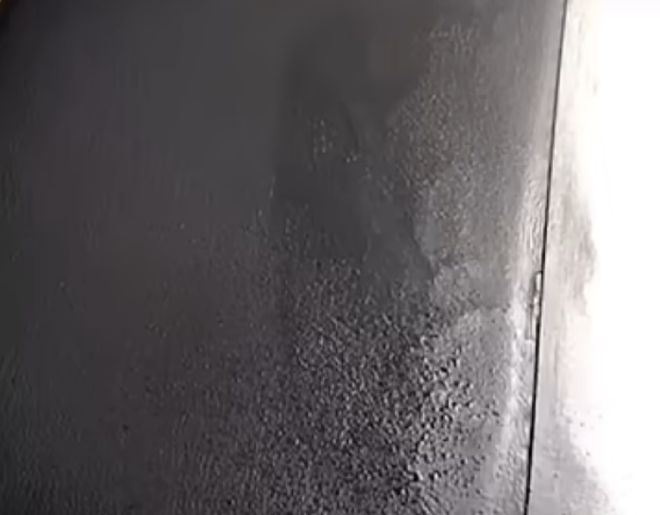
To restore the pattern, a special stamp is used to take texture from an undamaged section of similar leather. Then the surface is colored to the right shade.
What is interesting is that after a quality repair, a small scratch or cut can become nearly invisible. But “liquid leather” does not turn an old seat into a new one: with heavy damage to a bolster, seam, or large area, local repair will no longer replace reupholstery.
For a small defect, though, it is a workable way to postpone an expensive upholstery swap. And judging by this craftsman’s result, sometimes a few centimeters of repair material are enough to stop the cabin from looking as if the car has lived an extra hundred thousand kilometers.