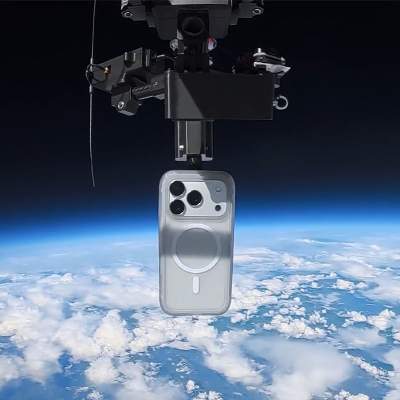
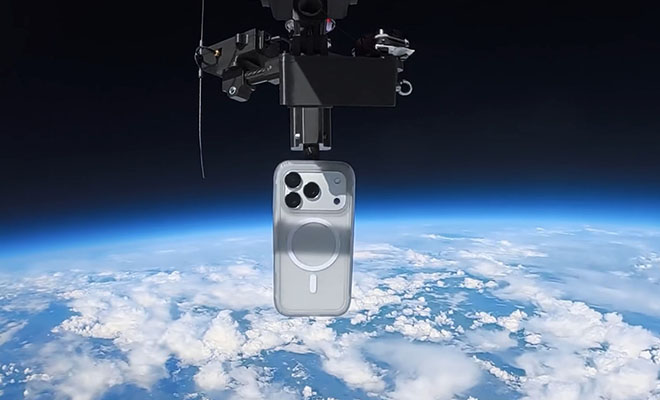
The British aerospace team Sent Into Space ran one of the harshest durability tests in electronics history. An ordinary iPhone 17 Pro was lifted on a weather balloon to the edge of near space and dropped with no parachute or special landing platform. The device fell 30,607 meters and survived; its operation was captured on video.
Conditions at the limit of physics
A height of 30.6 kilometers is more than three times the cruising altitude of passenger airliners; Mount Everest is only 8,848 meters. At that level near space begins.
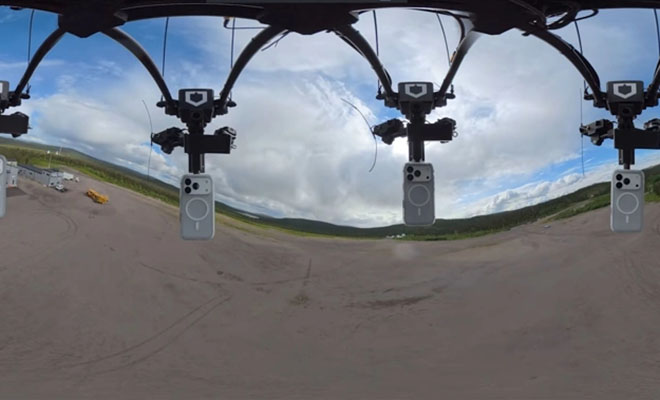
Under Guinness World Records rules, the experiment was run as harshly as possible. Braking parachutes, heating systems, or soft cushions at the landing site were forbidden. During 25 minutes of free fall the device faced extreme cold (from -40°C to -60°C), huge pressure swings, and acceleration to enormous speed, then hit solid ground at full velocity.
Five hours of searching in Swedish forests
The balloon launch took place in Sweden, over the isolated territory of the Esrange Space Center near the town of Kiruna. The location was chosen so an object falling from such a height would not threaten people.
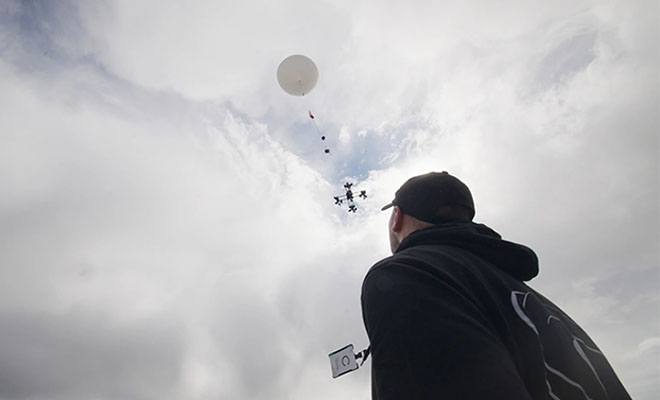
Right after landing, engineers tracked the GPS tracker’s last signal and narrowed the search zone to two kilometers. Even so, finding a tiny gadget among kilometers of Swedish taiga and windfall took more than five hours.
When the smartphone was finally found, a Guinness World Records adjudicator on site confirmed the device was fully intact: touchscreen, cameras, speakers, and the communications module all worked without fault.
Survival physics: how the gadget took the impact
The smartphone was protected by a special case. The manufacturer claimed it was built with new technology, almost like cushioning systems in footwear.
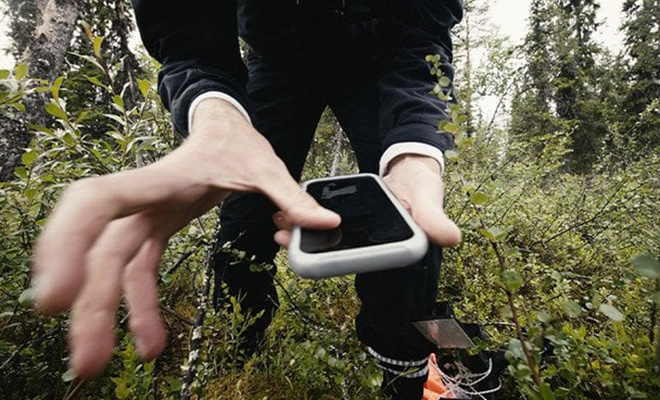
Instead of bulky metal structures, they used compressed air. Special sealed air channels around the case worked like automotive airbags. At ground contact, air inside the shock zones compressed and absorbed the main deformation vector, dispersing impact energy before it could damage the electronics.
Not everyone believed the experiment at face value. Some commenters called for repeating the test under independent specialist supervision.