The Russian Empire conducted its first and only universal census in 1897. The document captured a unique snapshot of the era: the country was growing, and the economy was reshaping entire regions. A rare cartographic publication made it possible to see which cities ranked as the largest at the time — and how many people lived in Russia a century ago.
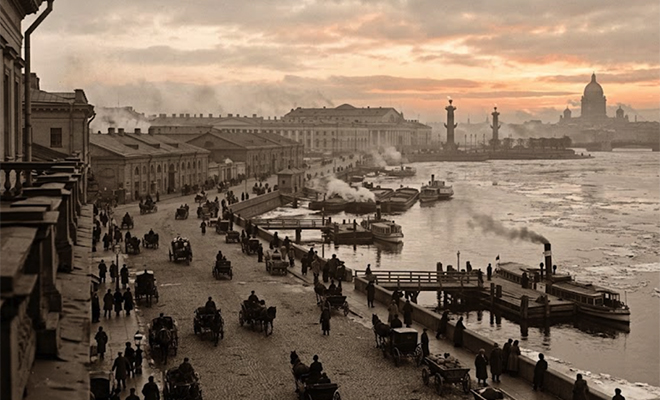
The Main Cities of the Russian Empire
The rise of megacities came later. In 1897, only St. Petersburg, the reigning capital, and Moscow qualified. The first had 1.265 million people; the second, 1.039 million.
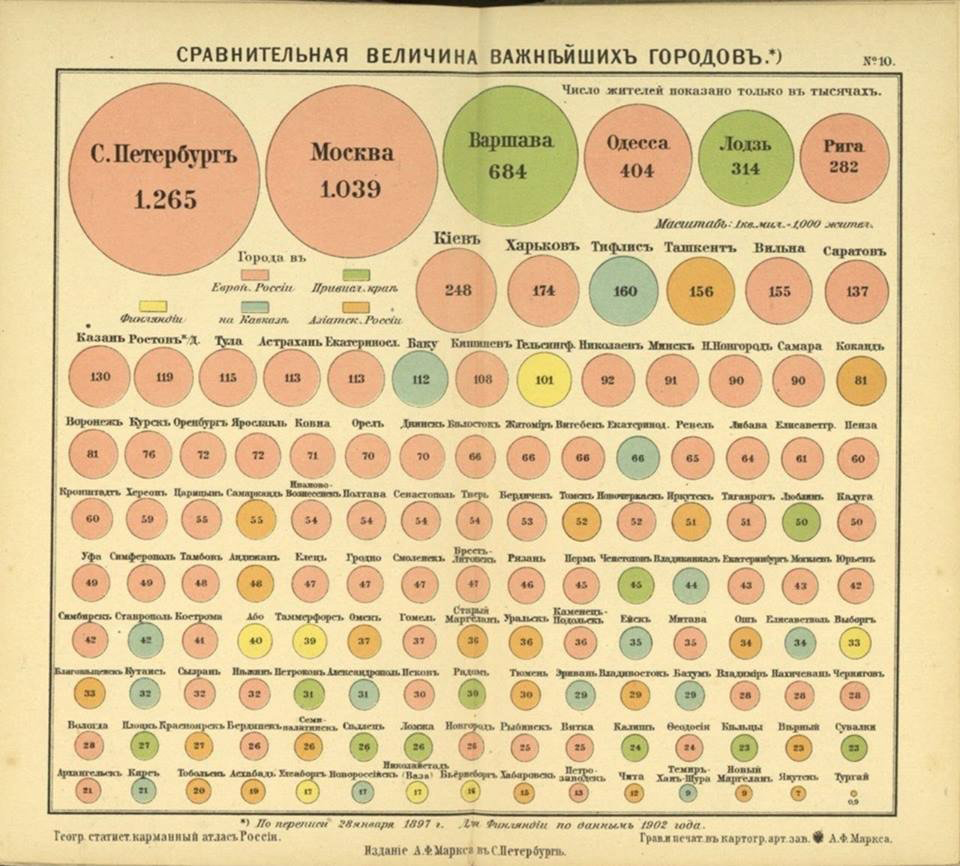
The country's third-largest city, well ahead of the rest, was Warsaw (684,000 people). The fast-growing textile hub of Lodz, with 314,000 residents, overtook Riga (282,000).
Key Features of Imperial Demographics
Studying the archival infographic reveals several striking trends in how the state was developing at the turn of the century:
- Centers of Asia and the Caucasus: The largest city outside European Russia was Tashkent (156,000), the administrative heart of Turkestan. In the Caucasus, Tiflis (160,000) led, followed by Baku (112,000), rapidly growing rich on the oil boom.
- Factory skew: With capital pouring in, industrial single-industry towns in Poland and the Baltic grew many times faster than traditional merchant centers in the Volga region such as Kazan (130,000) or Saratov (137,000).
- Finland's autonomy: The Grand Duchy of Finland kept separate records, so its capital Helsinki (Helsingfors) appeared on the map from supplementary 1902 data, showing a modest 101,000 residents.
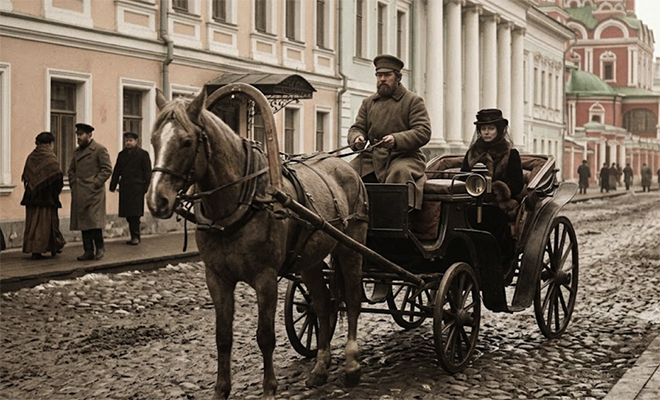
At the time of the census, the country had 125,640,021 people. Meanwhile, 87% of the Russian Empire's population lived in rural areas.
The 1897 census vividly showed that the country's economic backbone rested not only on the two capitals, but also on powerful national and commercial peripheries. The population map captured an epochal shift: an agrarian empire was finally entering the industrial age, forming large agglomerations — many of which still hold their key status a century later.