Anxiety does not always need you to “work through the causes.” Sometimes it only needs a signal that things are under control. That signal can take 20 seconds. Berkeley researcher Eli Susman reached that conclusion: a brief self-touch can quickly lower stress, without complex techniques or prep.

The story did not start in a lab, but at Plum Village. Susman arrived expecting hours-long practices and met the opposite: the monks bet not on duration but on regularity. One of them offered something simple: three mindful breaths instead of a “perfect meditation.” That contrast became the starting point: what if the brain really only needs a very short cue to switch?

Later it became an experiment published in Behaviour Research and Therapy in 2024. Student participants got a simple task: once a day, take a 20-second pause and add a self-support gesture. No complex instructions, just place a hand on the chest, lightly squeeze a shoulder, or give yourself a hug.

The effect showed up faster than the researchers expected. Participants said tension dropped almost at once, and the inner dialogue turned less harsh. That matters: this is not long-term therapy, but an immediate body response.
The secret is physiology. Light touch activates skin receptors tied to the body’s safety system. Cortisol falls and oxytocin rises, the hormone linked to support and trust. In short, the brain gets a brief message: “no danger.”
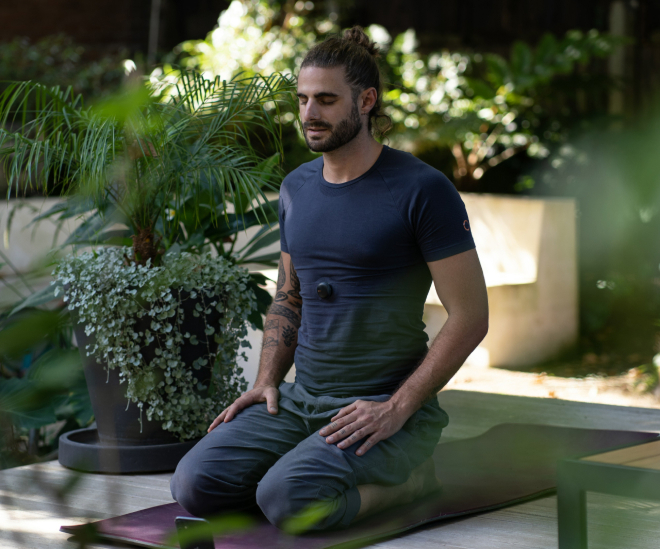
One detail makes the practice especially relevant in 2026. Psychologists talk more about a deficit of physical contact: people interact less through touch and spend more time in digital space. Against that backdrop, even a simple self-touch becomes a way to offset the deficit, at least in part.
Interestingly, many people already do these gestures by instinct. A hand on the chest when nervous, a light self-hug, a touch to the neck: familiar reactions once treated as mere habits. Now it is clearer they are built-in self-regulation tools.

The practice looks almost too simple. In a stressful moment, pause, take a couple of slow breaths, and add any comfortable touch. Then spend a few seconds on the sensations and ask a short question: “how can I support myself right now?”
It takes less time than checking notifications. Yet these short pauses, recent studies suggest, often beat long, complex techniques, because you can use them any time, not only “when there is time.”