Plenty of men skip certain moves simply because they think of them as «women's» exercises. Most often that means work for the glutes, hips, and pelvic muscles. Sports doctors and coaches push back: five staples of women's training also improve posture, cut injury risk, build strength, and can even lift numbers on the big lifts.
The glute bridge strengthens more than your glutes
Most men treat the glute bridge as a sculpting move. In reality it is one of the best ways to harden the entire posterior chain. The glutes, hamstrings, and lower-back muscles all fire hard—the same muscles that drive squats, deadlifts, jumps, and sprints.
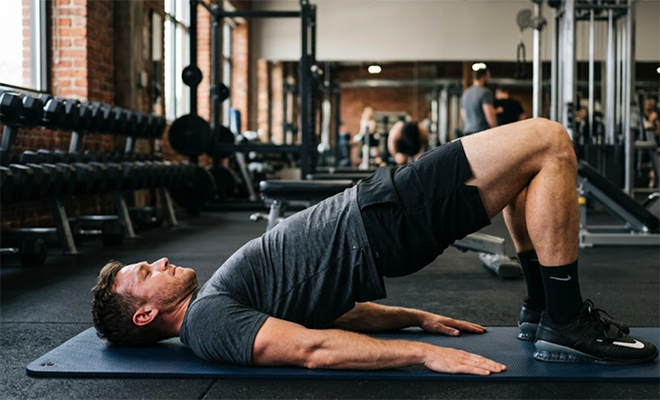
Strong glutes also unload the lumbar spine, which matters especially if you spend most of the day sitting.
Lunges improve balance and protect the knees
Lunges show up constantly in women's fitness programs, but they are just as useful for men. The move builds the thighs, glutes, and core at once, sharpens coordination, and helps fix left–right imbalances.
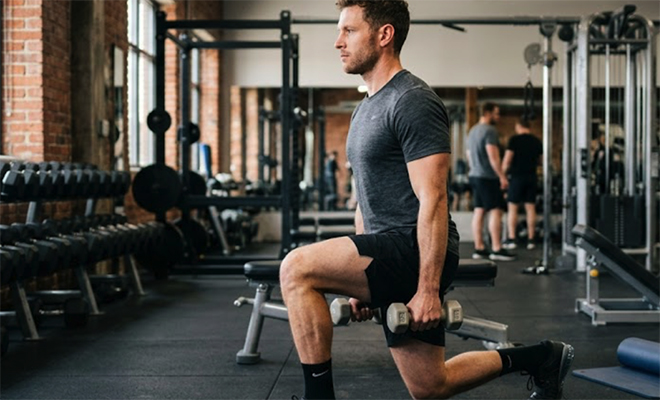
Coaches note that these unilateral drills often reduce knee-injury risk and clean up squat technique.
The plank steels the whole torso
Some men dismiss isometric work and chase only heavy loads. A basic plank, though, recruits almost the entire muscular corset: abs, lower back, shoulders, glutes, and thighs all stay under tension.
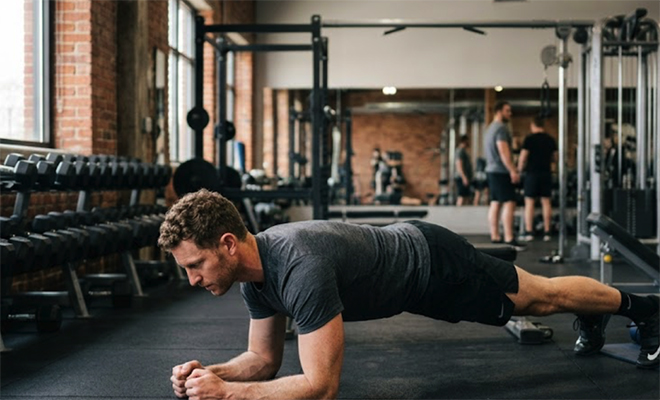
A strong core steadies every move, makes heavy lifts safer, and lowers the odds of back pain.
Hip-mobility work raises your numbers
Stretching and mobility drills are another thing many men wrongly file as «for women.» In practice, healthy hip range lets you squat deeper, pull cleaner deadlifts, run faster, and move more comfortably day to day.
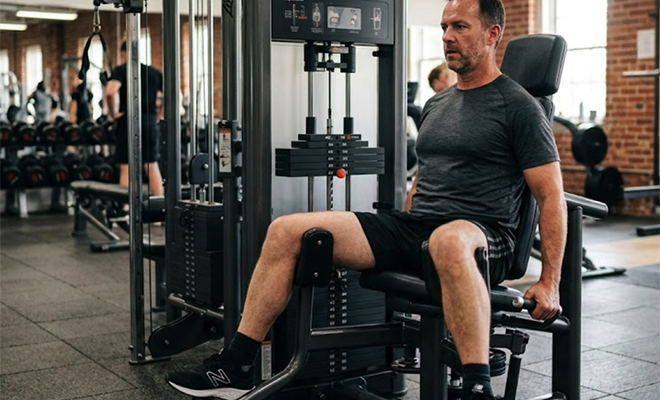
Stiff hips often feed chronic lower-back pain and cap progress on strength work.
Banded side steps build the stabilizers
You rarely see this in men's sessions, yet pros in field sports—football included—use it all the time. Band work strengthens the gluteus medius, a key pelvic stabilizer. That muscle keeps the knees tracking, supports clean running form, and takes load off the lower back. That is why similar drills land in prep programs for footballers, hockey players, and track athletes.
Modern training is dropping the men-versus-women exercise split. Muscle tissue does not care about gender; what matters is which job each move is hired to do.