Men often start hiding a bald spot too aggressively — and that is exactly what makes it more visible. A comb-over, a ton of gel, and any price to keep the old hairstyle: sometimes the disguise is more noticeable than what it is meant to cover. Here is how to hide thinning hair without circus tricks, and which methods actually work.
1. Shorter hair makes the difference less visible
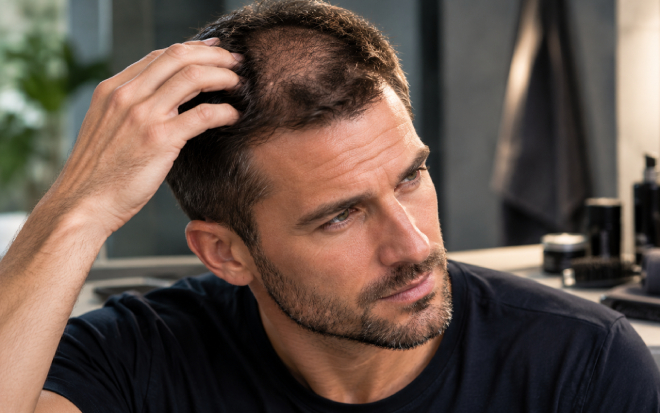
When hair thins, the first instinct is usually to grow it longer. It seems logical: more length, more ways to cover the spot. In practice it often works the opposite way.
Long strands create strong contrast between thick and sparse areas, especially on the crown. A short cut reduces that contrast. When thinning on top is noticeable, hair often looks fuller when it is shorter.
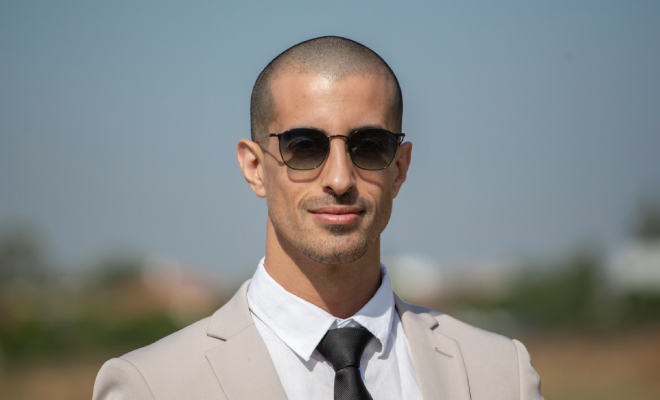
If hair keeps thinning, gradually reduce length instead of building elaborate camouflage from what is left.
2. Shiny gel works against you
The wet look works in early-2000s photos, but on thinning hair it has an unpleasant side effect: product clumps strands together and the scalp shows through more.
Matte pastes, clays, or light products that keep natural texture work better here. They do not create new hair, but they can visually add volume.
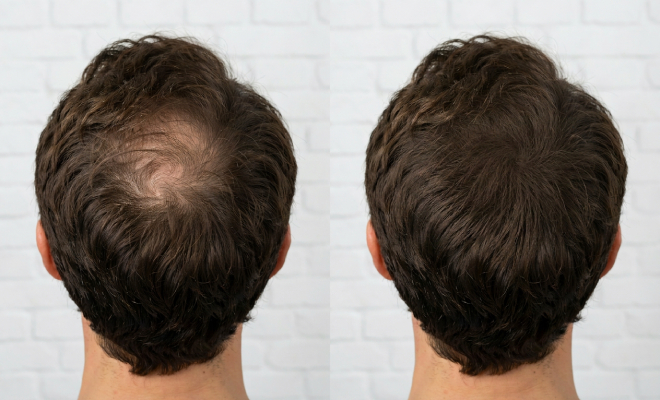
One more small point: do not use too much product. A few glued-together strands usually look sparser than hair with no styling at all.
3. Hair fibers can change the picture in minutes
Keratin and other concealing fibers are one of the simplest ways to make hair look denser quickly. They spread over thinning areas and cling to remaining hair, reducing how much scalp shows.
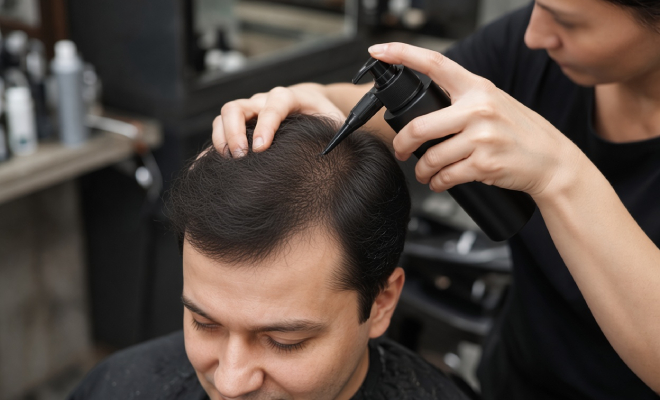
But there is an important limit people often forget: fibers need existing hair. On a completely smooth crown they are practically useless.
They work well for early or moderate thinning, especially before photos, an event, or an important meeting. But this is cosmetic cover, not treatment.
4. If you still have hair, do not wait until it is gone
With male androgenetic alopecia, hair gradually becomes finer and shorter. The process can run for years while a person simply thinks their hair "got a bit thinner."
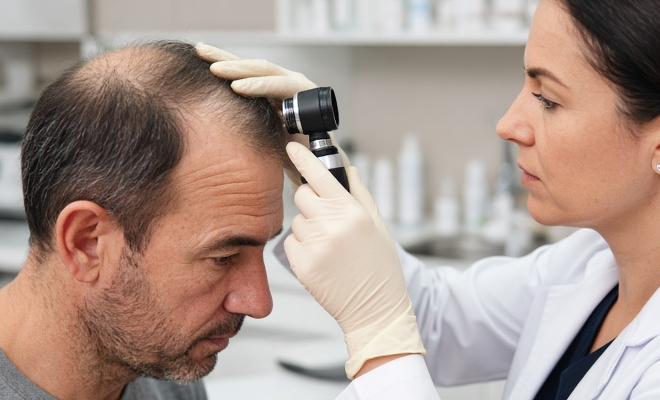
That is why seeing a dermatologist early makes sense. Minoxidil is among the best-studied treatments for male hair loss and can slow shedding and support regrowth. Finasteride is also used for androgenetic alopecia, but it has contraindications and possible side effects, so prescribing it is best discussed with a doctor.
Garlic, pepper, and castor oil should not be treated as a substitute for treatment. A burning scalp does not mean hair has started growing.
5. Sometimes it is better to shave
When the crown is already noticeably thin, clinging to the old hairstyle usually only makes things harder. A very short cut or a shave removes the main contrast between hair and scalp, so baldness can look much cleaner.
If you want hair back rather than a clean shave, transplantation remains an option. Your own follicles are moved from a donor area, usually the back and sides of the head. But surgery does not stop further loss, so a doctor must consider not only today's hairline but how it may change over time.
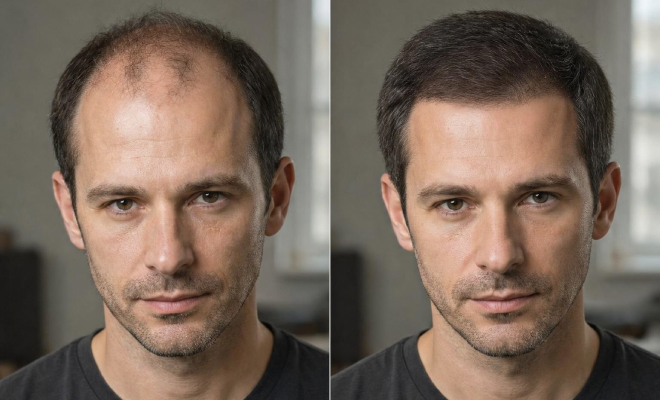
There is also a non-surgical option — a hair system. Modern units attach to the head and are matched to your color and density. Visually they are nothing like the wig someone could spot from across the room.
And sometimes the best way to deal with a bald spot is to stop treating it like a secret.