Kick off your shoes and look down: feet are built in wildly different ways. Some toes fall in a neat diagonal, some shoot the second toe forward, others look almost square across the front. Anatomists loosely sort feet into five types — Egyptian, Greek, Roman, Germanic, and Celtic. The historical labels have nothing to do with your family tree. They do decide which sneakers fit and which ones leave your feet aching after half an hour.

Classic proportions: Egyptian and Greek feet
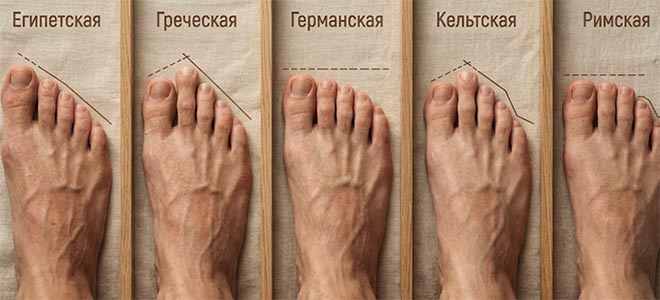
The Egyptian shape is the most common — about six in ten people. The big toe is longest, and the rest step down in a tidy ladder toward the little toe. Most of the world’s shoes are cut for that classic line. Pointed dress shoes or standard running sneakers from Nike or Hoka usually sit on this foot without drama.
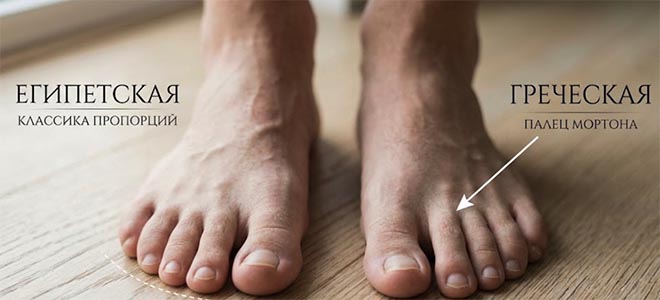
The Greek foot is another story. Its signature is a second toe longer than the first. Medicine calls it Morton’s toe, and it shows up in roughly 10–15% of people. Force that foot into a narrow toe box and the long toe jams forward, curls under, and takes the full hit of every step.
If you have a Greek foot, look for a rounded or almond toe box and size up by half a size.
Square and rare outlines: Roman, Germanic, and Celtic types
The Roman foot is a square: the first three toes are nearly the same length, so the forefoot runs wide. Squeeze it into skinny fashion shoes and you get guaranteed pain. Brands with a wide toebox or an explicit Wide (EE) width are the way out.
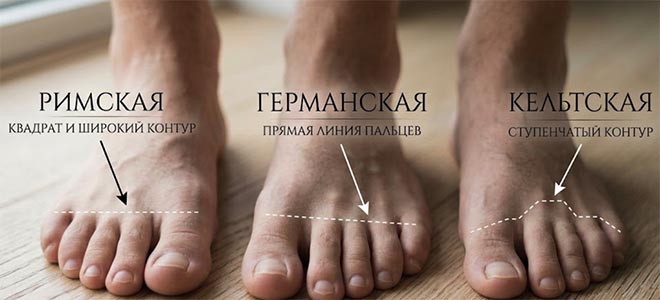
Germanic and Celtic types are less common, but shopping for shoes is no easier. On a Germanic foot the big toe is large and the other four sit almost in a straight line. It needs maximum volume up front, the kind anatomical models from Altra deliver.
A Celtic foot is stepped altogether: a long second toe, a slightly shorter first, and the rest dropping away sharply. That geometry wants a locked-in heel and serious cushioning — think trusted runners like Asics Gel-Kayano or New Balance 990.
Why toe geometry matters for health
Ignoring your toe shape when you shop is a bad idea. It is not only about worn-out mesh or blisters after the first weekend.
When narrow shoes crush the toes for years, the foot starts to deform: a bunion (hallux valgus) appears, and load on joints and ligaments stops being physiological.
Knowing your foot type lets you pick a last by real anatomy, not by whatever trend is circulating online — so the shoe protects your feet instead of wrecking them.