Doing the splits takes less marathon training than steady work on muscles and joints. For noticeable progress, three minutes of stretching per session is often enough, as long as you gradually increase your range of motion.
Types of splits
The front splits put one leg forward and the other back. Flexibility in the hip flexors and the muscles along the back of the leg matters most here.
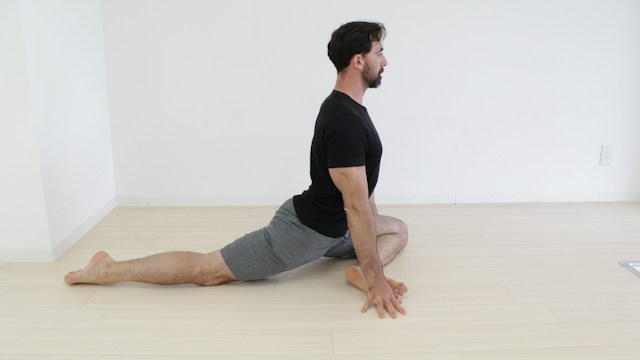
In the side splits, the legs open out to either side. The main load falls on the inner thighs and the muscles that control hip movement. Not everyone can sink fully into this position: joint structure plays a big role.
There is also a harder variation: the oversplits. The feet sit above hip level while the hips drop below the support line. You see it in gymnastics, ballet, and acrobatics, and it needs much more flexibility.
How long it takes
There is no fixed timeline for when someone will nail the splits. Speed depends on starting flexibility, age, joint shape, and how often you train.
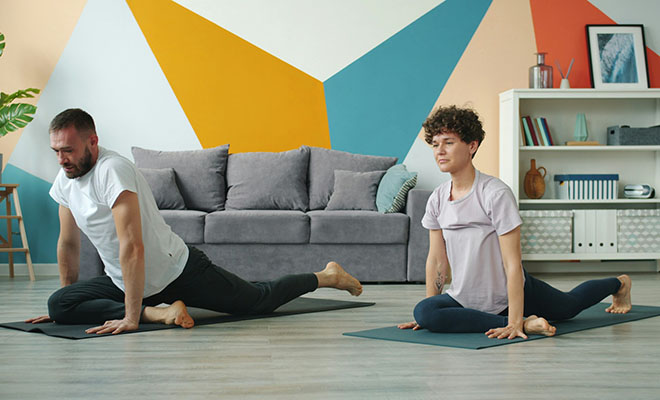
Real timelines vary widely: some people see clear progress in a few months, others need a year or more. Front splits usually come sooner than side splits. Age matters too: younger joints and muscles tend to move more freely. Still, regular stretching can improve flexibility later in life as well.
How to prepare for stretching
Warm up before you stretch. Ten to 15 minutes of light cardio works well, for example walking, jogging, or any activity that raises body temperature.

The main rule: do not force a position through sharp pain. You should feel a stretch, but strong or sudden pain means stop.
Exercises for the front splits
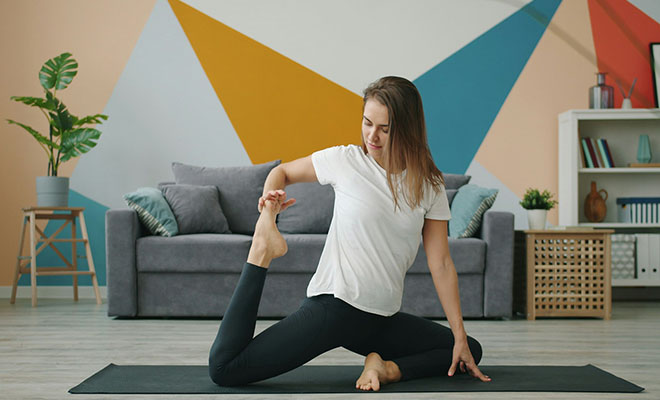
Start with a deep lunge. Step one foot forward, bend that knee, and lower your hips slowly while staying in control. Keep the back leg long, or adjust it so you can deepen the stretch over time.
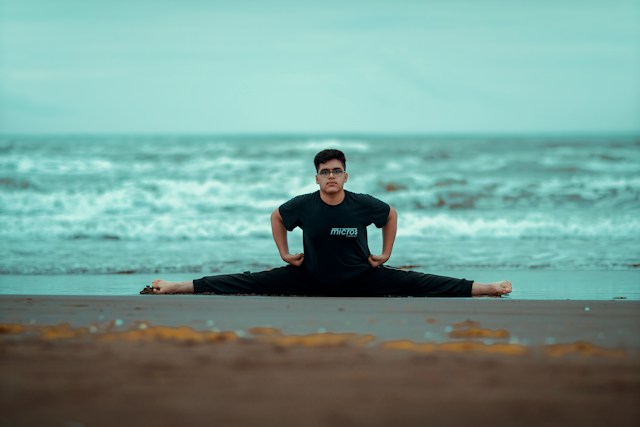
Next, straighten the front leg and fold toward it. That move stretches the back of the thigh, which works hard in the front splits.
Then move into the splits themselves. Lower only as far as your current flexibility allows, and use your hands for support. Do not try to drop your hips to the floor on day one.
Exercises for the side splits
The frog stretch is a solid prep for the side splits. Open the knees out to the sides and gradually widen the gap while keeping the hips steady.
Another option is a forward fold with the legs wide apart. Hold a depth where you feel the inner thighs stretch without sharp pain.
Finish the set by easing into the side splits. Support yourself with your hands or place blocks under them so you can control depth and avoid overloading the muscles.
Why three minutes is enough
You do not need an hour on every stretch. Work on one muscle group in short rounds. For example, do three exercises, two sets of 30 seconds each. That adds up to three minutes on that group. Physiologists have found that longer sessions do not automatically bring better results. Three minutes is a strong sweet spot.
Consistency beats length. Train three times a week and you get about 10 minutes of work on the muscles that matter.
Do not make up for missed days with one oversized session. Do not rush the splits either. It is a long process.