Soccer looks like run fast and score. Golf looks like walk the green and drop the ball in a hole. Pro sport is denser than that: a midfielder has to read the play before the pass arrives; a golfer has to read every slope before each swing. Behind the easy look of these five sports sit years of practice and a pile of small, hard details.

1. MMA: fast hands and feet are not enough
In mixed martial arts, clean punches and kicks are only the start. A rival can close distance, drag the fight to the mat, or flip the plan mid-round. You have to reset, defend, and hunt a counter while they sit one move away.

The real game starts when both fighters try to call the next beat. A feint draws a guard, a shot to the legs forces a stance change, and the open lane invites the strike. It is chess at full speed, only the pieces sweat, tire, and refuse to be moved.
2. Golf: one swing can ruin the round
Golf often passes for a calm stroll with a club. A true strike needs control of power, angle, and ball path, plus wind, lie, and turf.

Putting is especially cruel: the short stroke that sends the ball into the cup on shaved green. Big muscles will not save you. Misread the slope or pace and the ball rolls past, or dies short of the lip.
Another sting: a great shot does not lock in a great hole. The next lie can be worse. Score is stroke count: fewer is better. The course will not soften because you arrived in a good mood.
3. Soccer: fast legs mean little if the head is late
A player has to track the ball, teammates, opponents, and open space at once. Pros scan before the pass lands so they already know where to go and whom to hit. Think only after the first touch and defenders can shut the lanes.
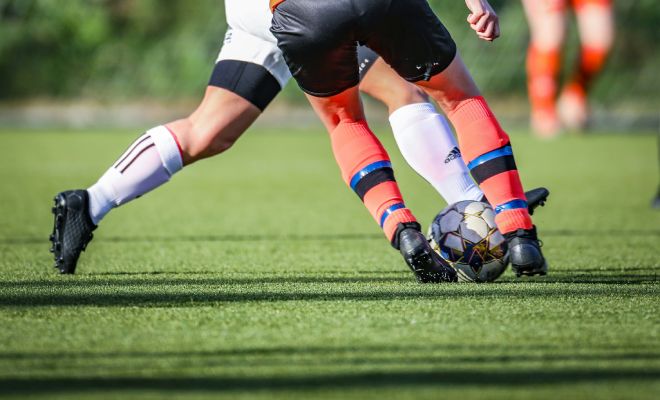
The physical load is real too. A detailed UEFA analysis from March 2025 put Kylian Mbappé’s top Euro 2024 speed at 36.7 km/h. Even that sprint is only one piece of the job: accelerate, brake, cut, and keep the whole picture.
That is why the fastest player is not always the best. A timely pass can beat a flashy move, and a smart run can create a chance without a max-effort dash.
4. Tennis: the opponent already hit, and you still have to choose
Tennis is more than getting the ball over the net. You read the shot, reach the bounce, pick a reply, and set for the next ball, all while accelerating and slamming on the brakes.
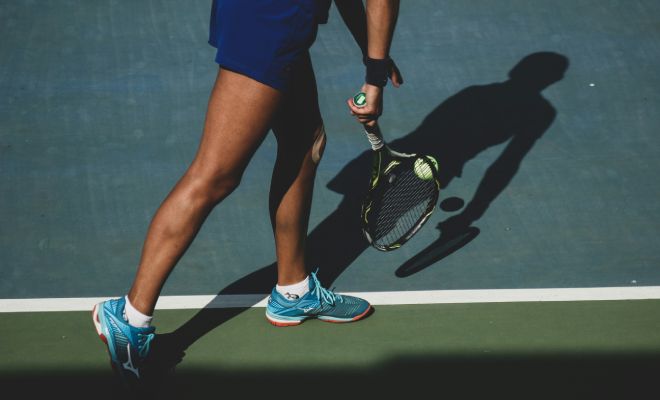
Rhythm changes hurt most. After a few heavy baseline blasts, a sudden drop shot forces a sprint forward. One bad step turns a set position into a scramble.
Now keep that up for hours. At the 2024 US Open, Dan Evans and Karen Khachanov played 5 hours 35 minutes, the longest match in tournament history. Under that load, keeping accuracy and decisions while the legs are gone is the real test.
5. Artistic gymnastics: controlled chaos
A gymnast packs a hard skill into a few seconds while the crowd only clocks the spin. The athlete has to time the run, takeoff, air shape, and landing. A miss on one link can spoil the whole skill.
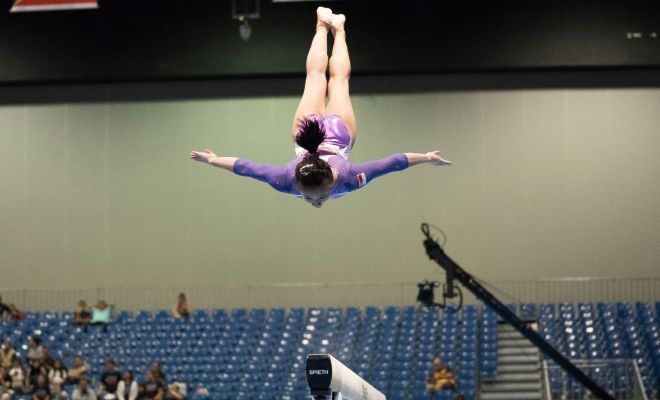
A hard flip is not enough. You keep body control, hit required shapes, and stick the landing. Judges mark tech faults, including extra steps and other landing errors.
So a flashy flip and a clean flip are not the same. Fans see the air time; judges also score what came before and after. That is where the real work sits.
Pro sport’s main trick is that skill makes impossible moves look casual. A midfielder “accidentally” threads the perfect pass, a golfer parks the ball by the pin, a gymnast sticks a landing as if balance never left. Behind each moment: years of reps, mistakes, and more reps. The crowd gets the beauty. The athlete keeps the work that made it possible.