Bruce Lee’s preparation is usually imagined as almost extreme: harsh discipline and punishing loads. Real training notes from the 1960s paint a different picture. By today’s standards it looks closer to a basic gym program than the secret system of a martial-arts legend.
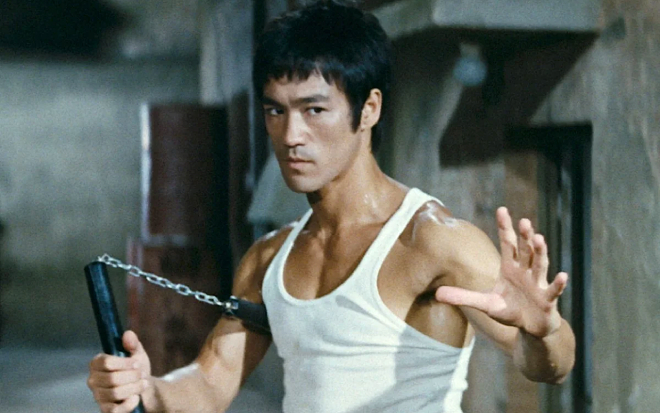
His diary lists a familiar strength set: squats, bench press, incline press, biceps curls, calves, abs, and push-ups. The scheme is familiar too: 3 to 4 sets of 8 to 12 reps, and for legs up to 15 to 20. Strip away the name and it could pass for a default program in any fitness app.
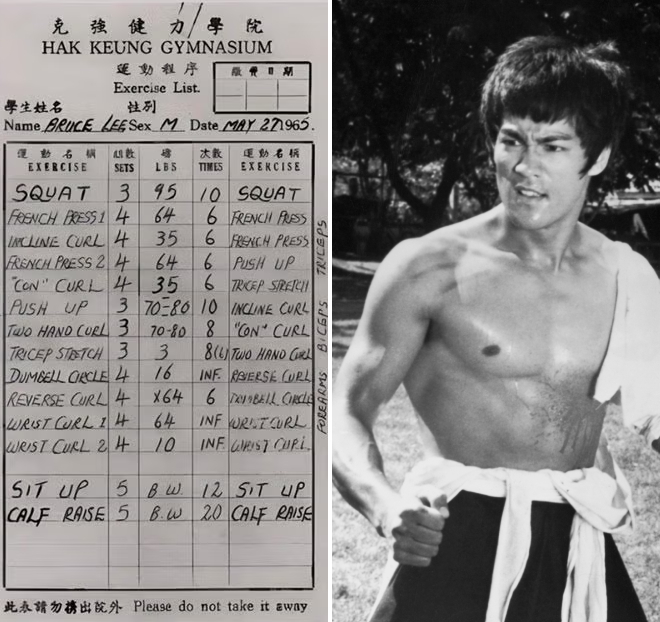
Still from video @MIMotivation / Photo National General Pictures, Wikimedia Commons
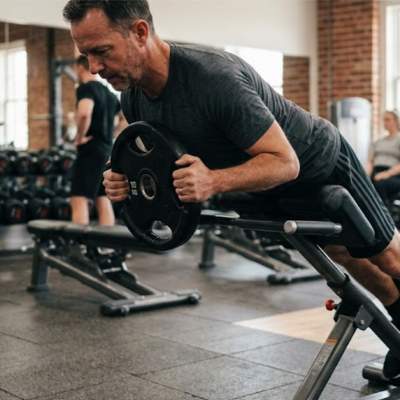
The contrast appears when working weights show up. Squats, for example, list about 95 pounds, roughly 43 kilograms, for 10 reps across several sets. In modern gym logic that reads as a light or warm-up load, rarely linked to the fighter who became a global legend.
Those numbers alone do not tell the full story. Strength work was only one part of Lee’s training. He regularly ran 4 to 12 kilometers, spent a lot of time on stretching and joint mobility, and often started the day with a core and spine routine. His body stayed in work almost constantly; separate sessions stacked on each other.
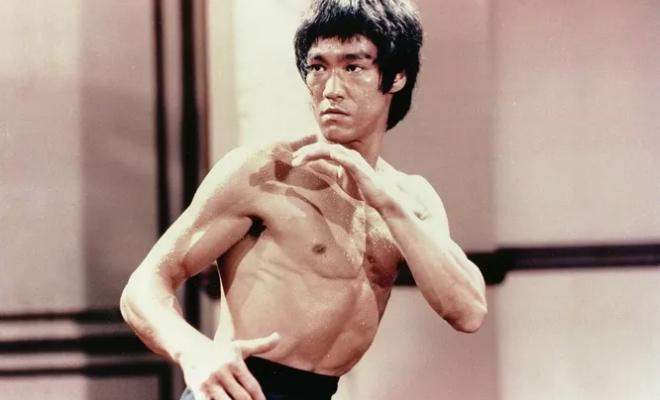
Lee also refused to stick to fixed methods. He tracked results, logged exercises and loads, watched how he felt, and regularly rewrote the program. Many biographers note that he treated training almost like an experiment, always testing what made him move faster, hit harder, and use his body better.
Seen from 2026, the shift in training culture is clear. Modern programs often split load into separate goals and track it with apps and wearables. At the same time, interest is rising in hybrid systems where strength, endurance, and mobility develop together, and success is judged not by one metric but by overall capacity.