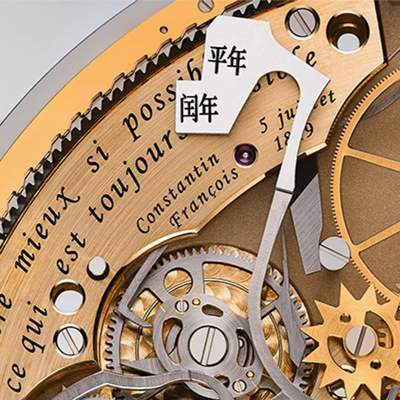
Switzerland's finest watchmakers spent nearly a decade on the Vacheron Constantin Berkley Grand Complication. In that time they assembled a movement from 2,877 parts, packed 63 highly complex functions into a compact case, and built a watch now regarded as the most complicated in the history of world watchmaking.
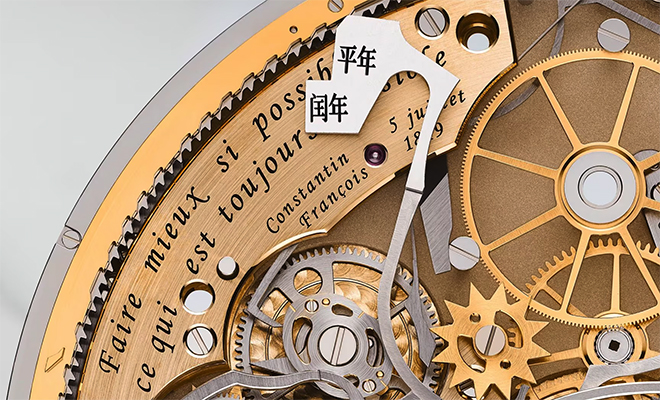
Why the Berkley Grand Complication is called the world's most complicated watch
In watchmaking, a «complication» is any function beyond the basic display of hours, minutes, and seconds. That can mean a calendar, a chronograph, a moon phase, an alarm, astronomical calculations, and dozens of other mechanisms.
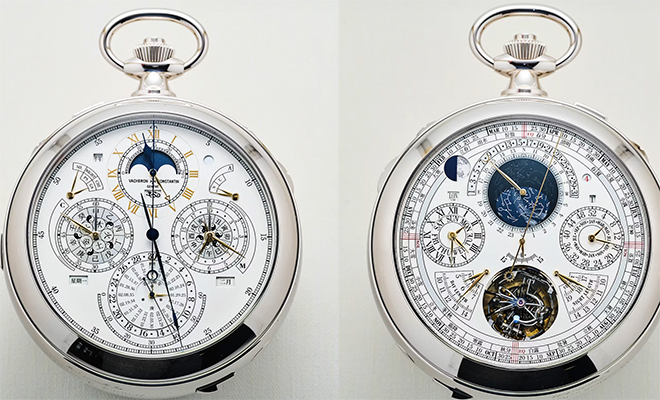
Swiss manufacture Vacheron Constantin set an absolute world record by combining 63 complications in a single movement. Before the Berkley Grand Complication, the benchmark was the legendary Patek Philippe Calibre 89 with 33 functions. The new project nearly doubled the old record holder.
The watch was made as a unique piece for an anonymous collector. Its foundation was the company's earlier pocket watch, Reference 57260, unveiled in 2015.
Almost 3,000 parts in one movement
The engineers' real triumph is not only the function count but the density of the design. Inside a case about five centimeters across sit 2,877 mechanical parts. Each is finished to jewelry standards and hand fitted to its neighbors.

The case is 18 karat white gold. For all its relatively compact size, the watch weighs about 960 grams, nearly a kilogram.

Building something like this is extremely hard. Every new complication demands dozens of extra parts that must mesh perfectly with mechanisms already in place.
What the Berkley Grand Complication can do
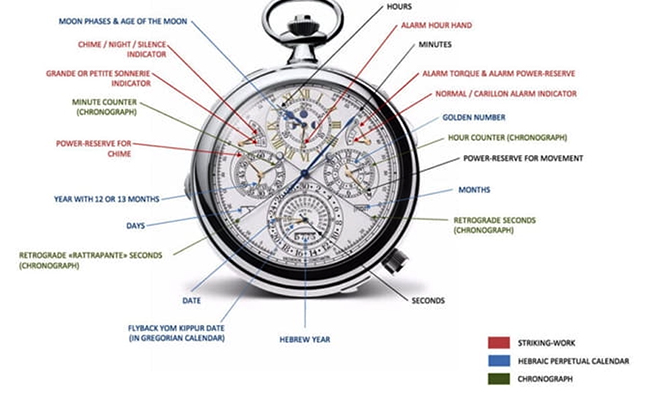
The Berkley Grand Complication does far more than tell time. Several calendar systems run inside the movement, including a perpetual calendar.
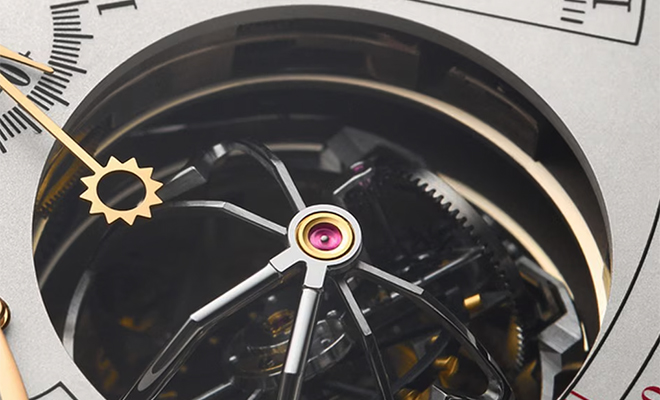
The watch shows astronomical data and moon phases, houses a complex split chronograph for timing several events at once, and includes many other mechanisms, some developed solely for this project. A few functions are so rare they had never shared a single watch movement before.

The entire construction remains fully mechanical. There are no batteries and no electronic parts inside, only gears, springs, levers, and wheel trains.
Why building the watch took nearly ten years
The work proved far harder than early estimates. Dominique Bernaz, head of the Atelier Cabinotiers division, said the team first planned roughly 36 complications. As development went on, engineers kept finding new technical solutions, and the project grew even larger.
The hardest problem was not inventing another function but making all 63 mechanisms run together without the slightest error. Every change rippled through the whole design, so craftsmen had to recalculate and redesign individual assemblies again and again.
What the world's most complicated watch costs
Vacheron Constantin has never disclosed an official price for the Berkley Grand Complication. Because the watch exists as a one-off made to a private commission, the deal stayed confidential. Watch market experts, however, put the unique movement at more than $10 million.
Collectors treat pieces like this as true works of engineering art. Their value usually only rises with time.