Sneakers began as sports equipment and over time moved far beyond stadiums — into museums, runways, and collections where people pay thousands of dollars for a rare pair. Between those points lies more than a century of history: basketball, tennis, hip-hop, skateboarding, technological innovation, and high fashion. Here are 18 models that show especially clearly how athletic shoes became one of modern culture's defining symbols.
Converse All Star, 1917
Modern sneaker history is hard to imagine without basketball. In 1917 Converse released the Non-Skid, one of the first models built specifically for the then-new game. In 1919 the shoe was renamed All Star; in 1922 basketball player Chuck Taylor joined the company. His signature appeared on the model in 1934.

All Star was sports footwear long before sneaker culture existed. The interesting turn came later: when professional basketball moved to more advanced models, All Star did not vanish. It simply moved to the street.
adidas Superstar, 1970
Superstar arrived on the basketball court in 1970. Its defining detail was the shell-toe rubber cap that protected toes and made the model instantly recognizable.

But Superstar entered history through a different scene. In the 1980s hip-hop culture practically claimed it. Run-DMC wore the shoes without laces and with tongues pushed up; in 1986 they released My Adidas. After a Madison Square Garden show, the group asked the crowd to hold pairs above their heads. adidas saw what sports brands had barely noticed: sneakers were already part of musical culture.
Superstar made a rare jump — from the basketball court to the stage, then into everyday wardrobes.
adidas Stan Smith, 1960s–1973
The timeline here is slightly tangled: the model appeared before Superstar but under another name. In the mid-1960s adidas made tennis shoes for French player Robert Haillet — the Haillet. Later the company linked the shoe to American tennis player Stan Smith; the first pairs bearing his name came in 1973.

White leather with minimal detail proved surprisingly versatile. Over time the tennis silhouette largely left sports context and became one of the most recognizable everyday models.
Stan Smith matters for its quietness. Unlike loud basketball sneakers, it proved athletic shoes could become classics without complex design or oversized logos.
Nike Waffle Trainer, 1974
Bill Bowerman, coach and Nike co-founder, looked for ways to improve running-shoe grip. The idea came from an unexpected place: a waffle iron.

Experiments with a textured sole led to the Waffle construction. The pattern improved traction while keeping the sole relatively light.
For Nike this was one of the first major technology steps. Sports footwear began to be designed not only from familiar construction but by rethinking the sole for how athletes actually move.
Vans Old Skool, 1977
In 1977 Vans released Style 36, later renamed Old Skool. It was the brand's first model with leather panels and the famous Sidestripe.

Paul Van Doren devised it as a decorative experiment. A simple curved line became one of the most recognizable marks in footwear history.
Old Skool was especially loved by skaters. Here something important shifted: sneakers began to signal not only a sport but membership in a subculture.
Nike Air Force 1, 1982
Air Force 1 appeared in late 1982 as a basketball model. Bruce Kilgore designed it, and the shoe became Nike's first basketball model with Air technology.
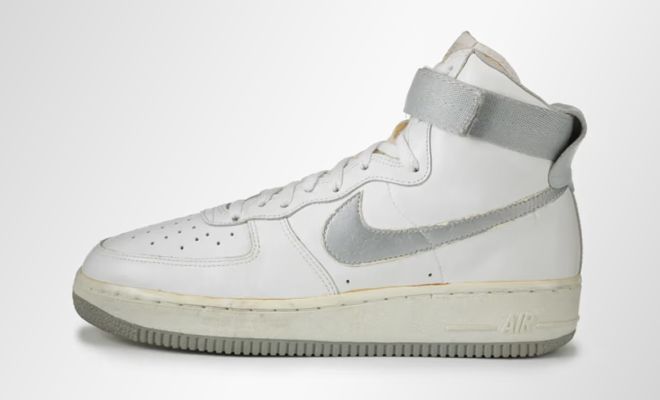
On court AF1 was high-tech sports footwear. Within a few years a different story began. In 1985 the model returned in limited runs; Baltimore shops released small batches in different colorways. Pairs sold out quickly, and an early collecting culture formed around them.
Air Force 1 eventually moved fully from basketball to the street. Hip-hop, urban fashion, and limited-release culture made white AF1s one of the world's most recognizable pairs.
New Balance 990, 1982
The same year brought a model that took a completely different path. New Balance 990 was built as premium running footwear focused on comfort, stability, and build quality. Its gray color and calm silhouette did not try to shout.

That restraint later became part of the image. The 990 showed sneakers could look almost utilitarian and still become fashion objects.
Later this aesthetic would tie into normcore and the return of so-called dad shoes.
adidas Micropacer, 1984
In 1984 adidas built an electronic system directly into a sneaker.
Micropacer had a sensor and small display on the tongue showing workout data. For the early 1980s the idea was nearly science fiction: the shoe could collect information about physical activity on its own.

Today a step counter in a watch or phone surprises no one. But Micropacer appeared long before wearable electronics went mainstream and became an early attempt to turn a sneaker into a gadget.
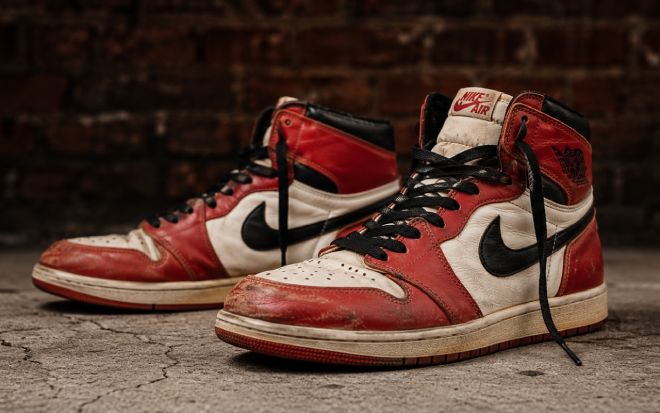
Nike Air Jordan 1, 1985
Air Jordan 1 changed the relationship between athlete and shoe brand. Nike released the model in 1985 for Michael Jordan. Designer Peter Moore created it; the original price was $65.

The best-known story involves the black-and-red colorway and supposedly banned sneakers. Decades mixed different episodes. In the 1984–85 season Jordan wore black-and-red Nike Air Ships that drew NBA complaints. Nike later used that story in advertising for Air Jordan 1. In Nike material updated in October 2025, the company explicitly separates the two stories.
But the ad legend was only part of a bigger success. Jordan showed an athlete's name could become its own brand — and sports shoes could be objects of desire far beyond basketball.
Nike Dunk, 1985
Dunk appeared almost alongside Air Jordan 1 and was also tied to basketball. Nike built the model for college teams and used their colors in the design.
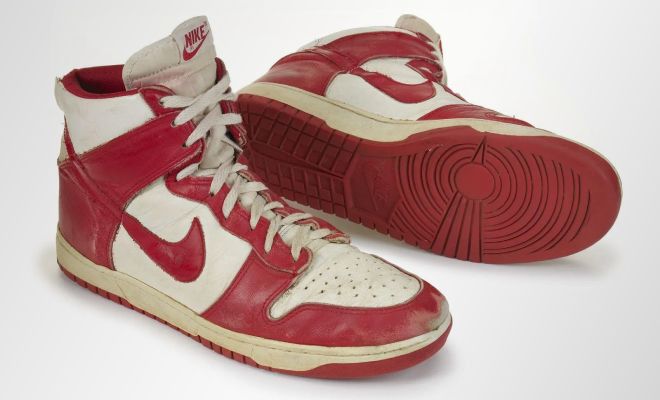
Its real second life came later. In the 1990s Dunks showed up on skaters' feet. In the early 2000s Nike reworked the silhouette for skateboarding as Dunk Low Pro SB.
That version turned Dunk into the perfect base for collaborations. From there comes the familiar modern story: rare colorway, known partner, limited run, and a queue for sneakers.
Nike Air Max 1, 1987
Air Max 1 became one of the most important sneaker-design models for one simple reason: it showed the technology.
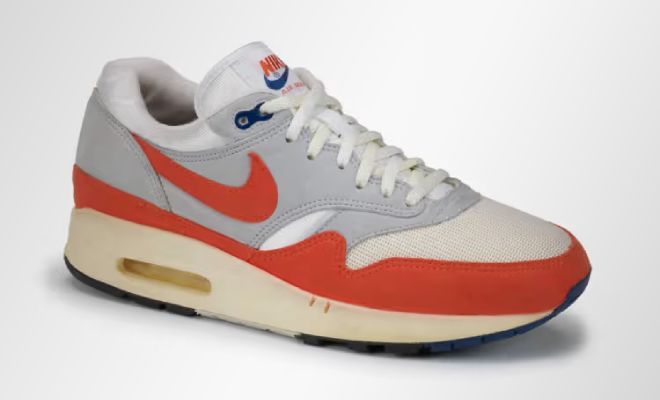
Nike Air was already in footwear, but the air unit was hidden inside the sole. Designer Tinker Hatfield decided to make it visible. On a trip to Paris he was struck by the Centre Pompidou, where the building's engineering systems are exposed on the outside. That architecture helped inspire Air Max 1.
In 1987 the model launched with a visible air cushion in the heel. After that, a technical detail could be not hidden inside the shoe but the main visual element.
Reebok Pump, 1989
In the late 1980s Reebok let the owner adjust fit inside the shoe.
The Pump arrived in 1989 on a basketball model with an air system you could inflate through an element on the tongue.
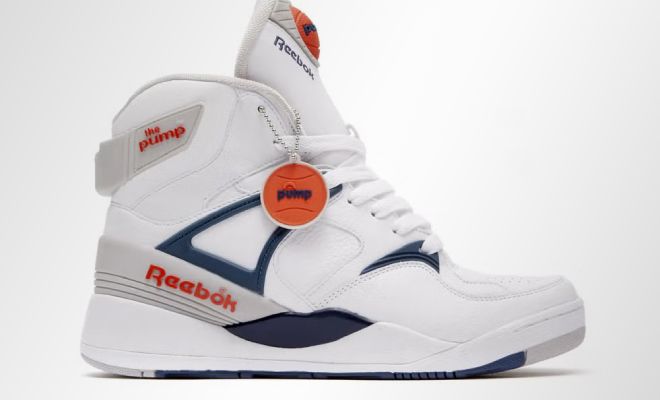
For sports footwear this was an interesting shift. Before, you picked size and laced up. Now the shoe itself could be tuned slightly to your foot.
Pump became one of the most visible technology experiments in basketball shoes of its era.
Nike Air Foamposite One, 1997
Foamposite looked as if it were designed not for basketball but for a sci-fi film. Instead of traditional textile and leather panels, Nike used a molded synthetic construction. The model was linked to basketball player Penny Hardaway and appeared in 1997.

At launch Foamposite was expensive, unusual footwear that was hard to confuse with anything else. Over time that strangeness became its main asset.
The model showed new materials could change not only performance but the very shape athletic shoes could take.
Supreme x Nike Dunk SB, 2003
In the early 2000s the economics of sneakers changed. Supreme and Nike took the Dunk and released a special skate version. The design used elements referencing luxury materials; a limited run turned the pair into a streetwear grail.

Here the sneaker enters a new system: value is set not only by materials and specs but by who collaborated, how many pairs dropped, and how hard they are to get.
Modern drop culture grew largely from releases like this.
Common Projects Achilles Low, 2004
After decades of loud logos and tech experiments, Common Projects went the opposite way. Achilles Low looks almost austere: smooth leather, a simple silhouette, minimal decoration, and a small gold code on the heel.

This model's importance is not sports technology. It helped establish a new idea: sneakers could belong in wardrobes once reserved for classic dress shoes.
A white minimalist pair became a normal part of looks with jeans, trousers, even suits.
Nike Flyknit Racer, 2012
By the early 2010s the industry talked about manufacturing again. Flyknit technology let brands knit uppers from yarn using digital knitting, creating light construction with fewer seams and separate pieces.

Flyknit Racer debuted in an Olympic year, 2012. Nike positioned the tech as a new way to build a light, fitted upper using material more precisely.
It was another view of athletic footwear: not add more parts, but calculate construction as precisely as possible for how the foot moves.
adidas Yeezy, 2015
By the mid-2010s sneakers sat at the center of fashion. The adidas collaboration with Kanye West did not invent collaboration culture. Before Yeezy there were Air Jordan, Nike SB, Supreme, and many other projects.

But Yeezy combined several forces at once: celebrity as designer, limited releases, high demand, and sneakers treated as fashion objects.
After that it was hard to claim athletic shoes and high fashion lived in separate worlds.
Balenciaga Triple S, 2017
In the late 2010s came an almost paradoxical turn. The sports industry had spent decades making shoes lighter, more comfortable, and more technical. Balenciaga offered the opposite: huge, heavy, deliberately complex construction.

Triple S became one of the main symbols of ugly-sneaker aesthetics and dad-shoe popularity. This was no longer sports footwear accidentally worn in the city. Fashion took the sneaker and decided what it should look like.
How Sneakers Became More Than Shoes
Walking this history from 1917 to the late 2010s, several big shifts stand out.
First sneakers were built to perform better in sport. Then they became part of athletes' uniforms. Musicians, skaters, and other subcultures claimed them next. Technology, collaborations, and designers followed.
Air Force 1 and Superstar helped move athletic shoes to the street. Air Jordan tied them to an athlete's persona. Air Max turned technology into design. Dunk became a symbol of collaboration culture. Flyknit changed ideas about manufacturing; Yeezy and Triple S finally erased the line between sneakers and fashion.

In 2026 that process has not stopped. Old silhouettes keep returning, archive models get reissued, and technologies that once seemed fantastical become ordinary parts of footwear.
Sneakers have a strange fate: they started as something you wear for results at training — and ended up as something through which you can read the history of sport, music, technology, and fashion.