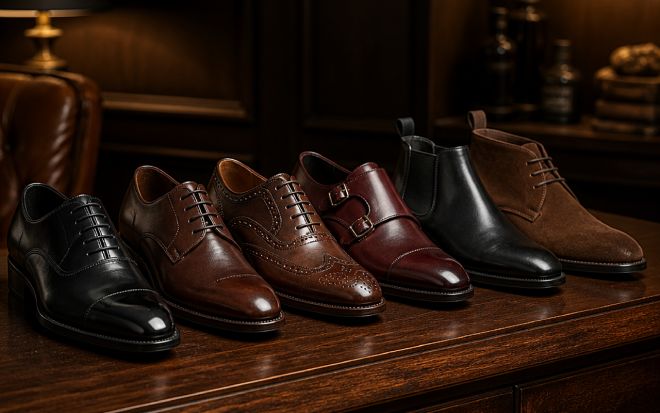
Oxford, derby, brogue, monk strap, Chelsea, chukka. Men's shoes have so many names it sometimes feels as if each pair got its own English term. But they're easier to sort out than the whole dictionary suggests: some names describe construction, others the fastening, others decoration or purpose. We look at what hides behind these words and how to tell one model from another at first glance.
Oxford
The main sign of an oxford is closed lacing. The side panels with eyelets are stitched under the vamp, so when the shoe is unlaced they don't spread wide apart.
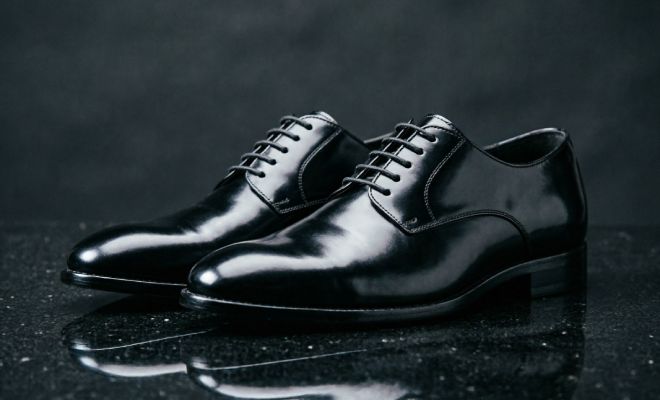
It's the construction that defines an oxford, not color, material, or toe shape. A black oxford with a plain toe remains a classic of strict menswear — but the model itself doesn't have to be black and formal. There are brown, suede, perforated, and heavier versions.
So oxford doesn't automatically mean "black dress shoes for a suit." It's a construction name.
Derby
With a derby it's the opposite: the lacing is open. The panels with eyelets are stitched on top of the vamp and form two noticeable flaps.
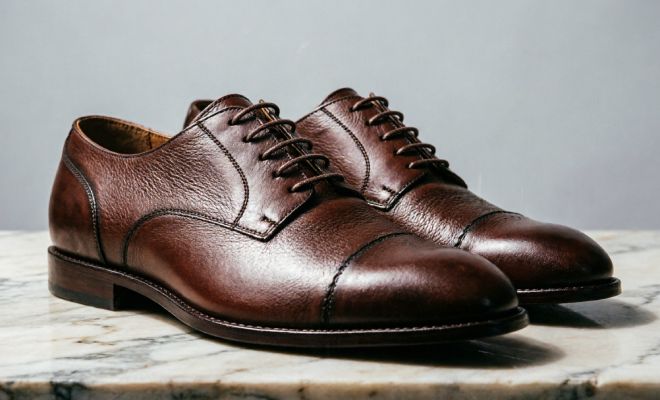
That's the simplest way to tell a derby from an oxford. Open lacing gives more freedom over the instep, so derbies are easier to fit different foot shapes. Depending on material and sole, they can look like strict classics or perfectly everyday footwear.
Derby often sits next to the term blucher. In modern retail and everyday speech these names are frequently mixed, though in professional descriptions there are differences between the constructions.
Brogue
Here's where confusion starts most often. Brogue is not a separate shoe construction — it's decorative leather work with perforation and shaped edges on the pieces.
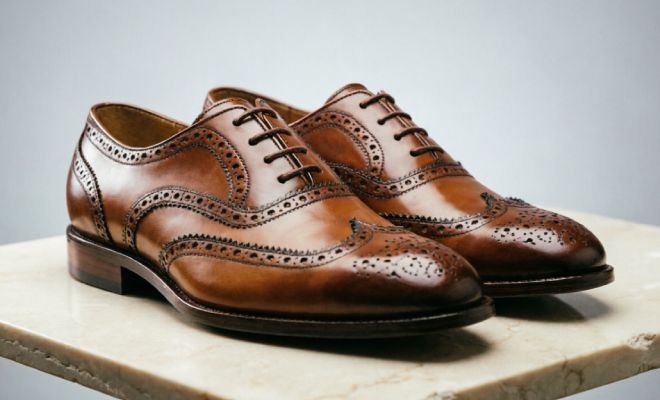
So one pair can be both an oxford brogue and a derby brogue. The first word describes construction, the second decoration.
By amount and placement of perforation, people distinguish quarter brogue, semi-brogue, and full brogue. The last is usually recognized by the characteristic W-shaped toe and is also called wingtip.
Brogue history is traditionally linked to Ireland and Scotland. But the popular story that holes were originally made specifically to drain water shouldn't be treated as established fact. Today broguing is seen first and foremost as a decorative technique.
Wholecut
Wholecut is one of the most restrained options in classic footwear. The upper is cut from almost one continuous piece of leather, so there are minimal seams.
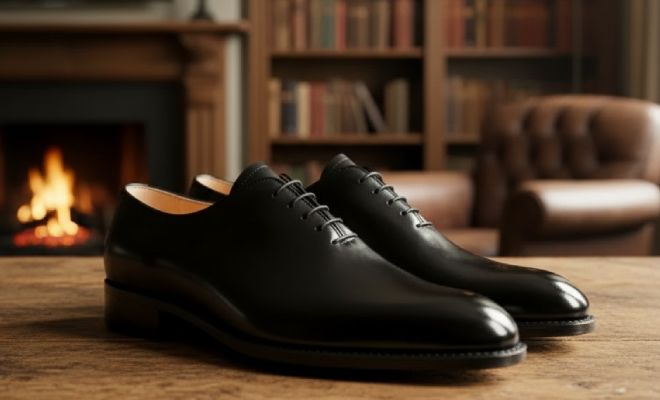
Because of that construction, material and craftsmanship are on display: decorative details can't do much to distract from the last shape and quality of execution.
Wholecut often looks strict, but the name itself doesn't define formality. It's a characteristic of the upper construction, not dress code.
Monk strap
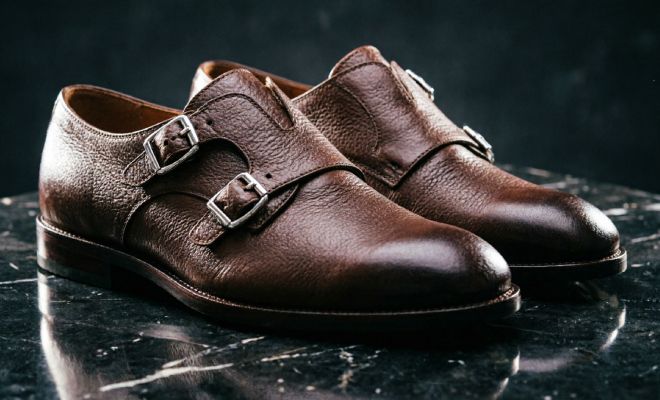
Monk straps have no laces. Instead they use a strap with a buckle. One buckle makes it a single monk; two makes it a double monk. The latter is especially easy to spot by the two buckles on the vamp.
Monk strap history is often linked to monastic footwear, but reducing the origin of the modern model to one neat legend isn't wise. Strap-and-buckle shoes existed in Europe long before today's menswear took shape.
Today monks occupy an interesting place between classic and more statement footwear. A smooth black pair looks restrained; a brown double monk in textured leather becomes the accent itself.
Loafers
A loafer is laceless, buckleless footwear you slip on without extra fastening. Within this category there are several familiar subtypes.
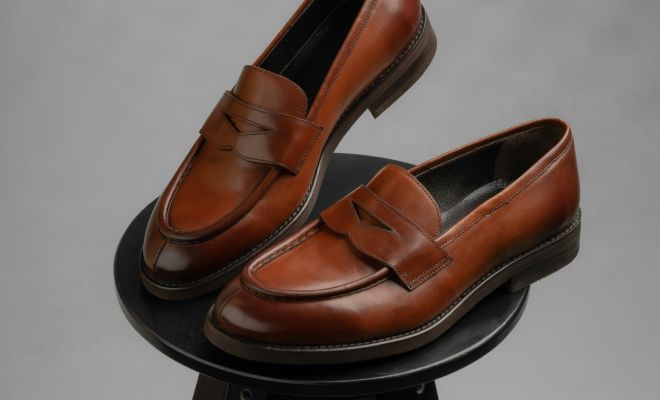
A penny loafer is defined by the strap with a slot; a tassel loafer by decorative tassels; a bit loafer by the metal detail on the vamp.
The word loafer speaks mainly to construction and how you put the shoe on. Loafers can be strict leather, soft suede, or deliberately chunky. One term covers very different characters.
Chelsea boots
Chelsea boots are ankle-high with elastic side panels. There's no lacing, and a small pull tab at the back usually helps you get them on.
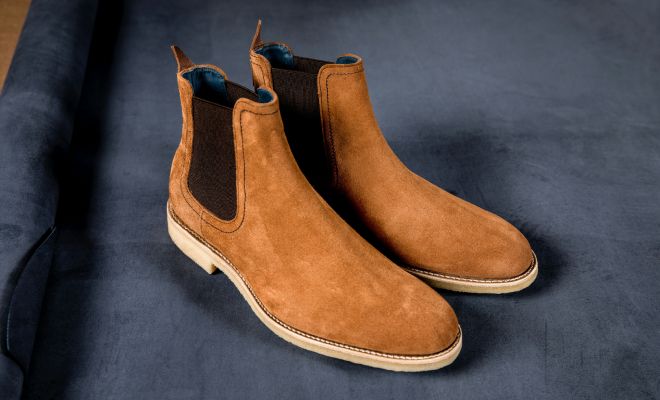
Modern Chelsea history is tied to English bootmaker Joseph Sparkes Hall, who worked with elastic shoe construction in the 19th century. Later the model became a notable part of British fashion and got a new push in the 1960s through youth culture.
Today Chelsea boots range from almost classic leather pairs to heavy lug-sole versions. But what defines them isn't sole thickness or dress style — it's the elastic inserts on the sides.
Chukka boots
Chukka boots are short boots with open lacing and a small number of eyelet pairs. The upper is usually as plain as possible, without complex decoration.
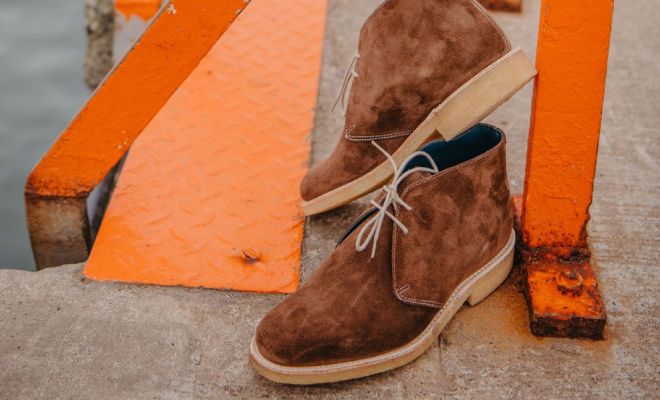
Classic chukkas are often made in suede, but there's no single mandatory material. Modern versions come in smooth and grained leather too.
Don't treat chukka as a synonym for any suede shoe on two or three eyelet rows. Manufacturers use the term fairly loosely, so when buying it's better to look at the whole construction, not just the name on the product card.
Desert boots
Desert boots are often considered a chukka subtype, and outwardly they're close. But the desert boot has a specific history.
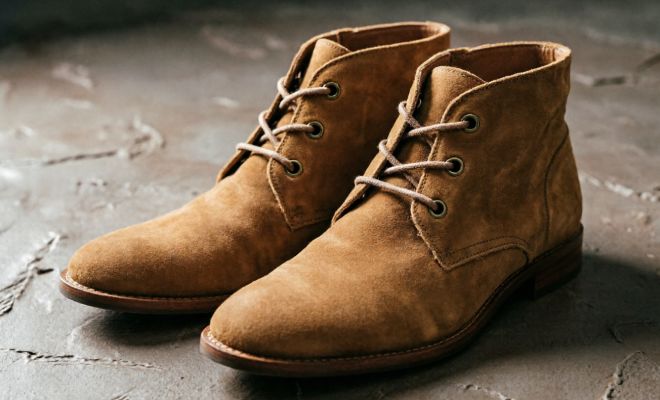
The best-known version, the Clarks Desert Boot, was created by Nathan Clark. The model appeared in 1950. Its design was influenced by lightweight boots Clark saw during service and travels in North Africa. The classic version got a suede upper and crepe sole.
So the desert boot can be seen as a specific historical type within the broader chukka group, though in modern retail the line between these names is often blurred.
Hiking boots
Hiking boots are footwear built for walking on rough terrain. Here the name is defined less by looks than by purpose and construction.
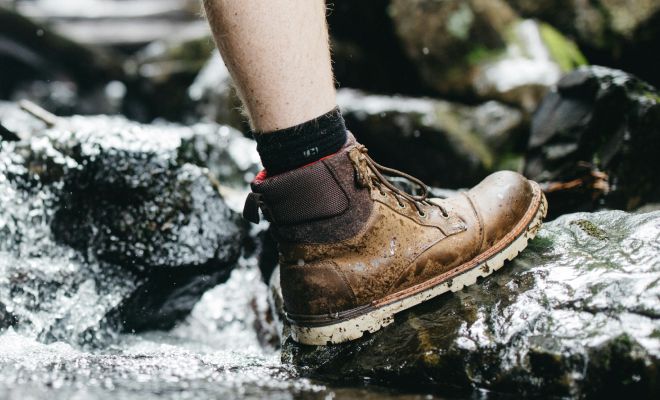
Such boots need reliable foot support, a tough upper, and a sole with tread suited to the terrain. The exact construction depends on what routes they're meant for.
City models may copy the hiking-boot silhouette, but a chunky sole and several rows of lacing don't by themselves turn footwear into trail boots.
Creepers
Creepers are easy to spot by their thick, ridged sole. That's the main visual marker of this footwear.
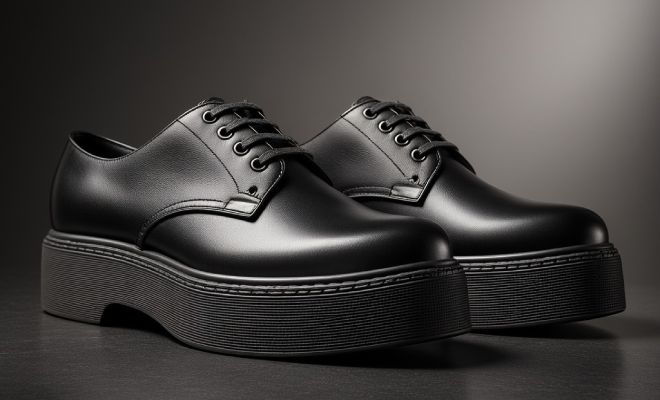
In the 1950s creepers became firmly part of the British Teddy Boys look. That era's culture is tied to narrow trousers, long jackets, and crepe-soled shoes. Later creepers saw several comebacks and became part of other musical and youth subcultures.
Today they're not necessarily subcultural footwear. But the thick sole remains their main marker.
Winklepickers
Winklepickers are shoes with an extremely long, pointed toe.
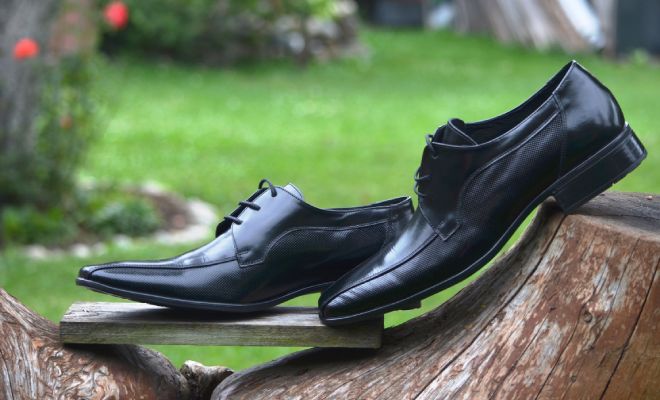
The name is linked to the English word winkle, a sea snail. The association comes from the toe shape resembling the tool used to pull a mollusk from its shell.
In the 1950s and early 1960s pointed models became part of British youth and music fashion. Today winklepickers remain niche footwear you're more likely to see in rock, retro, and subcultural looks than in an ordinary men's wardrobe.
The Main Point: Don't Rely on the Name Alone
In men's shoes one name doesn't always describe the whole pair. Oxford and derby refer to lacing construction, brogue to decoration, monk strap to fastening, Chelsea to boot construction, and hiking boots to purpose. Two pairs can look completely different yet belong to one category; one model can sit in several at once.
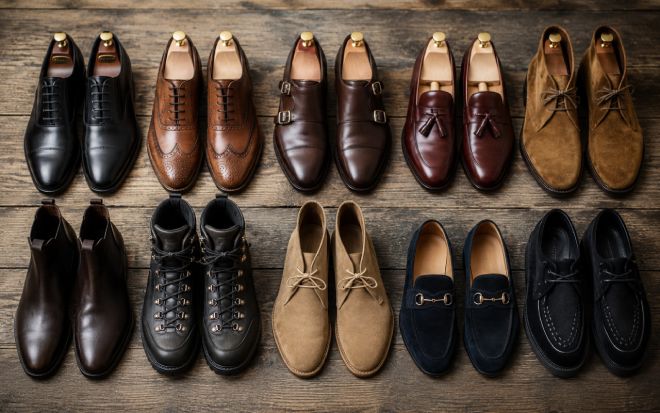
Once you understand that logic, English names stop looking like a random word list. Look at the lacing, fastening, upper shape, sole, or decorative details — and you can identify most men's footwear without a cheat sheet.