A sweater seems like one of the simplest pieces in a man's wardrobe: put it on, zip up your jacket, and go. In reality, it is surprisingly easy to get wrong. The wrong wool itches, a loose knit pills quickly, a poor fit distorts your proportions, and a deep V-neck that was once fashionable can suddenly make the entire outfit look dated. Here is how to choose a men's sweater in 2026, which fibers to look for, how to spot the right fit, and which styles are genuinely worth buying.
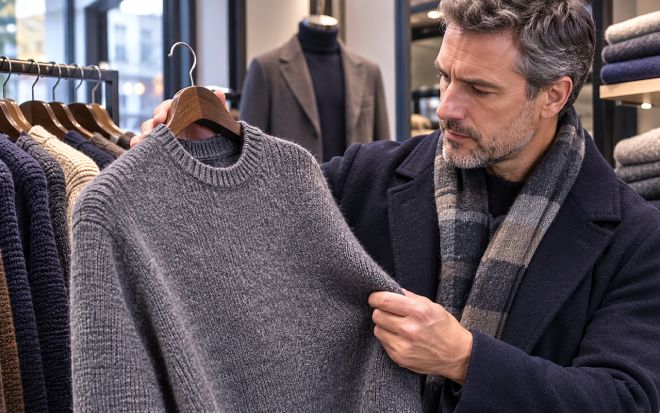
Read the fiber content, not the label on the front
Merino wool remains a strong starting point for a versatile sweater. It is fine enough for layering, works well in cool weather, and does not need constant washing. But the word “merino” alone does not guarantee quality. Knit density, fiber treatment, and overall construction all matter.
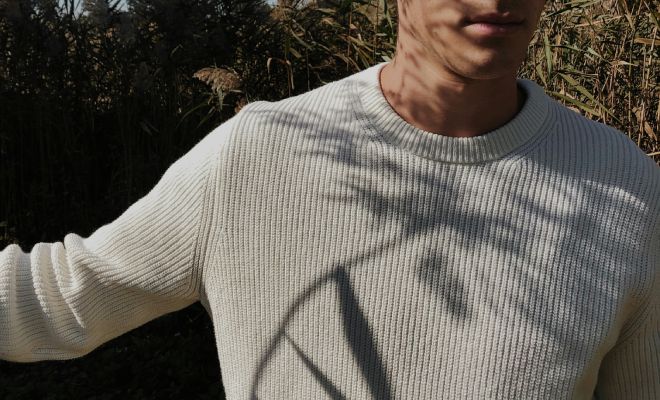
Choose cashmere when softness and lightness matter. Check the actual percentage on the composition label. If Cashmere is splashed across the front but the inner tag says 10% cashmere and 90% wool, you are looking at a wool blend, not something that is “almost cashmere.” US labeling rules, for example, explicitly require fiber content to be listed by percentage.
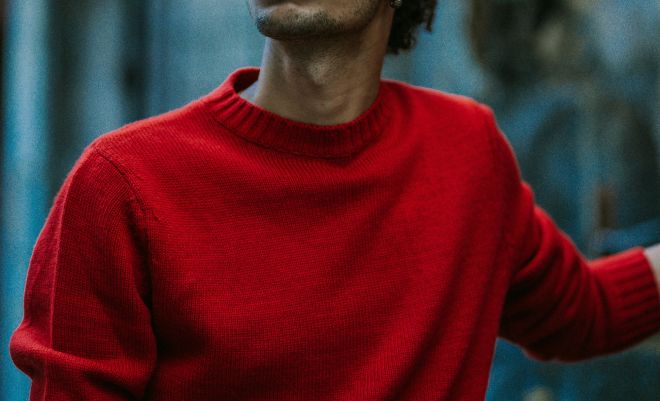
Cotton works well between seasons and indoors. It is not as warm as wool, but a fine cotton sweater is much easier to wear in spring or on a cool summer evening.
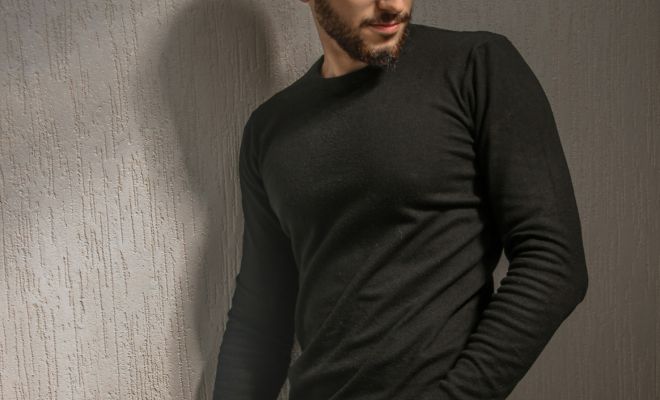
Do not automatically treat blends as a compromise. Other fibers can improve durability, elasticity, and feel. What matters is that the composition is clear and the price reflects what is actually on the label.
Inspect the sweater in the store
First, turn the sweater inside out. Check the shoulder and side seams, sleeve attachments, and cuffs. Uneven stitching, loose threads, and poorly finished areas are easier to spot from the inside.
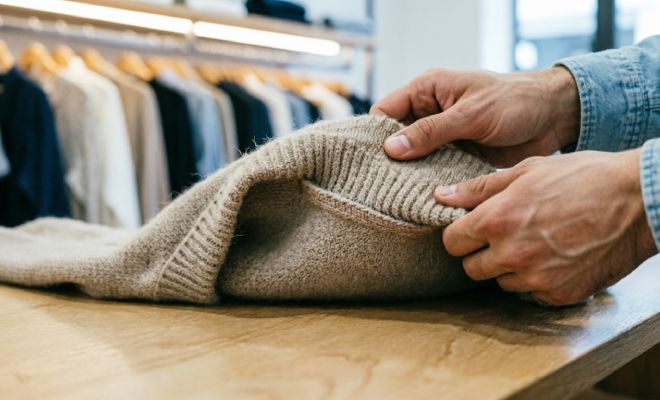
Next, gently stretch a cuff. It should return to its original shape. Run your palm over the surface: a loose knit and a mass of fibers already sticking out are not good signs.
Pilling does not automatically mean a sweater is poor quality. Friction causes pills, and even expensive cashmere develops them. The real questions are how quickly they appear and how well the knit itself is made.
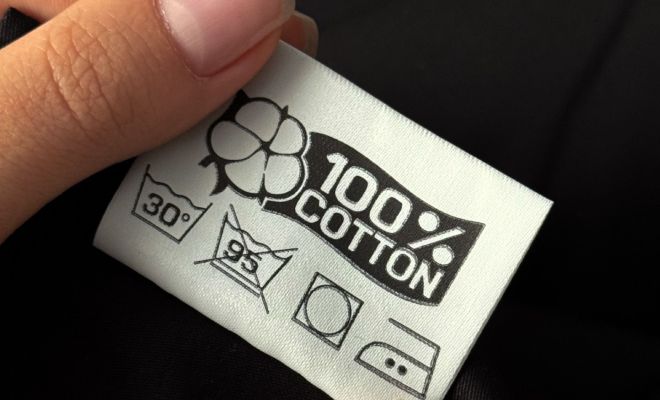
Always check the care label too. Some modern wool garments genuinely are machine-washable when the manufacturer explicitly says so. Woolmark, for example, permits suitable products to be washed on a dedicated machine cycle.
Fit matters more than fashion
A sweater should be neither a second skin nor a blanket.
A fine sweater worn under a blazer or coat can fit fairly close to the body. A heavy wool sweater usually looks better with a little more room. On a classic style, the shoulder seam should sit roughly at the edge of your shoulder unless the silhouette is deliberately oversized.
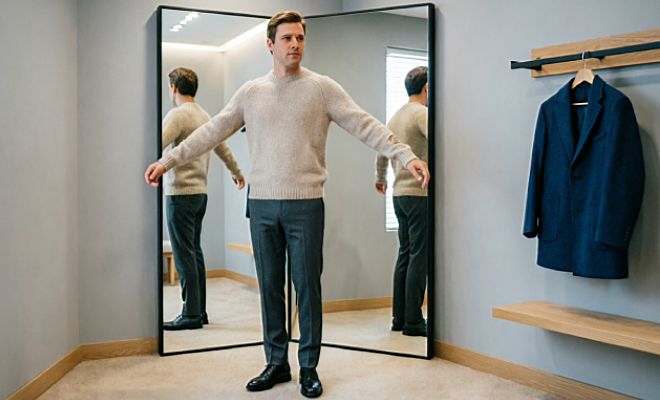
There is a simple test: raise your arms, sit down, and bend over. If the sweater constantly rides up, pulls across the chest, or turns the sleeves into bracelets, the size or cut is wrong for you.
Do not buy a garment simply because the label shows your usual size. Fit can vary significantly between brands and even between styles from the same brand.
Which neckline should you choose?
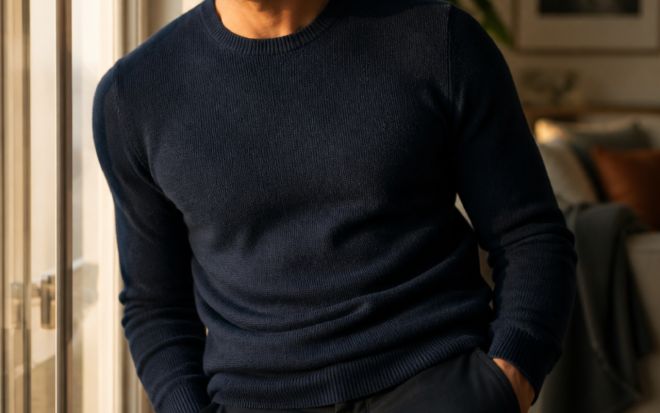
The crew neck remains the most versatile option. If you need one good everyday sweater, start there.
The V-neck has returned to menswear in 2026. The current version is very different from office sweaters of the past: a relatively high, compact V that does not plunge deep down the chest looks best.
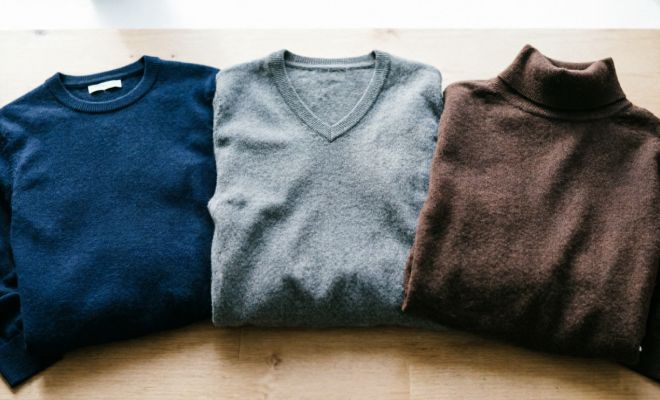
A turtleneck works with a coat or blazer and removes the need for a shirt. A cardigan offers more layering options, while the quarter-zip remains one of the most visible forms of modern knitwear. Alongside classic crew and V-necks, 2026 selections regularly feature cardigans, zip styles, alpaca, and textured knits.
Color and texture
Your first sweater is best bought in navy, gray, charcoal, brown, or cream. These colors do not force you to rebuild the rest of your outfit every time.
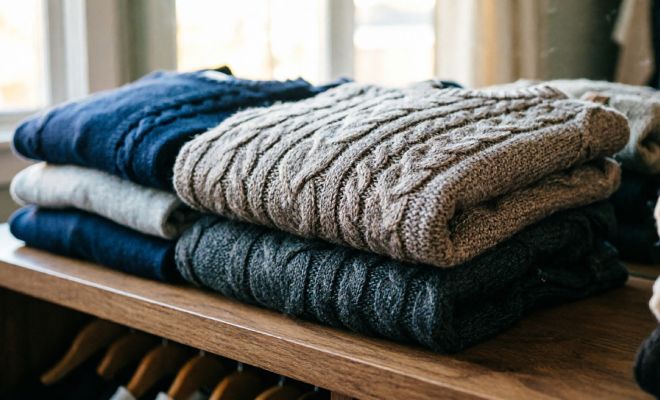
Once the basics are covered, move on to textured knits, cables, argyle, or a stronger color. Men's knitwear is getting more interesting in 2026: designers and brands are bringing back V-necks, vintage patterns, chunky knits, and more distinctive cardigans.
But fashion cannot overturn one rule: a good fit always matters more than a trend.
One last thing: how not to ruin it
Most sweaters die from poor care, not old age. After washing, dry wool knitwear flat instead of hanging it wet on a hanger. The weight of the water can stretch the garment and destroy its shape.
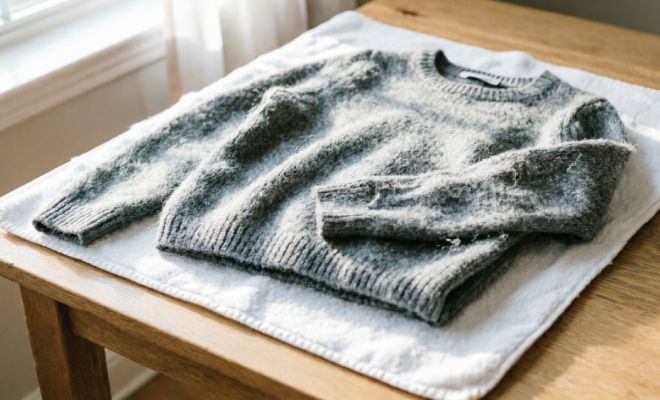
Sweaters are also best stored folded. There is no need to wash wool after every wear: if it is clean and has not absorbed odors, airing it out is often enough.
In the end, choosing a good men's sweater is pleasantly unglamorous: read the composition, inspect the knit and seams, move around while trying it on, and do not buy a size “just in case.” Only then should you decide between a classic gray crew neck and the V-neck that, until recently, looked hopelessly out of fashion.