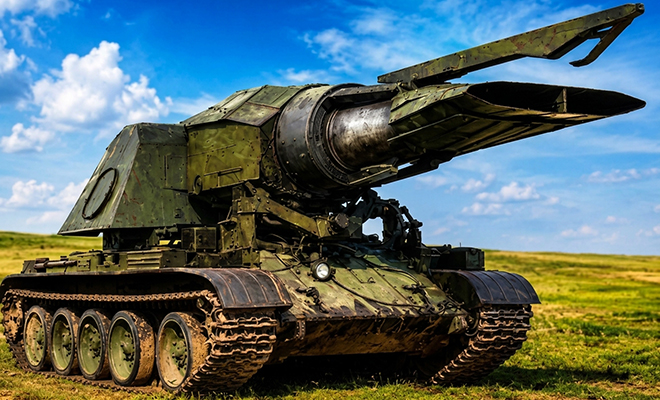
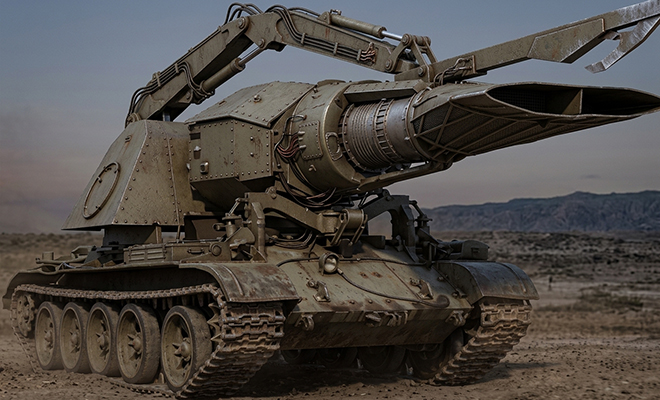
A heavy tank's tracked chassis topped by a massive jet engine from a fighter plane — the Soviet "Progrev-T" looked like something out of a sci-fi film. This 37-ton hybrid was built for a strictly practical and deadly dangerous job, and only a handful of these machines were ever made. What's more, the USSR had no interest in showing off the unique "Progrev-T" at arms exhibitions.
The Afghan Deadlock and the Birth of an Idea
During the 1980s war in Afghanistan, Soviet convoys faced a constant threat: the enemy buried mines and booby traps deep beneath the asphalt or rocky ground of mountain roads. Standard sapper probes and metal detectors worked too slowly, and traditional mechanical mine rollers quickly broke down against rocky terrain.
A solution was needed that could clear a path quickly without direct mechanical contact with the ground. Soviet engineers decided to use not the force of metal, but the energy of superheated compressed air.
Design: A Hybrid of Aviation and Armor
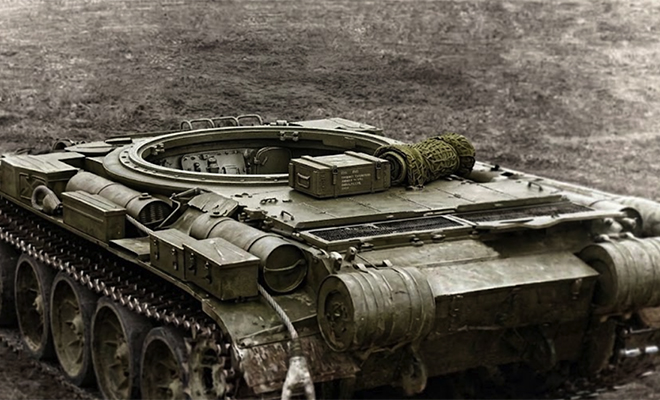
Designers took the proven chassis of the T-54 medium tank, weighing about 37 tons, as their base. The tank's original turret and gun were removed, and in their place they installed:
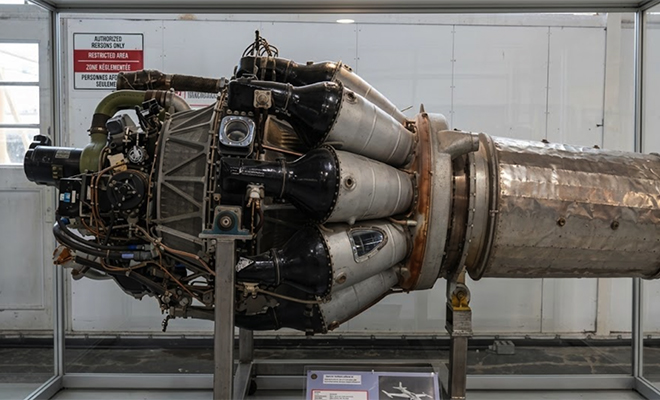
- The VK-1 jet engine — an aviation turbojet unit used on MiG-15 and MiG-17 fighters.
- A special nozzle — directing the superheated jet blast downward at an angle in front of the vehicle.
- A fuel tank — holding aviation kerosene needed to run the turbine on the move.
How the "Progrev-T" Cleared Minefields
The vehicle moved slowly at 1–3 km/h, continuously blasting a powerful stream of gas onto the road. A jet of air at hundreds of degrees Celsius erupted from the nozzle under enormous pressure.
Clearing worked like this:
- The hurricane-force blast stripped and swept aside the top layer of soil and stones 10 to 20 centimeters deep.
- Concealed mines were either blown to the roadside or detonated by the intense heat and sudden pressure.
- Electronic and wired detonator lines were instantly severed or burned through by the blast.
Behind the vehicle remained an absolutely clean strip about 6 meters wide, through which any convoy could pass safely.
Why the "Monster" Never Went into Mass Production
Despite its high effectiveness, the "Progrev-T" remained incredibly rare. There were several reasons:
- Colossal fuel consumption: The jet turbine burned through kerosene by the ton in just a few hours of operation, requiring constant support from fuel trucks.
- Noise and visibility: A running jet engine could be heard for dozens of kilometers, completely eliminating any element of surprise for the convoy.
- Road surface damage: The powerful air blast stripped away not only soil but also badly damaged asphalt.
The "Progrev-T" was retired along with the Afghan campaign. But the idea of gasodynamic clearance proved highly viable.
A similar principle is still widely used in civilian life today: specialized vehicles with jet engines (thermal machines) clear snow and ice from airfields and runways.