In the eighteenth century a strange fashion swept Britain’s upper class. Earls and barons no longer settled for a scenic park, fake ruins, and a stone grotto. Full romantic melancholy required a real, living hermit in that grotto. The role usually went to homeless men.

A living element of landscape design
In the Georgian era English culture prized communion with nature, philosophy, and a light sadness. Poets praised solitude. Wealthy landowners competed over how refined their estates looked.
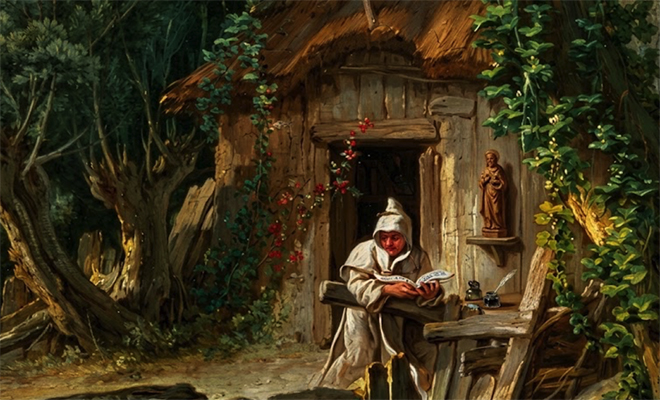
The “ornamental hermit” became peak status. A wild-looking man on the grounds, musing on the vanity of life, signaled the host’s deep spirituality and wealth to guests.
Aristocrats placed newspaper ads to find candidates. Local peasants, former soldiers, or impoverished townsmen took the “job.”
Seven-year contracts: no soap, no scissors, no talk
Employers wrote the terms into formal contracts. The tasks sounded simple. They demanded iron endurance.
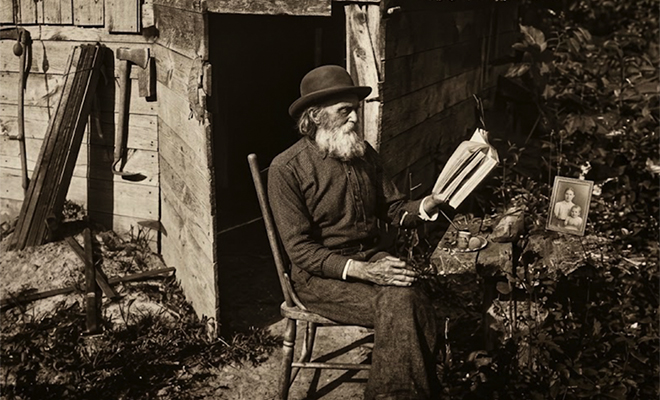
A typical deal ran five to seven years. For that whole stretch the hire was forbidden to:
- Cut hair, beard, or fingernails and toenails.
- Wash or use perfume.
- Leave the assigned garden plot.
- Speak with servants or passing guests (in some cases wise Latin phrases were allowed).
The hermit received a rough goat-hair robe, an hourglass, books, glasses, and wooden dishes. The duty was to stay in view of strolling aristocrats: reading folios, playing mournful flute tunes, or staring thoughtfully at water.
Big money and comic failures
For completing the full term, employers promised sums that could buy a house and a comfortable life: about 500 to 700 pounds sterling then (tens of thousands of pounds in today’s money). During service the hermit was fed and given water for free.
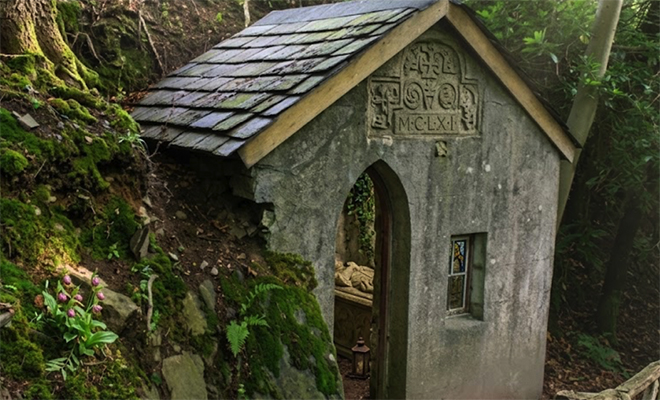
Almost no one lasted. The most famous flop was at Painshill Park under Charles Hamilton. His hermit lasted three weeks. He was caught in a village tavern drinking ale and complaining of boredom. Hamilton fired him with no pay.
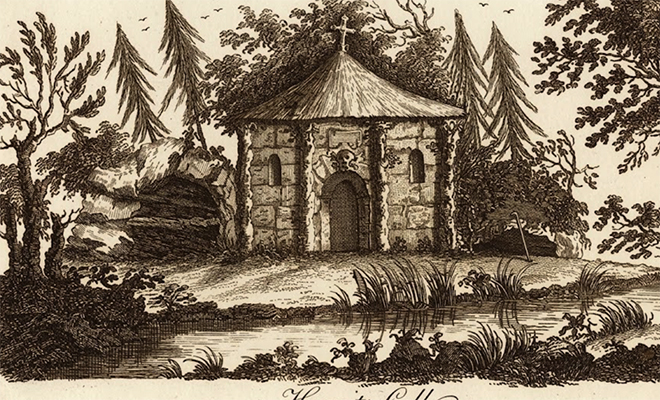
On other estates “workers” slipped away after a few months, unable to bear total isolation, filth, and years without washing.
The end of human garden décor
By the early nineteenth century wild romanticism gave way to a more practical Victorian age. Hiring live people to fake deep thought started to look vulgar and absurd.
Some landowners tried wax mannequins or mechanical automata that nodded when hidden pedals were pressed. By the mid-nineteenth century the odd tradition was gone, leaving hundreds of empty stone grottoes in old English parks.