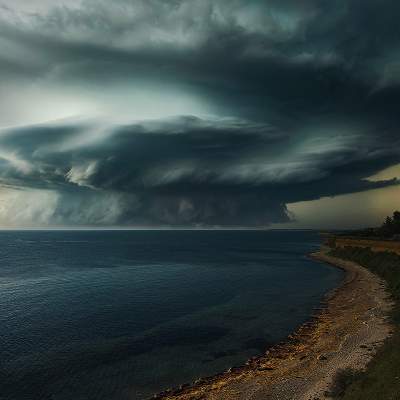
Say “Sahara” and most people picture endless sand dunes running to the horizon. Golden sand covers only a small part of that vast territory. In places its depth reaches the height of a 50-story building. Under that layer lies a different world: ancient river valleys, huge freshwater reservoirs, and a stone foundation that still remembers green tropics.
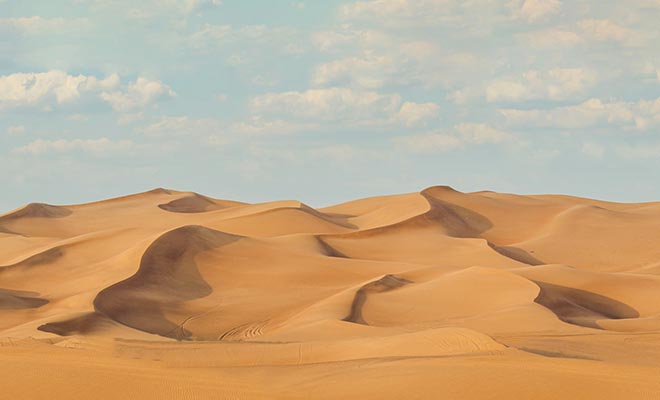
How deep is the sand in the Sahara
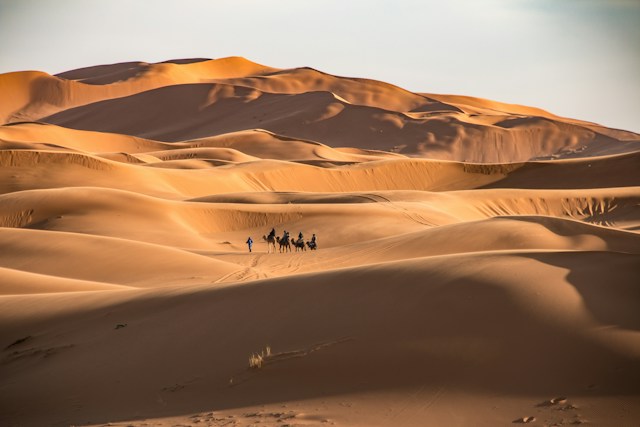
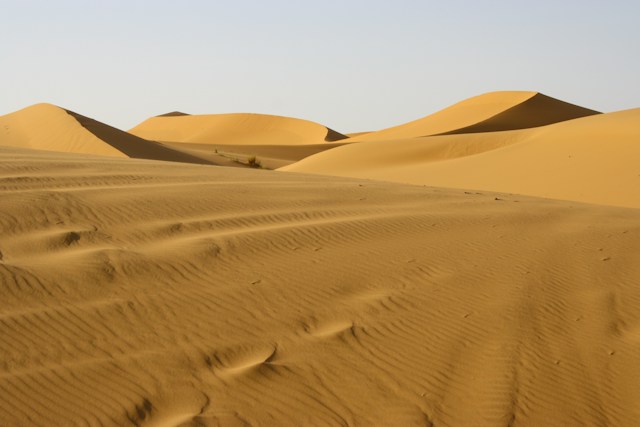
Sandy deserts, or ergs, make up only 15–20% of the Sahara. The rest is rocky plateaus (hamadas), pebble plains, and real mountain ranges such as the Ahaggar and Tibesti.
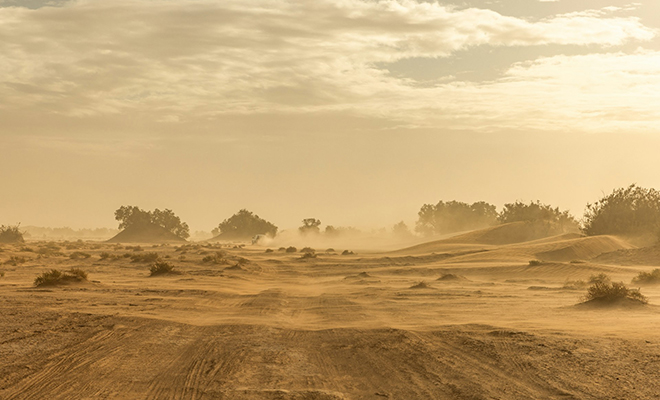
Where a sand cover does exist, its depth is uneven:
- On average: the sand layer is about 20 to 45 meters thick.
- In low basins: in the great sand seas of Algeria, Libya, and Egypt, dune height and sand depth can reach 150–300 meters.
The sand formed over millions of years of erosion. Rocks cracked under temperature swings, winds ground stone into fine grains, and those grains settled in natural depressions.
A rocky base and ancient river valleys
Directly under the sand sits bedrock: a massive layer of sandstone, limestone, and volcanic basalt. If all Sahara sand vanished overnight, we would see a cut landscape of dry canyons, deep basins, and dry riverbeds. Satellite radar shows that under the sand sea lies a network of ancient river systems.
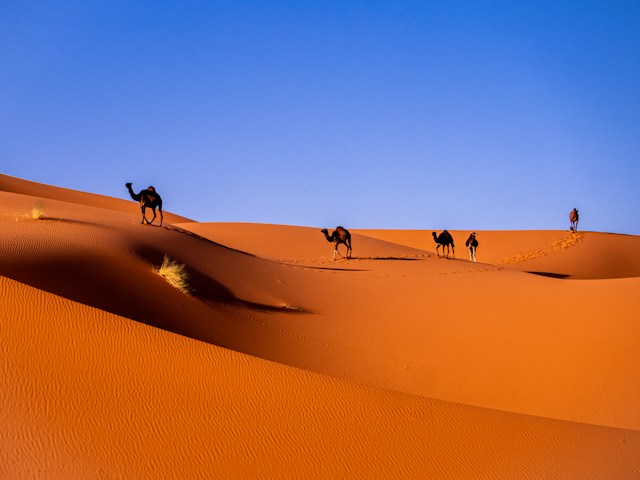
Thousands of years ago, full rivers ran here into giant lakes. The largest, Mega-Chad, was bigger than today’s Caspian Sea.
Underground oceans of freshwater
Beneath the dry sand-and-stone surface sit some of the planet’s largest freshwater stores. From a few hundred meters to about 1.5 kilometers down lies the Nubian Sandstone Aquifer: a vast fossil water horizon formed tens of thousands of years ago, when monsoon rains fell over Africa.
Those underground reserves are estimated in the hundreds of thousands of cubic kilometers. That sealed sandstone water is why rare natural oases still appear, where springs reach the surface.
Traces of ancient life and mineral wealth
Under deep sand and stone lie historical and natural treasures.
- Fossils and remains: the desert regularly yields skeletons of ancient marine animals, whales (as in Egypt’s Wadi al-Hitan, the Valley of the Whales), and dinosaurs. Sand also hides traces of the “Green Sahara” era only 6–10 thousand years ago: bones of hippos, crocodiles, and wild cattle.
- Archaeological sites: sand preserved ancient camps, tools, and rock art showing hunting and herds grazing on green meadows.
- Minerals: under the Sahara’s stone foundation lie huge oil and gas fields (in Algeria and Libya), plus rich deposits of phosphates, iron ore, uranium, and gold.
The Sahara is only a thin sandy cover. Under it sits a record of how Earth’s climate has changed.