Most trains simply connect cities. Saphir Odoriko in Japan works differently. Some passengers buy a ticket not for the destination, but for the ride itself along the Pacific coast.
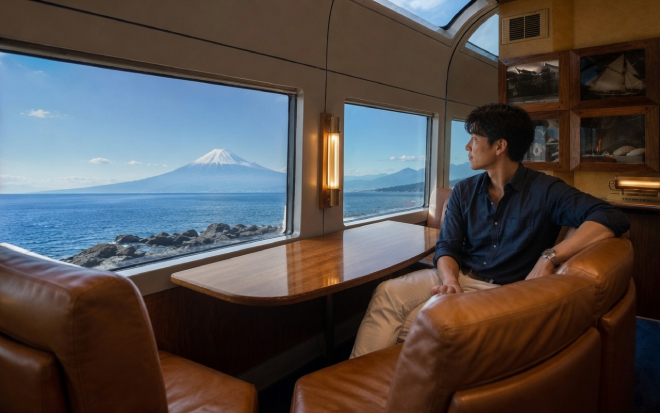
The JR East train runs between Tokyo and the Izu Peninsula, a region of hot springs, coastal towns, and views of Mount Fuji. Launched in 2020 as a premium version of the Odoriko line, it quickly became one of the country's most in-demand tourist trains.
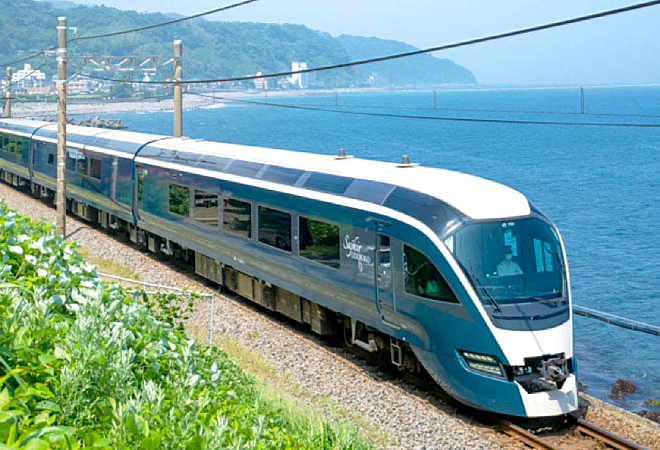
The train has only eight cars and 164 seats. There are no ordinary coach cars. Every seat is either Green Car comfort or a private compartment.
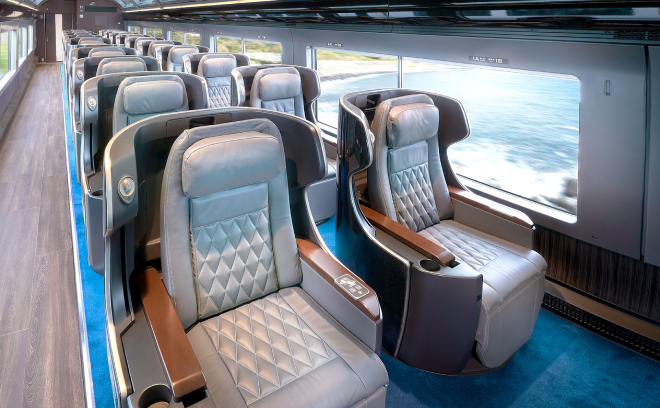
Car one is Premium Green: just 20 seats in a 1+1 layout. The chairs are roomier than on standard expresses, and the large windows make the ride feel almost panoramic. These seats sell out first.
Further back are compartments for small groups and families, for 1 to 4 or 1 to 6 people. On popular dates they disappear from sale soon after booking opens.
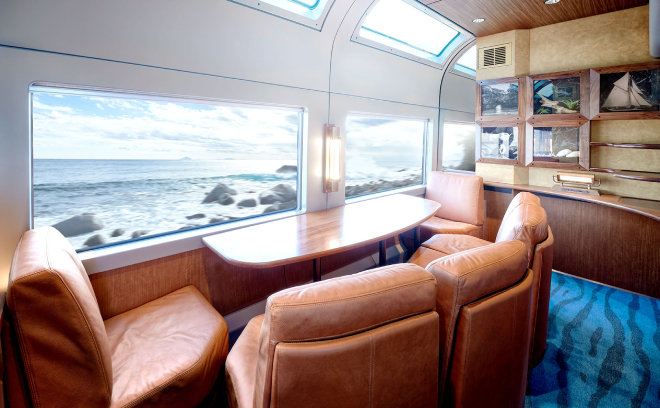
The journey takes under three hours. Along the way the train passes Atami, Ito, and Izu-Kogen. Much of the line runs beside the ocean, and that stretch ranks among Japan's most scenic rail routes. On a clear day Mount Fuji is visible from the windows.
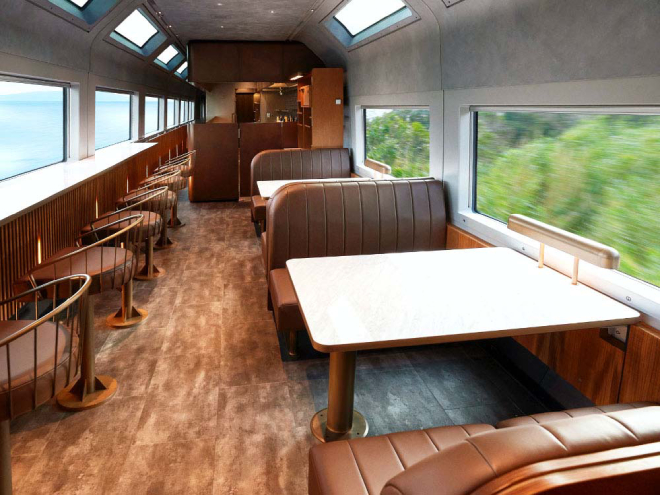
In the middle of the consist is a Cafeteria car, a rare format for modern Japanese expresses. The menu draws on products from the Izu region, so the culinary part of the trip starts on board.
The fare is a base ticket plus a class surcharge.
Tokyo to Ito: about 7,000 to 8,600 yen (roughly $45 to $55)
Tokyo to Izu-Kyu-Shimoda: about 10,000 to 13,000 yen (roughly $65 to $85)
Premium Green and private compartments are charged separately and can raise the final price depending on the seat type.
Tickets go on sale about a month before departure. The most sought-after seats, including Premium Green and private compartments, often sell out in the first hours.
The name Saphir Odoriko nods to sapphire and the ocean tones that follow the route for most of the way. The train's design was led by Ken Okuyama, known for transport and automotive projects.
The ride lasts under three hours, but for many passengers it is not just a way to reach the Izu resorts. It is a route in its own right, one that shapes how they plan a trip to Japan.