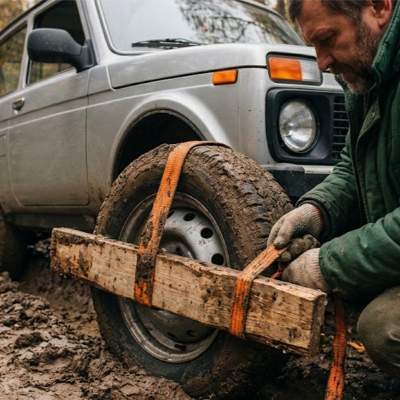
The Pan-American Highway almost lets you drive across the Americas from north to south, but in Panama it unexpectedly ends in the middle of the continent. Beyond lies the Darien Gap between Panama and Colombia: 50 kilometers of mountains and forest with no roads and no settlements.
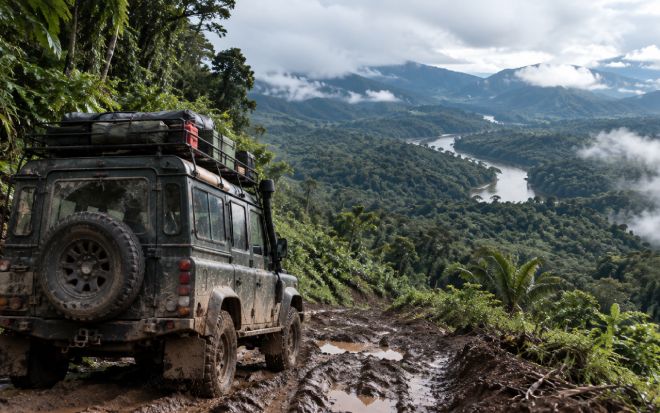
The Road Does Not End at the Ocean
The last major stretch of the Pan-American Highway in Panama reaches the town of Yaviza. There is no motor route from there into Colombia. Between the road networks of the two countries lies inaccessible terrain of swamps, rivers, tropical forest, and mountains.
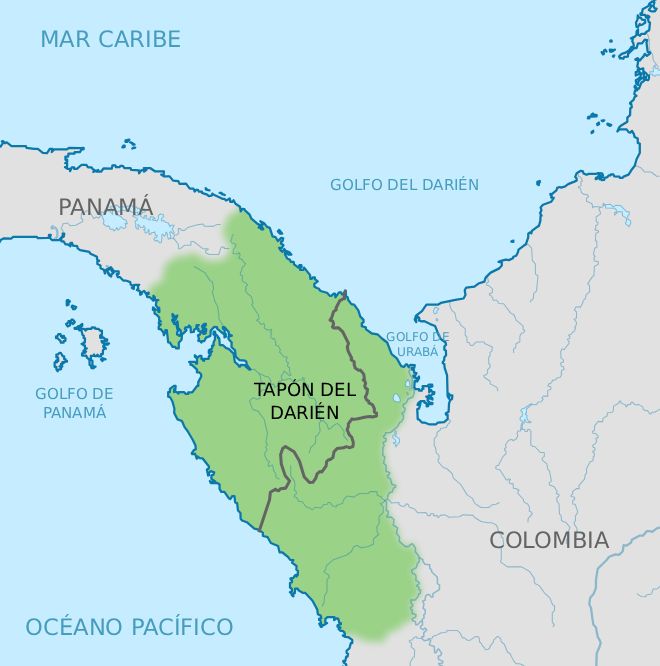
Photo: Milenioscuro, CC BY-SA 4.0, Wikimedia Commons
Within its boundaries lies Darien National Park, covering about 579,000 hectares. UNESCO listed it as a World Heritage Site in 1981. One of the largest continuous tracts of Central American tropical forest survives here, and indigenous peoples live on park land.
That is why the idea of simply “finishing the missing piece” turned out to be far more complicated than it looks on a map.
Cars Have Crossed the Darien After All
In 1971–1972 a British expedition set out from Alaska to Tierra del Fuego in two new Range Rovers. The hardest test was the Darien.
The expedition vehicles had to cut a path through swamp and forest. The cars bogged down in mud, broke down, and rivers had to be crossed on temporary bridges. Crossing roughly 160 kilometers took about four months.
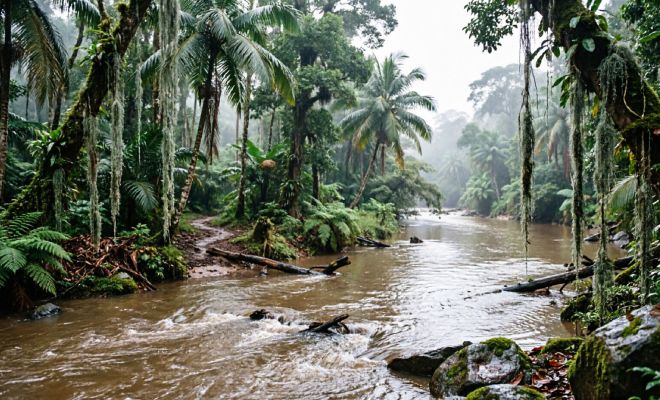
So here is the paradox: you can get a car through the Darien. Building a road there that thousands of vehicles could use is much harder.
They Tried to Build the Road
This is not a myth about a long-forgotten construction project. In 1971 the United States, Panama, and Colombia agreed to complete the Darien section of the Pan-American Highway.
The project proved far costlier than early estimates. According to the U.S. Government Accountability Office, construction was estimated at about $150 million in 1968 and rose to $285 million by 1977. By then part of the route in Panama had been built, but the road to Colombia was never finished.
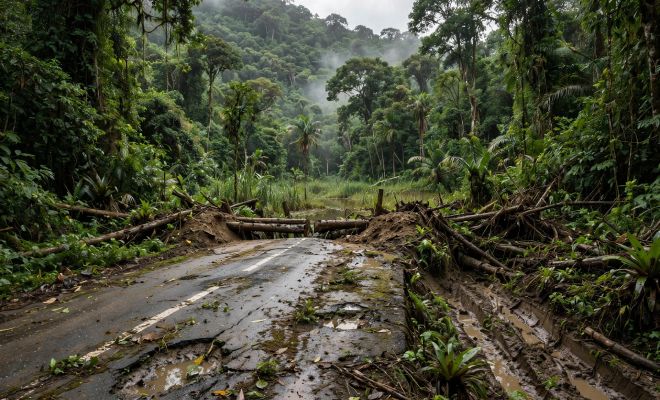
Money was not the only problem. Authorities feared the spread of foot-and-mouth disease from South America, and the new route would have crossed land of high conservation value.
Why It Is Not Being Built Now
Today the question comes down mainly to consequences. Darien National Park is protected territory of international importance, and UNESCO lists completing the Pan-American Highway among potential threats to its preservation.
A road would open access to areas that remain hard to reach. Logging, agriculture, resource extraction, and new construction could follow. For the Darien that would mean a serious transformation of the entire region.
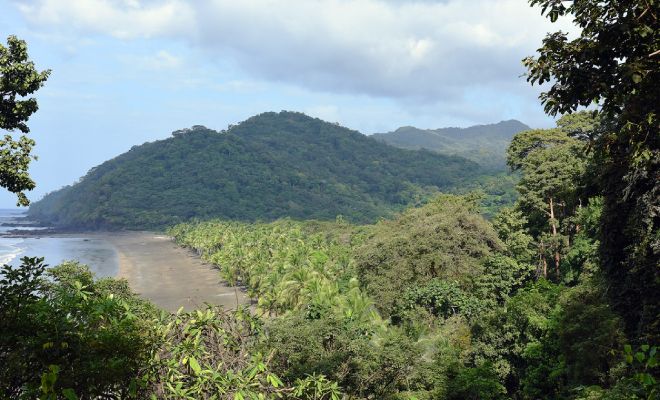
Photo: Harvey Barrison / flickr / CC BY-NC-SA 2.0
So the famous gap exists not because it is impossible to drive through. Several cars have already proved the opposite. The problem is that a road can be laid there, but keeping the Darien intact after it appears is far harder.
That is why one of the world’s most unusual highway breaks remains on the map of the Pan-American route: the path between North and South America exists almost in full — except for this stretch on the Panama–Colombia border.