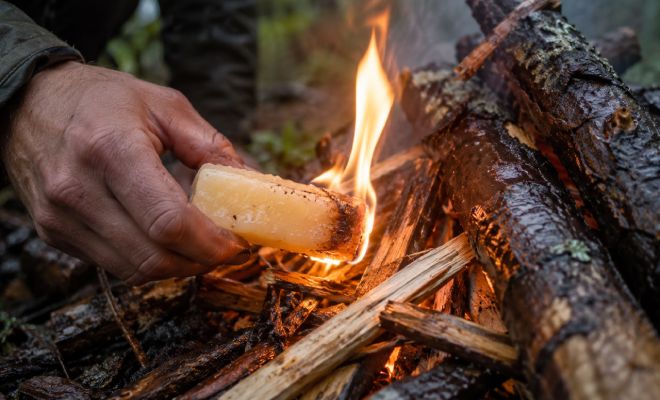
After rain, damp wood can turn an ordinary campfire into an ordeal: matches burn, shavings hiss, and thick branches refuse to catch. Rangers have a strange trick for that case: laundry soap mixed with gasoline makes a thick combustible paste. It burns longer than plain fuel and gives the fire time to dry the wood. The interesting part is that real chemistry sits behind this taiga trick.
Soap is not doing what you might think
Laundry soap itself does not become some kind of super-fuel. Its job is more interesting.
Soap contains compounds that can thicken hydrocarbon liquids. After contact with the soap base, gasoline stops behaving like an ordinary liquid: the resulting mass is denser and stays put longer at the ignition point.
That is why the mix acts like a small combustible candle. Gasoline supplies the energy, and the soap base keeps that energy from vanishing in a few seconds.
How a bar of soap becomes campfire starter
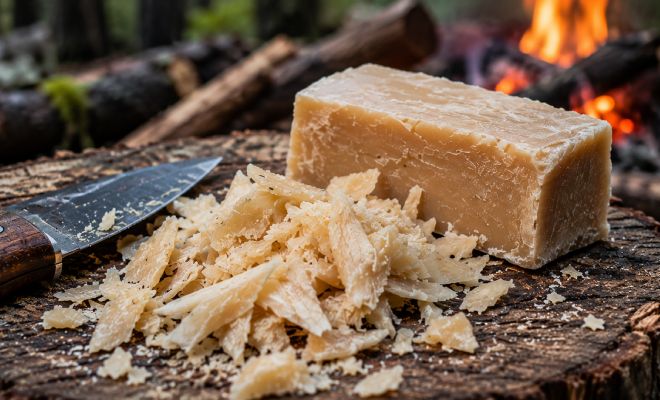
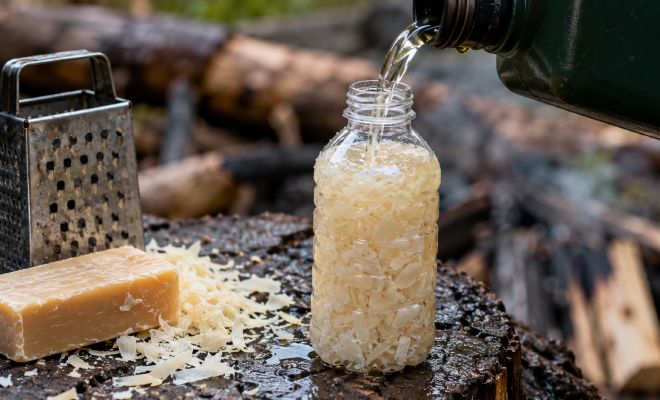
Laundry soap is grated and mixed with gasoline in a closed container, then left to sit for a while. The fuel gradually thickens. The result is a combustible mass used to start the first flame.
The whole trick is burn rate. A small amount of gasoline evaporates and flashes almost instantly. Thickened fuel stays more compact and can sustain a flame longer.
That is exactly what a fire on wet wood needs.
Why a damp log will not catch
Wood after rain has an awkward trait: before it will burn properly, it has to shed excess moisture.
At first the fire spends heat warming the surface and evaporating water. So a thin dry shaving may burn away while a thick damp branch stays almost unchanged.
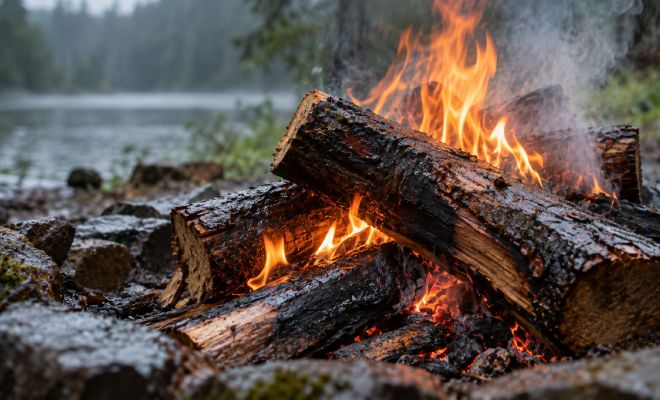
Sustained flame changes the equation. It has time to dry the surface, heat the wood, and pass the fire to the next layer.
So the secret is not that the soap starter somehow makes wet wood burn. It simply gives the fire what it needs most after rain: time.
Why this is not a new idea
Chemists have known the principle of thickened gasoline for a long time. Soap compounds were used to make gel-like hydrocarbon mixes that bind liquid fuel into a denser structure.
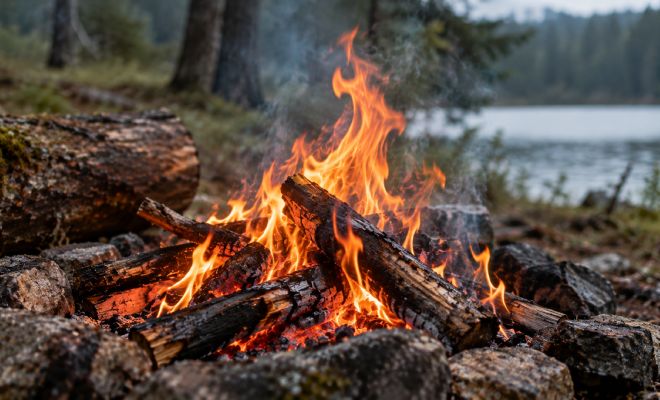
So the taiga method looks almost like a kitchen trick, though it rests on serious chemistry.
That is the whole clever part: an ordinary bar of laundry soap does not become fuel. It makes liquid fuel behave completely differently.
Gasoline is nothing to joke with, of course: it ignites easily, so this starter is used only outdoors and with the usual fire-safety rules.