A few centuries ago, crossing an ocean almost always meant risking your life: ships only 25 to 36 meters long set out on routes where giant liners sail today. In the Age of Discovery that counted as a technological breakthrough, but by modern standards those vessels were cramped and extremely vulnerable.
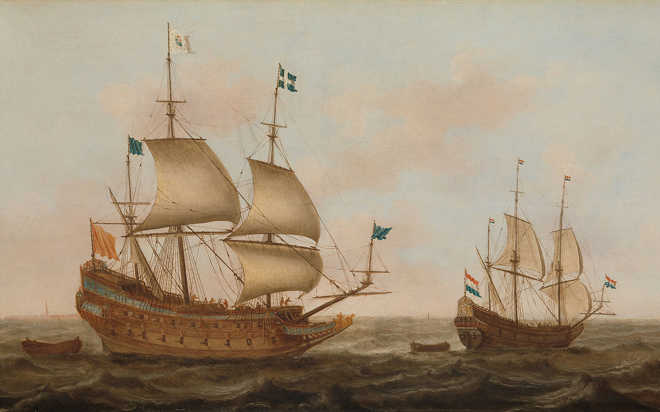
The sailing ships of that era still surprise by their size. Francis Drake's flagship Golden Hind, which completed a circumnavigation, was about 36 meters long and a little over 6 meters wide. Even more compact was Christopher Columbus's Santa María, roughly 25 to 26 meters. On that space lived dozens of people, plus stores and gear.
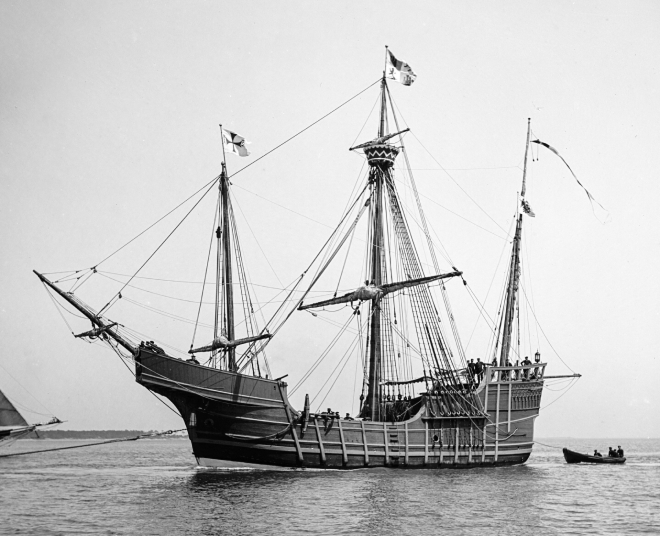
Photo: Edward H. Hart / Wikimedia Commons
Life for 16th-century sailors was harsh. A crew of 50 to 60 men shared one common space and slept in hammocks, often in shifts. Damp, cold, and constant motion never stopped for a day.
_deck-660 1.jpg)
Photo: Boatbuilder, Wikimedia Commons, CC BY-SA 3.0
Food quickly became a problem. Salted meat, hardtack, and water made up the core ration, but within a few weeks the water could spoil. Alcohol was sometimes added to make it drinkable. The lack of fresh food led to scurvy, a disease that took more lives than storms.
Ferdinand Magellan's expedition became one of the best-known examples of the risk: of about 270 men, only 18 returned home on the ship Victoria. For many, such voyages really were a one-way trip.
Things began to change only in the 18th century, and with steam engines seafaring became more predictable and safer.
Today the contrast feels almost unreal. As of 2026, the largest liners, such as Icon of the Seas, stretch more than 360 meters and carry up to 7,000 to 8,000 people. On board there is full infrastructure with entertainment and comfort.
And yet it was these small sailing ships that made the modern world possible. They opened routes without which neither global trade nor modern sea travel would exist.