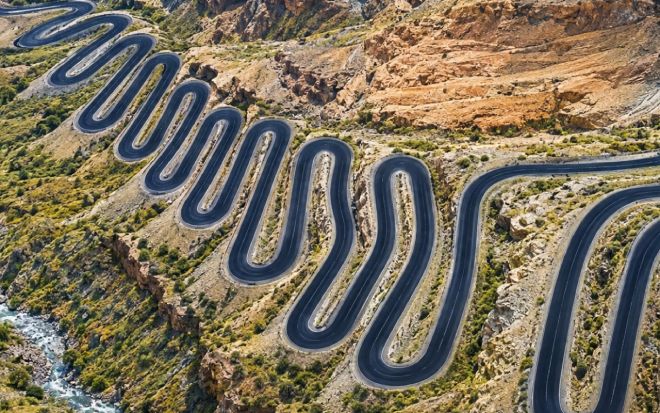
Panlong Road is often called the world's wildest switchback, filmed from drones to epic music. Six hundred turns, about 1,200 meters of elevation change, and dozens of kilometers of asphalt coiled into the slopes of the Kunlun Mountains. But the point of Panlong is not the turn count. The road was not built for racers or for cinematic shots: it was meant to link remote villages to the county center and replace a multi-day mountain trek with a driveable route.
600 turns in 36 kilometers: the math of Panlong
Panlong sits in Taxkorgan Tajik Autonomous County in China's Xinjiang Uyghur Autonomous Region. The full route is about 75 kilometers long, but the famous winding section covers roughly 36 kilometers.
That stretch packs more than 600 S-shaped and U-shaped turns. The road climbs from about 3,000 to 4,216 meters above sea level, with an elevation gain of around 1,200 meters.
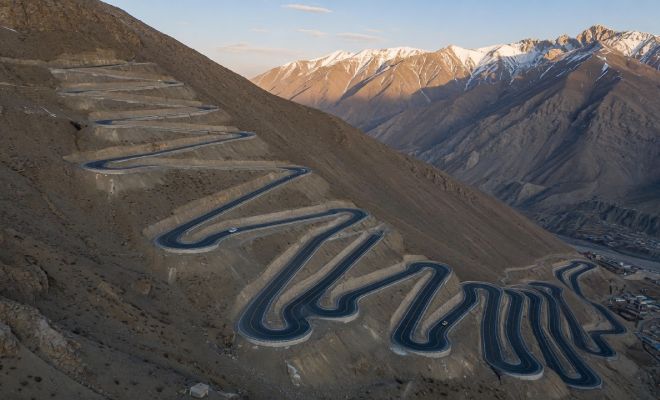
There is an even denser stretch: Little Panlong. On a segment of about 600 meters there are roughly 30 turns. From above, the road really does look like a giant dragon coiled on the slope. That is where the name Panlong comes from: "coiling dragon."
Two days on foot: why the road was needed
The reason Panlong exists is far more practical than its looks. Before the paved road, people from remote settlements walked about two days to reach the county center, or roughly a day on horseback.
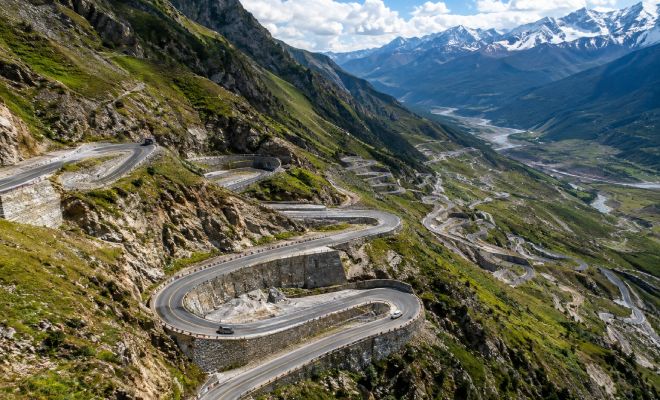
A trip for groceries or medical help meant crossing the mountains. The new route changed how people moved between settlements.
The paved road was finished in 2019. After that, Panlong gradually shifted from ordinary transport infrastructure into a tourist attraction.
Why so many turns?
The answer sits under the asphalt. Panlong follows the difficult mountain terrain of the Kunlun range and climbs more than a kilometer in elevation.
Instead of a straight climb, the road had to be stretched along the slopes. That produced a switchback with hundreds of bends: a car gains height gradually, and the route covers far more ground than the straight-line distance from start to finish.
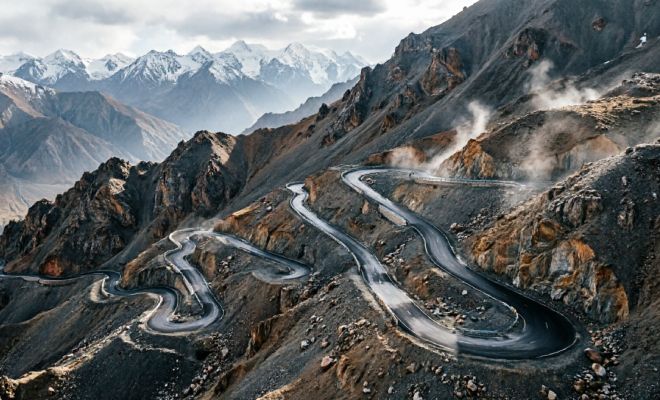
So the 600 turns are not decoration. They are the cost of routing a road through this terrain.
Why is Panlong called an ancient road?
The asphalt itself is not ancient at all. The name points to the region's history: the Taxkorgan area sits on old Central Asian routes tied to the Silk Road.
Modern Panlong came much later, but it runs through land where mountain paths between China and Central Asia existed for centuries. So "ancient" in the name refers more to the place's history than to the age of today's highway.
Why does Panlong close in winter?
At more than 4,000 meters, the road is highly weather-dependent. Snow and ice regularly force seasonal closures.
After the winter closure of 2024, traffic reopened on March 21. Vehicles also face limits on size and wheelbase, so check current rules and road status before you go.
Panlong looks like a road built for flashy car videos. In fact it was the other way around: first came the need to connect mountain settlements to the outside world, and only later did the road become a sight in its own right.
The 600 turns were not added for a record. They are the price paid for a driveable path through the mountains.