The ocean holds creatures that outlast entire human eras and still show little sign of aging. Some live for hundreds of years; a few approach a millennial span. And the more data arrives in 2026, the clearer it becomes: this is not a "miracle of nature," but a set of concrete conditions. The cold, stable deep-ocean environment slows life processes and stretches an organism's lifespan to scales that look unreal from a human point of view.
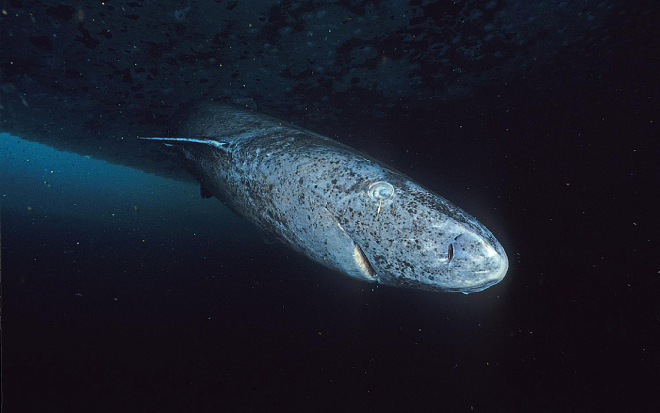
The Greenland shark is one of the clearest examples of this "slowed time." It lives in the cold darkness of the North Atlantic and rushes almost nothing: slow movement, minimal growth, an extremely thrifty metabolism. That biological unhurriedness, scientists believe, stretches its life to extraordinary lengths.
Estimates reach 400 to 500 years, and at that point the story is no longer about a record. It is a different logic of existence, where decades pass as a single stage of life.
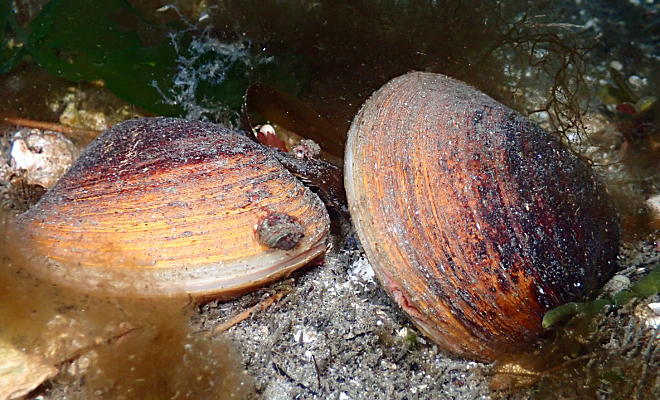
With the mollusk Arctica islandica, the story is even more concrete. From the outside it is an ordinary shell, nothing special among other marine life. Inside are layers that record each year like diary pages. The most famous specimen lived 507 years, and that is not just a number: you can literally read past climate from its shell. That is the peculiarity of such long-lived animals. They do not only live long; they become living archives of the ocean.
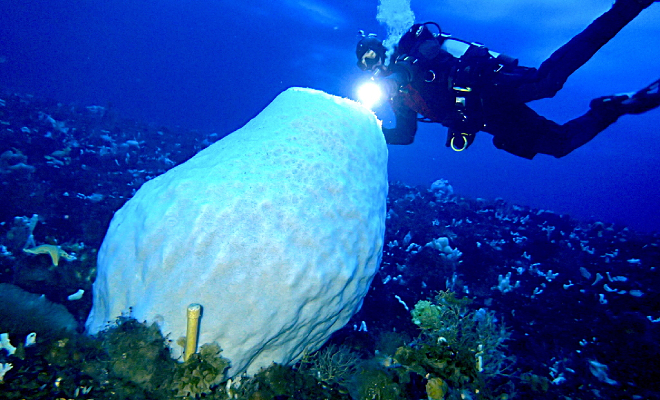
In Antarctic waters, glass sponges, including Anoxycalyx joubini, create a similar sense of time standing still. They do not age in the familiar sense. Rather, they keep existing very slowly, building structures in conditions where almost nothing changes.
Because of that, their colonies can persist for a very long time, but science still struggles to pin down the exact limits of that "very long": growth is so slow that these organisms barely register on ordinary timescales.
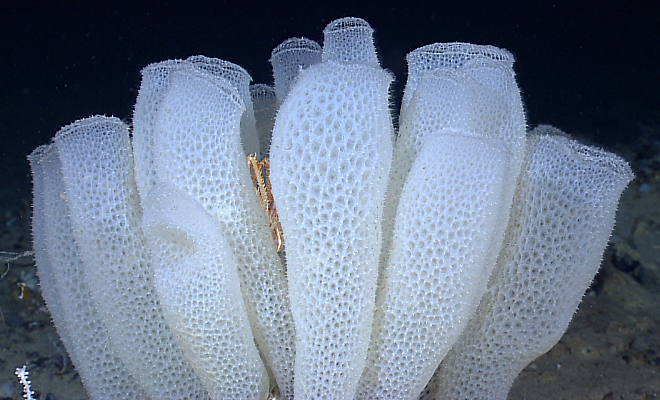
Euplectella aspergillum leaves a similar impression. Its lace-like silica skeleton looks less like something a living organism built and more like natural architecture. The frame is so durable that it sometimes outlasts the sponge itself, creating an illusion of near-eternal existence. Behind that "eternity" sits the same principle: extremely slow growth and minimal change in a stable deep environment.
And perhaps the strangest turn in this story is the jellyfish Turritopsis dohrnii. Its life is not merely long; it can run in a loop. Under stress or damage it returns to an earlier developmental stage and effectively restarts the cycle. That does not make it immortal in the literal sense, but it gives the biology of aging an odd flexibility: here age stops being a straight line.
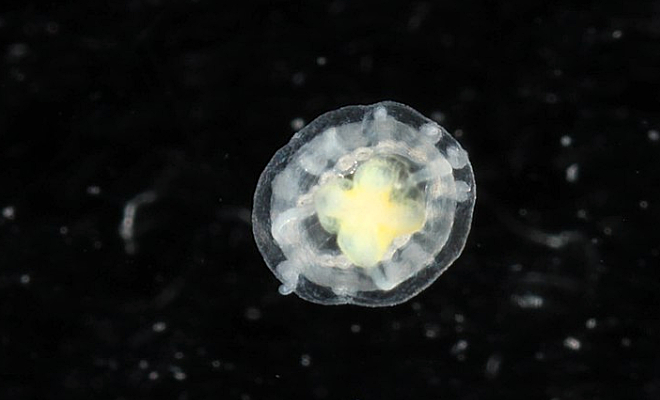
And all of this is only a small part of the ocean picture. The deeper research craft go, the more often it feels as if familiar ideas of time and aging apply only loosely here. In these conditions life does not hurry, does not force events, and does not fit human scales, which is exactly why it remains so hard to explain.