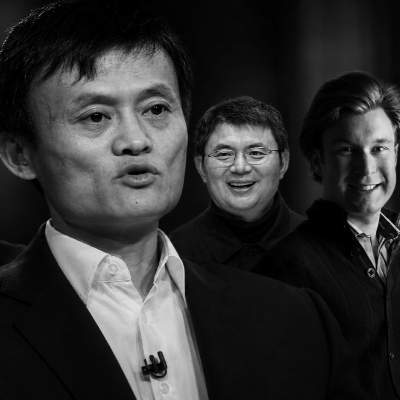
For more than 150 years, people who rarely share the same space gather each summer in a California forest. Guests at Bohemian Grove over the years have included US presidents, heads of major companies, bankers, military leaders, and well-known scientists. Outsiders are not allowed in, membership lists are not published, and the grounds stay fully closed to the public.
That secrecy is exactly what made Bohemian Grove one of the most discussed private communities in the world. There is no documentary proof that global political decisions are made there. What is known is different: the club really does bring together people with high influence and a long shared history.
How a club that began with journalists took shape
The Bohemian Club was founded in San Francisco in 1872. Journalists and people in creative fields started it so they could spend time with artists, musicians, and writers away from work.
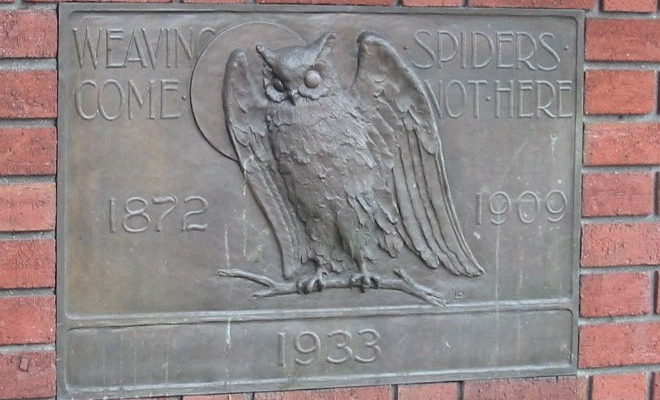
Hence the name: a "bohemian club." Its motto, Weaving Spiders Come Not Here, reflected a simple idea: leave business and work talk outside.
Over time the membership mix changed. By the early twentieth century entrepreneurs, lawyers, bankers, and politicians had joined. Gradually it became a place where business, science, and public service intersect.
In 1899 the club bought a plot of about 11 square kilometers in Sonoma County, near the Russian River. Bohemian Grove appeared there as the site of the annual summer camp.
How access works, and why getting in is hard
The Bohemian Club remains a closed private community. A candidate must be recommended by a current member, after which internal committees review the application. The club does not publish a waiting list or disclose selection rules.
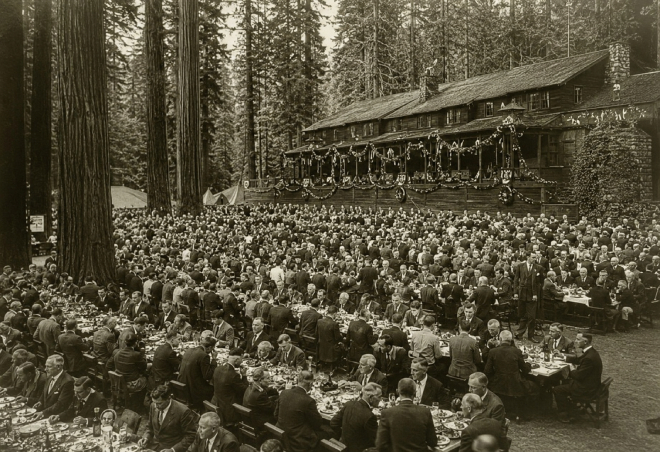
According to US media, the joining process can take more than ten years, and sometimes much longer. Exact timelines depend on internal screening and available recommendations.
Researchers estimate the club now has about 2,500 members.
Who has visited Bohemian Grove
At different times members or guests have included Herbert Hoover, Dwight Eisenhower, Richard Nixon, Ronald Reagan, George H. W. Bush and George W. Bush, as well as Henry Kissinger and David Rockefeller.
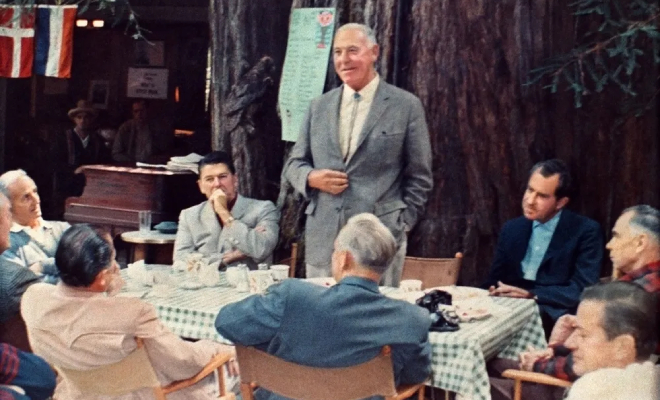
Representatives of major corporations, financial institutions, and academia are also known to have taken part. The widespread claim that every US president was a club member is not true.
That roster is what drove heightened public interest in the club.
A historical episode tied to the nuclear project
One of the best-known episodes is a 1942 meeting. During the annual gathering, physicist Ernest Lawrence organized a discussion of nuclear research prospects with Robert Oppenheimer, military officials, and US government representatives.
Historians believe that meeting may have helped strengthen support for Oppenheimer as scientific director of the Manhattan Project. Key decisions on building nuclear weapons were still made at the US government level.
What happens during the summer camp
The Bohemian Grove program includes lectures, musical performances, theatrical productions, and informal meetings among members.
There is an unspoken tradition not to discuss business or government matters there, though how strictly it is kept cannot be verified.
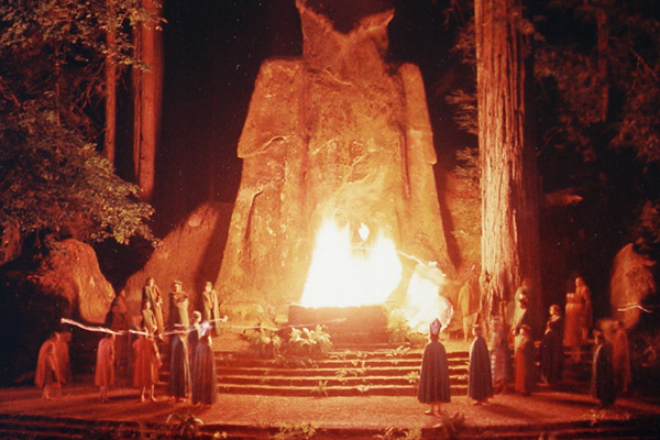
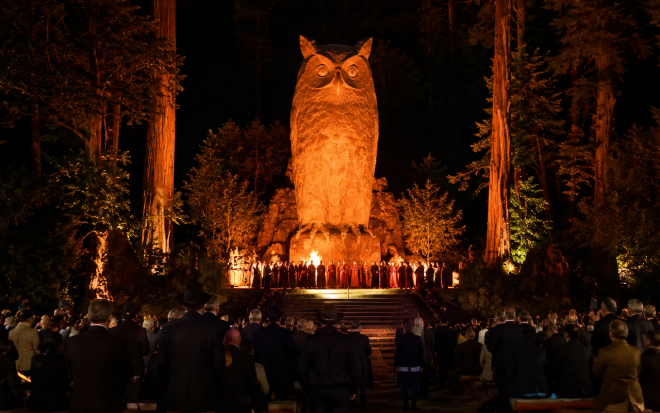
The main publicly known ceremony remains the Cremation of Care. It is a theatrical performance at a large owl statue, during which everyday worries are symbolically left outside the camp.
That ritual is the one that most often appears in open sources and draws the most public interest.
How an outsider got onto the grounds
In 2000, American radio host Alex Jones managed to sneak onto Bohemian Grove grounds and record the camp's opening ceremony. The footage spread widely online and drew more attention to the club.
The published material did not confirm any hidden political process. It mainly showed a closed traditional ceremony of a private club with a long history.
Why interest in the club never fades
Bohemian Grove remains an example of a closed community where a high degree of privacy meets the presence of well-known and influential people.
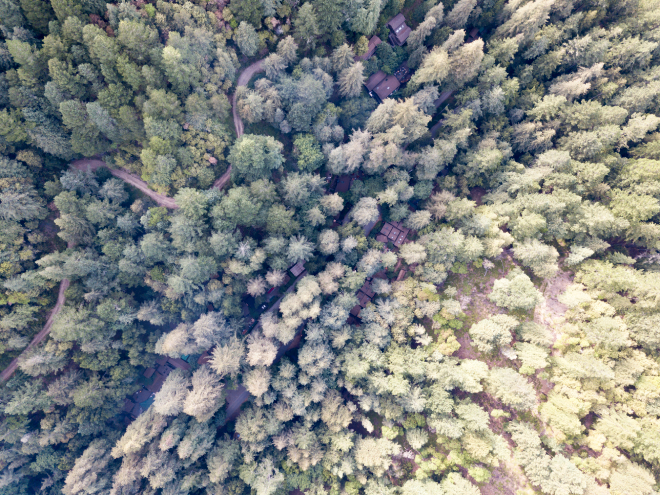
The lack of official information, the closed format of the meetings, and the historical makeup of the membership have kept interest in the club alive for more than a century.
Over time many interpretations and theories have grown around it, but the documented part of the story remains fairly limited and, for the most part, factually grounded.