Crewed lunar bases may arrive within a decade. A year on the Moon is not a romantic vacation with Earth in the window. It is a hard test for the human body. Astronauts would face radiation, lunar dust, gravity about six times weaker than Earth’s, and a broken sleep cycle.
1. Sunlight is dangerous
On Earth, atmosphere and magnetic field act as a free giant shield. The Moon has no such luxury.
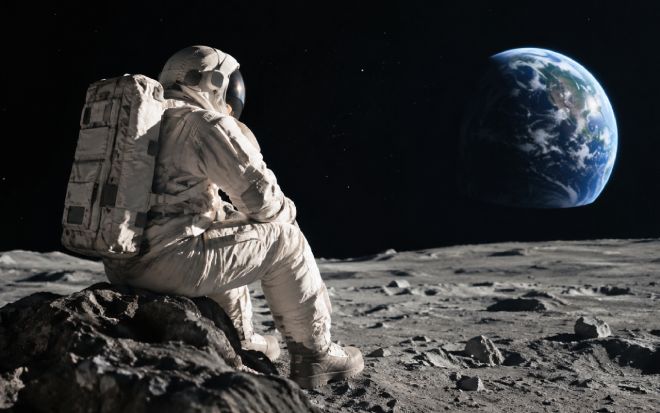
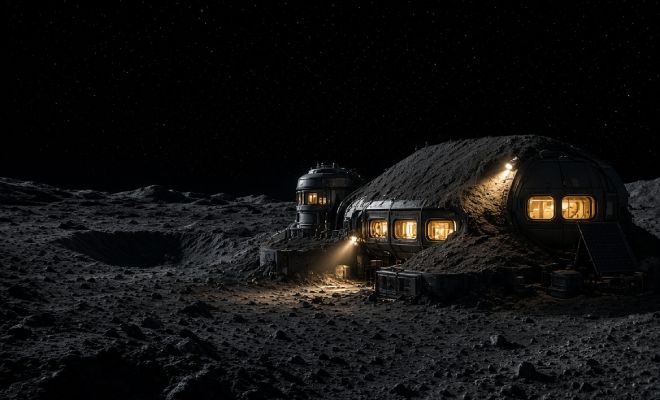
Outside shelter, people must be protected from cosmic radiation and solar particles. Strong solar flares are especially bad: they can spike radiation load fast.
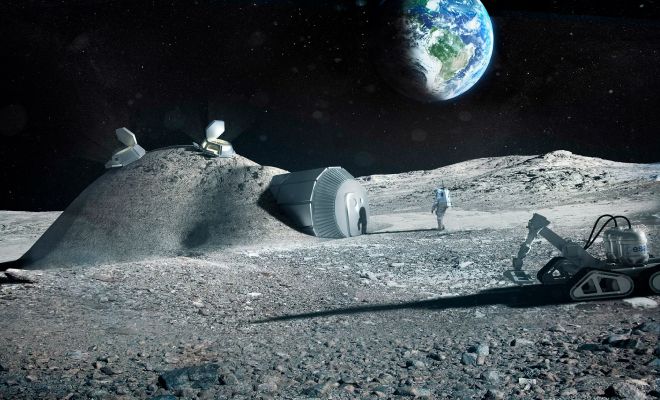
So a lunar base is not a glass house from a sci-fi film. Habitats need serious shielding, including with regolith, the local ground analog.
In other words, the ideal lunar suite will probably look like a bunker buried under rock.
2. The body starts saving on bone and muscle
Lunar gravity is about one-sixth of Earth’s. Jumping gets fun. Living like that for a year is less fun.
With lower load, muscles and bones get less stimulus, so the body remakes itself. On space stations this is well studied: astronauts train constantly to slow bone and muscle loss.
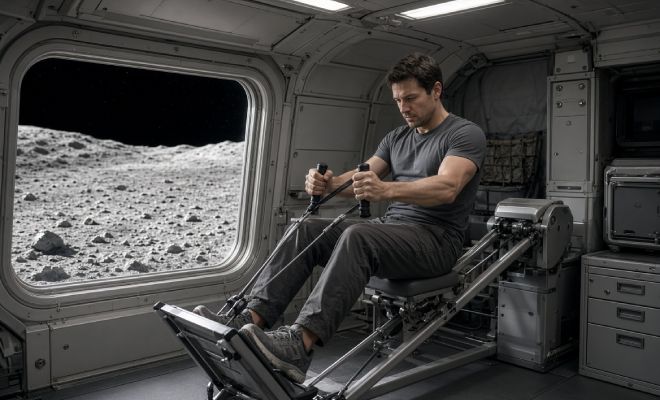
On the Moon it is harder still, because after return to Earth the body must work in full gravity again.
It is fitness in reverse: spend a year where everything is too easy, then come home where your own body suddenly feels heavy.
3. Lunar dust is worse than your vacuum
Regolith looks harmless until you live with it. Lunar dust is very fine and abrasive. It clogs gear, sticks to suit surfaces, and is a problem for machines and people.
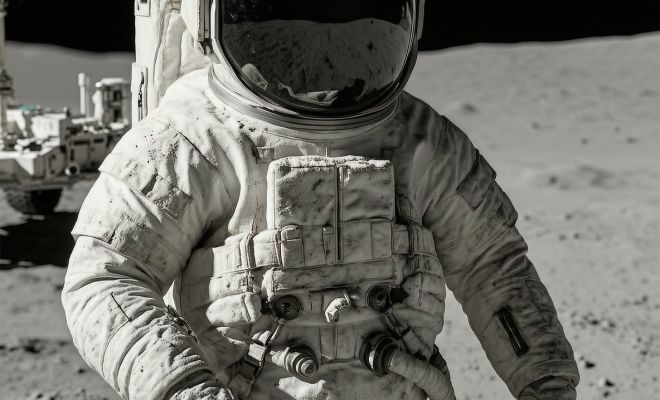
It also clings to surfaces because of the lunar environment.
For future bases that is a separate engineering headache: you need not only to go outside, but to come back without dragging a kilogram of lunar sand into the bedroom.
4. Day lasts almost two weeks. Night does too
On the Moon, one full cycle from sunrise to sunrise takes about 29.5 Earth days. Near the lunar equator, a solar day lasts about two Earth weeks, then a night of similar length.
For humans, that is far from a familiar 24-hour day.
Sleep, lighting, temperature, and power have to be managed artificially. Night is especially harsh: the surface cools sharply, and there is no atmosphere to smooth temperature swings the way Earth does.
So ordinary insomnia becomes an engineering problem worth billions.
5. The mind gets its own lunar crater
The most underrated problem is isolation. People live in a small closed space, far from nature, friends, and the option to walk to a shop. Even a link to Earth does not replace other people in the room.
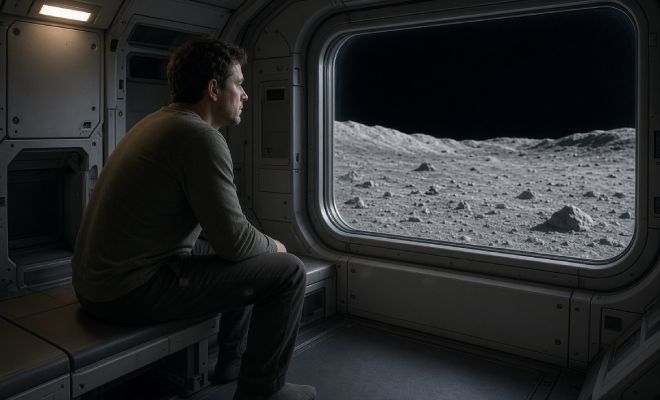
One-way signal delay between Earth and Moon is small, about 1.3 seconds. That is not the multi-minute wait of Mars. It still does not make a bunker apartment 384,000 kilometers away feel cozy.
Humans are odd animals: you can spend a week wanting to be left alone, then miss a random chat with a cashier.
6. Ordinary tech becomes a survival issue
On Earth a broken AC means you call a technician. On the Moon a critical life-support part fails and there may be no technician at all.
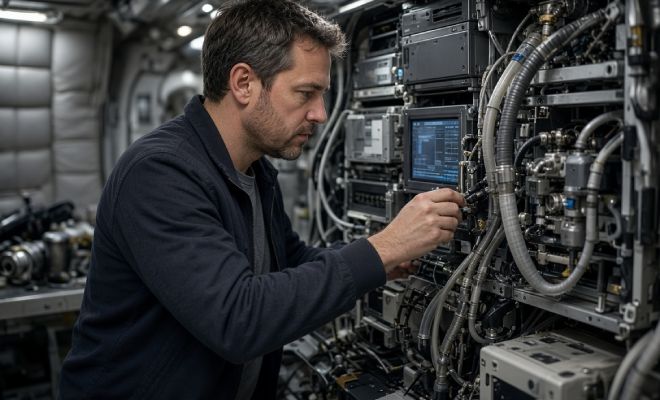
A year of autonomy needs redundancy for almost everything: power, water, air, comms, thermal control, and repair gear.
Any small failure can become a large one, because the nearest service center is about 384,000 kilometers away. And yes, “reboot the router” gains a whole new level of drama on the Moon.
7. The strangest part starts after return
Paradoxically, a year on the Moon does not end when the ship lands on Earth.
After long time in low gravity, the body needs to adapt again. Changes in muscle, bone, balance, and the cardiovascular system do not vanish on touchdown.
Radiation dose and long-term effects remain open questions. That is why long lunar missions are treated not only as transport problems, but as serious tests of human limits.
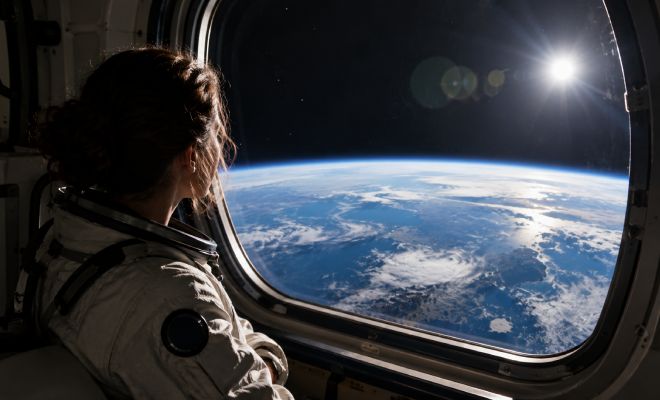
The Moon looks beautiful from Earth because it is far away. At 384,000 kilometers romance fades fast: first you watch the blue ball in a black sky, then you check the life-support filter, then you find out who tracked dust into the airlock again.
The Moon is a great place for a photograph. For a year of living, it still has to pass the interview.