You know the scene: you check the mirror before leaving home and feel fine about how you look. Then someone snaps a phone photo and a stranger stares back from the screen. Most people feel that discomfort.

Psychology: the mere-exposure effect
The main psychological reason is the mere-exposure effect. People prefer what they see most often. For a lifetime we see ourselves in mirrors, so the brain treats the mirrored face as the “correct” one. But faces are asymmetric: one brow a bit higher, a smile slightly off-center, nostrils that do not match.

On a normal photo we see the face others see, which feels “wrong” to the brain. It reads that mismatch instantly and answers with mild rejection.
Optics: focal length and perspective distortion
The second cause is physics and phone cameras. They use wide-angle lenses (about 24–28 mm) so more of the scene fits in frame. Shoot a close portrait with that lens (arm’s length) and strong geometric distortion appears:
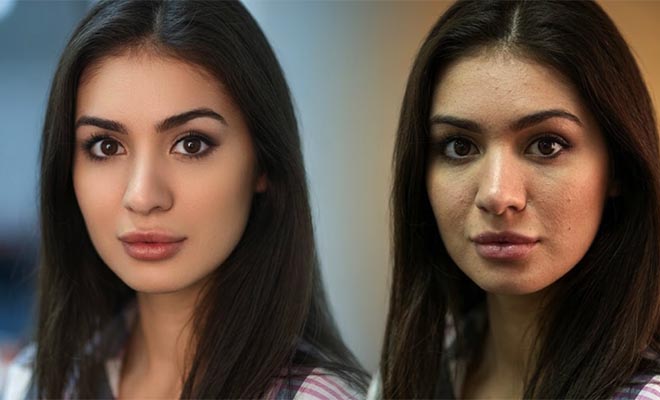
Features closer to the lens (nose tip, chin) look larger. Features farther away (ears, cheekbones) recede and look smaller.
Pros shoot portraits on longer lenses (85–135 mm) from greater distance. That optics flattens perspective and keeps real facial proportions.
Motion versus stillness: 3D versus 2D
In a mirror we see ourselves in volume and in motion. The brain averages expression while we smile, fix hair, or tilt our head. In front of a mirror we also pick a flattering angle and tense useful facial muscles without noticing.
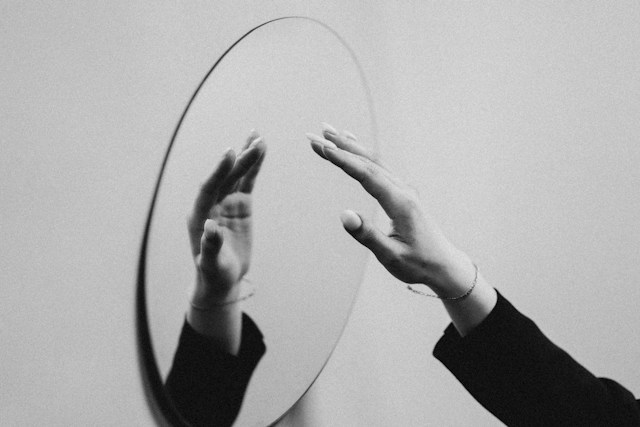
A camera freezes a flat 2D frame in a hundredth of a second. The shot locks micro-expressions, awkward mid-blinks, and hard shadows we never catch in a moving mirror reflection.
Light and volume
Indoors by a mirror, light usually falls at a soft angle, casting natural shadows that shape the face. Front cameras and phone flashes do the opposite: flat light that kills volume. Flash lights every skin texture and stresses asymmetry, making the face look flatter and wider than it is.
So feeling “ugly” in photos is not a flaw in your looks. It is short-lens optics plus the brain’s reaction to an unfamiliar view of your own face.