In the USSR a moped in the courtyard rarely just stood there. People started it: by pushing, on the pedals, sometimes with several tries in a row until the engine finally caught and began to pull. For a second the yard changed: the familiar crack of a two-stroke motor, the smell of gasoline, and almost always someone nearby watching with mild envy.
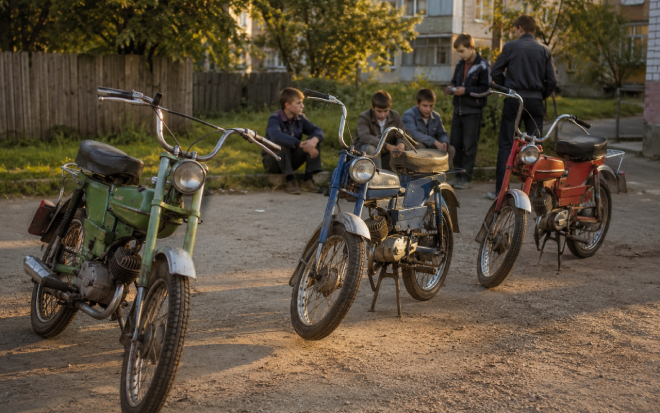
In the late USSR a moped sat somewhere between a toy and full transport. Not a luxury, but not an ordinary purchase either. People did not choose by specs or compare models. More often they took whatever they managed to get. Sometimes that was luck, sometimes a long chain of talks, waiting, and "come back tomorrow." Just owning a moped already shifted your standing in the courtyard.
By the late 1980s the Delta showed up more often, one of the most recognizable late-USSR models. It was built at the Riga plant Sarkana Zvaigzne. For its time it looked clearly more modern than earlier machines: a cleaner body, a proper riding position, an engine of about 50 cc, and a top speed of 40 to 50 km/h. After early mopeds with pedal starts, this already felt different: a machine you could simply ride.
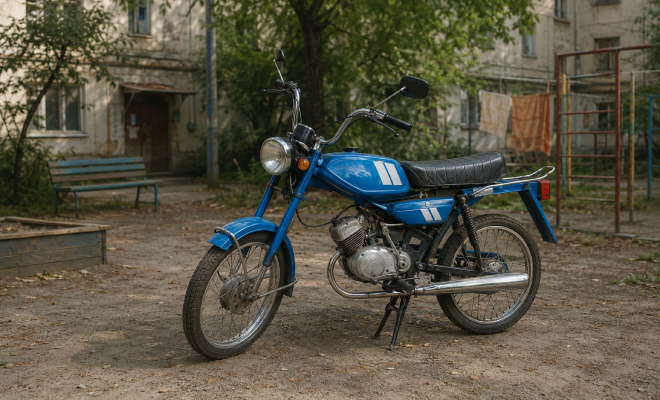
But the real difference between models showed not in looks, but in how they were used. By then the Riga line had become almost a standard. Especially the Riga-12 and its versions: simple, noisy, but very tough. They could be fixed in a garage or right in the yard, often without a manual, by feel and by sound. They did not like neglect, but they forgave a lot: cold starts, bad gasoline, and imperfect service.
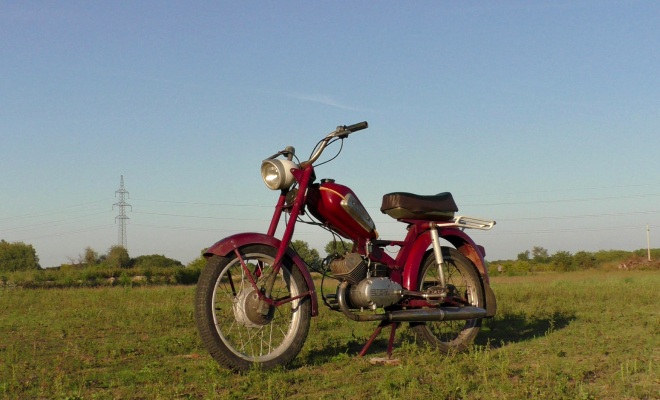
Karpaty-2 mopeds were seen differently. They looked heavier and more "grown-up" and often became projects for mods. Owners fitted other handlebars, added racks, swapped seats, and repainted. The factory look rarely lasted long. Almost every machine slowly turned into a personal version built from whatever parts and imagination were available.
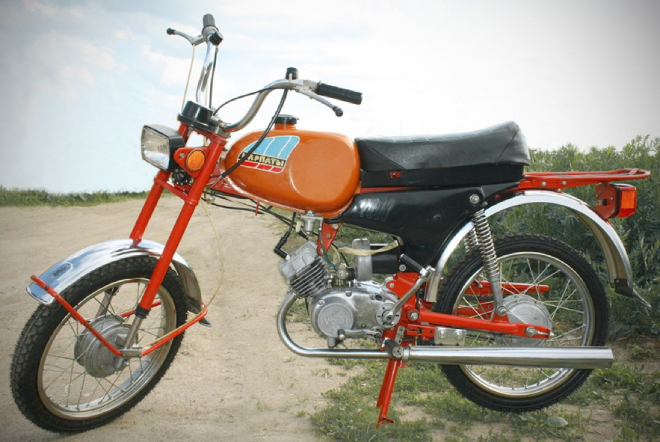
Karpaty-2 moped. Photo: Viktor Khodyeyev, public domain, Wikimedia Commons
Interestingly, a moped in the USSR was almost never treated as entertainment. It was everyday utility transport, sometimes the only way to cover those 10 to 15 kilometers to work, a shop, or the next town quickly. That was its main role: it did not make life prettier. It simply made life possible where other transport barely existed.
Today, in 2026, these mopeds return in another role. People restore them, pull them from garages, and show them at retro festivals. Delta, Riga, and Karpaty have become part of the visual memory of an era when machines sat closer to their owners and demanded their involvement. The further that time recedes, the clearer the interest in these simple, noisy, stubborn machines becomes.