Many people notice a strange coincidence: talk with friends about a new smartphone, a coffee machine, or a vacation destination, and similar products start showing up in ads almost at once. No wonder so many suspect that smartphones secretly eavesdrop on their owners. But can a device really record conversations while it simply sits on the table nearby?

Technically, that capability exists. What is more, a modern smartphone stays ready to hear commands for its voice assistant. That is why devices can react to phrases like “Hey Siri” or “OK Google” even when the screen is locked.
There is an important nuance, though. Constantly waiting for a command does not mean the smartphone continuously records every conversation and sends it to the internet. Usually the system analyzes sound locally on the device and starts full processing only after it recognizes a wake phrase.
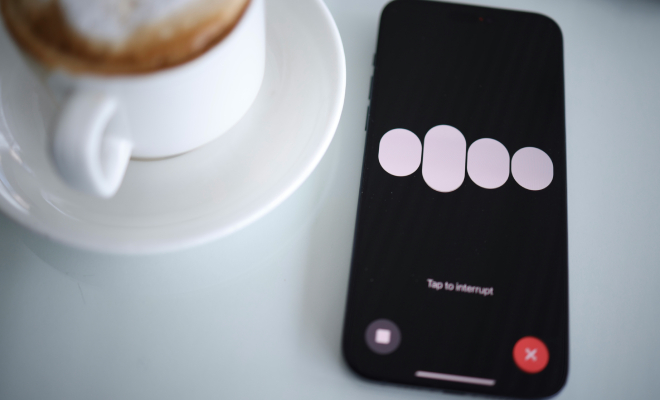
Still, history shows that privacy questions around voice assistants did not appear out of nowhere. In 2019 Apple was at the center of a major scandal after reports that some recordings linked to Siri were listened to by employees of outside contractors.
Later, similar practices were acknowledged by other tech giants, including Google and Microsoft. The companies said the goal was to improve speech recognition quality, but the situation sparked a serious public debate about the limits of digital privacy.
Interestingly, many such incidents were caused not by deliberate recording but by mistakes in the assistants themselves. Algorithms sometimes treat completely different words, or even random combinations of sounds, as an activation command. As a result, the device may start processing a voice request even though the person never meant to address the assistant.
There is another little-known fact. Technical specialists have repeatedly shown that speech recognition systems can react to sounds people hear as ordinary noise. Some experiments even pointed to the possibility of delivering voice commands as signals that are almost inaudible to human hearing. That is why developers keep improving protections against false triggers.
But if smartphones are not running total surveillance of users, why is advertising sometimes so precise? The answer is usually much simpler. Modern ad platforms get huge amounts of information without using the microphone at all. Search queries, browsing history, online purchases, visited sites, device location, and app activity let algorithms build a very detailed digital portrait of a person.

Cybersecurity specialists note that ad platforms usually already have enough collected data. Search history, purchases, and movement patterns give algorithms so much information that constant hidden eavesdropping would look more like an unnecessary and expensive tool.
There is also a psychological explanation for such coincidences. After a person pays attention to a topic, the brain starts noticing everything related to it more often. So an ad that would once have gone unseen suddenly jumps out. This effect is known as the Baader-Meinhof phenomenon, or frequency illusion.
Experts agree: modern smartphones really can analyze ambient sounds to run voice assistants, and accidental activations still happen from time to time. But there is still no proof of mass covert eavesdropping on users for advertising. The paradox is that ad algorithms often do not even need to hear our conversations to know a great deal about us.