A monowheel, glowing car tires, and a car steered with a joystick long before remote-control ideas went mainstream. Inventors of the past did not always predict the future, but they often dared to test the strangest ideas. Many of these devices reached prototypes and patents, and some turned out surprisingly close to technologies we use today.

Tires that glowed at night
In 1961 Goodyear unveiled a technology that would look perfect in a cyberpunk car ad today. The company made translucent tires from a synthetic material called Neothane and fitted light sources inside them.
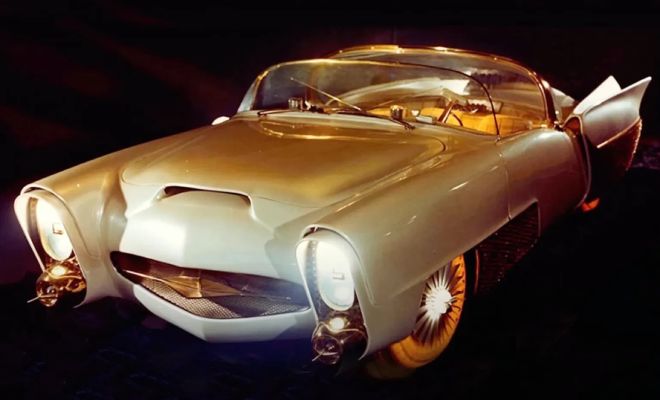
The tires could come in different colors and truly glowed while moving. Goodyear even used them on show cars, most famously the Golden Sahara II. The company saw more than decoration: the lights could improve visibility and signal braking.
The technology never reached production cars. Grip, heat, durability, and cost got in the way. In 2026 the story got a fresh chapter: Electronic Design devoted a separate piece to researching these tires.
A coffee maker for the Volkswagen Beetle
In 1959 there was a car accessory that today looks almost like a parody of road comfort. The Hertella Auto Kaffeemaschine was a small coffee maker that mounted right on the Volkswagen Beetle dashboard.
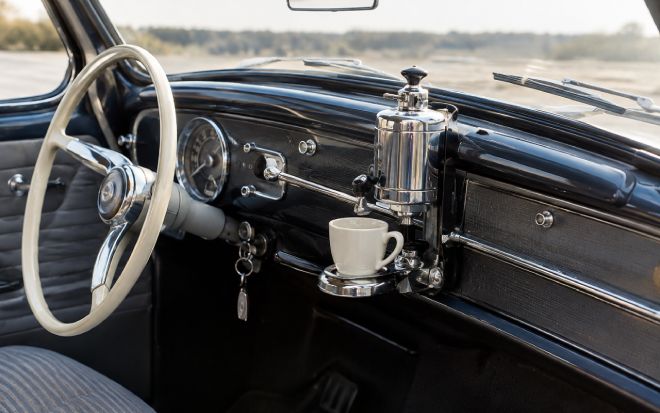
It plugged into the car's electrical system and heated water during the drive. A few surviving examples make clear this was a real device, not a magazine concept.
It was a long way from today's built-in coffee machines: the design was crude and had obvious safety issues with hot liquid in a moving car. But the idea itself proved surprisingly durable.
The automotive monowheel
In the 1930s British inventor John Archibald Purves experimented with transport that literally looked like a giant wheel with a person inside.
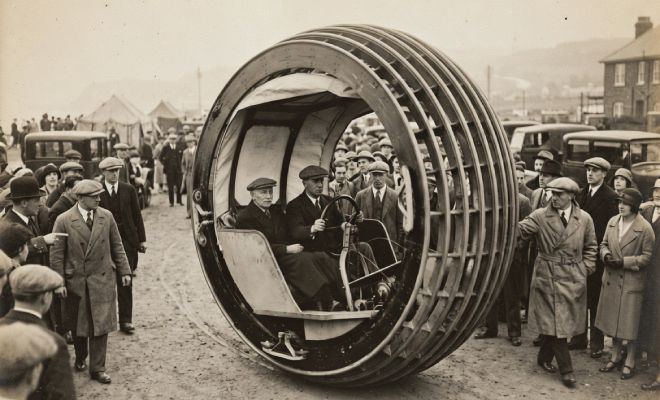
The Dynasphere was meant to move with an engine mounted inside the structure. Purves received a patent, and an experimental machine was actually built and tested.
The problem was obvious: one wheel looks great in a photo, but is far worse for controlling real transport. The idea stayed an exotic experiment.
Interestingly, decades later single-wheel transport came back, this time as electric self-balancing monowheels.
A radio-controlled lawn mower
A modern robotic lawn mower feels ordinary now. But the idea of taking the person off the controls appeared much earlier.
As early as 1952, a U.S. patent application was filed for a radio-controlled lawn mower. The operator was meant to steer remotely, including direction, speed, and stop. The patent was granted in 1955.
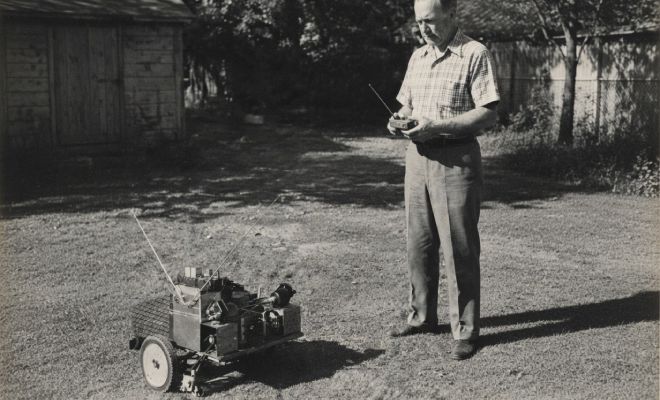
Later came more complex designs, including radio control with separate safety systems. A 2025 study of robotic mowing history also notes mid-20th-century experiments with remote lawn mowers.
So this story was not so wild after all: modern robotic gear really did arrive at the same idea.
A plane that could turn into a car
In 1950 the American Airphibian received certification from U.S. aviation authorities. It was a real airplane that, after removing the wings, tail, and propeller, became a car.
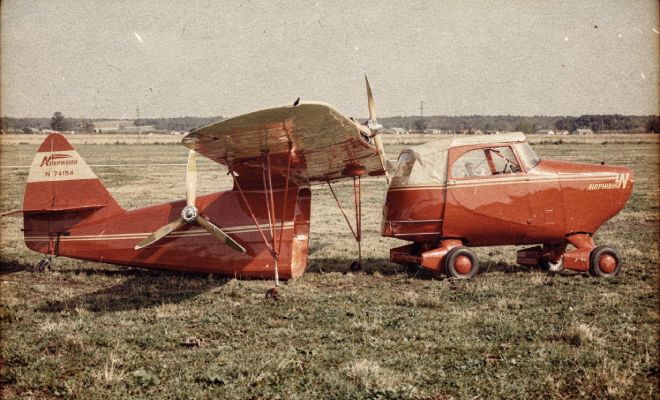
Robert Fulton Jr. designed it. The idea came from a practical problem: after landing, a pilot still had to get from the airport into town. Why not arrive in the same machine?
The Smithsonian calls the Airphibian the first roadable aircraft to receive that kind of certification. It never became mass transport. But unlike many fantasy projects, this was not a magazine drawing: it was a machine that really flew.
A plane without a tail
In 1932 American designer Waldo Waterman showed an unusual aircraft called Whatsit. It had no conventional empennage, and the machine was meant to make flying as simple to control as driving a car.
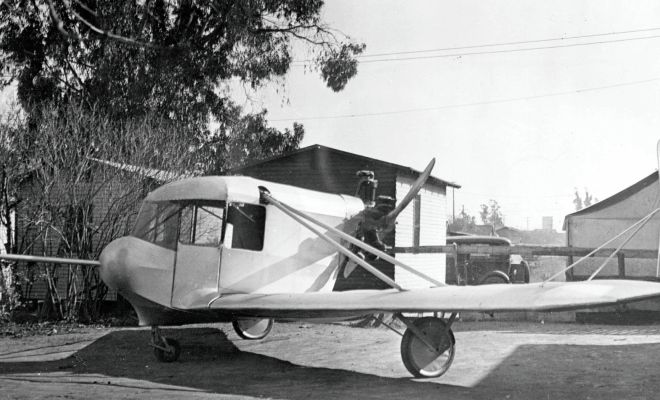
The name came after the first showings: spectators and reporters literally asked, "What is it?" The Smithsonian notes that testing brought stability problems and landing crashes. The project then continued in a later design.
Today tailless aircraft surprise no one, but in the 1930s such a layout looked completely unfamiliar.
A propeller hat that needs no wind
Sometimes a strange invention really is almost a joke. In the 1950s American inventor Jerome Lemelson patented a hat with a propeller you could spin with your own breath through a tube. Instead of a propeller, you could fit a whistle.

The most interesting part is not the toy, but its author. Lemelson later received hundreds of patents, including work on automation and machine vision. The Smithsonian holds his archive of more than 600 patents.
The story shows that an odd idea alone says nothing about an inventor's ability.
A route map right on the dashboard
In 1939 inventor Solomon Adler patented a car device that combined a map with route guidance. Paper information was meant to scroll on a special roller mounted on the dashboard.
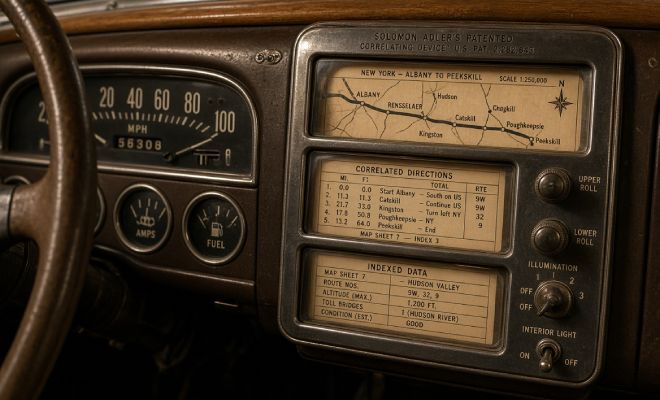
Today the design looks like a very early navigator, though it had no electronics. The Smithsonian confirms the patent and notes that the device never went into production.
GPS was still decades away, but the idea of putting the route right in front of the driver was already there.
A car with a joystick instead of a steering wheel
Another project that unexpectedly echoes modern cars appeared in the Golden Sahara II. On this experimental car, the usual wheel was replaced with an unusual control system, including a central joystick. Its movements handled steering, acceleration, and braking. The car also got sensors that could trigger automatic braking when an obstacle was detected.
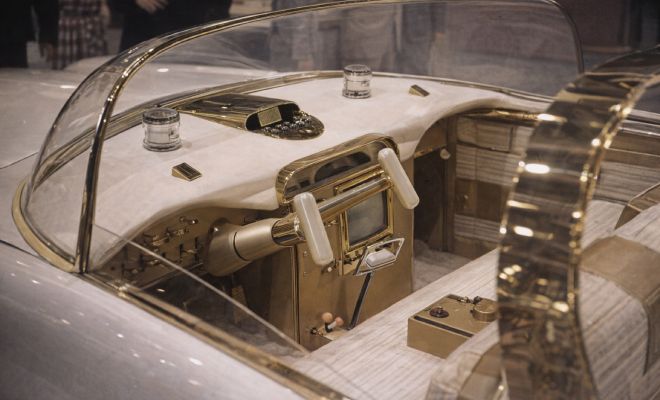
For the late 1950s this looked like pure science fiction. Today some pieces of that concept surprise no one.
That is why the strangest inventions of the past matter as more than a cabinet of curiosities. Sometimes you can see an early version of a technology that will feel ordinary half a century later. Inventors of the past simply did not know which of their ideas would stick.