Going over a waterfall carries an extreme risk of severe injury or death. Yet in rare cases, people have survived drops of dozens of meters. Height is not the only danger. Below the falls may be rocks, powerful underwater currents, whirlpools, and aerated “boiling” water that makes staying afloat extremely difficult.
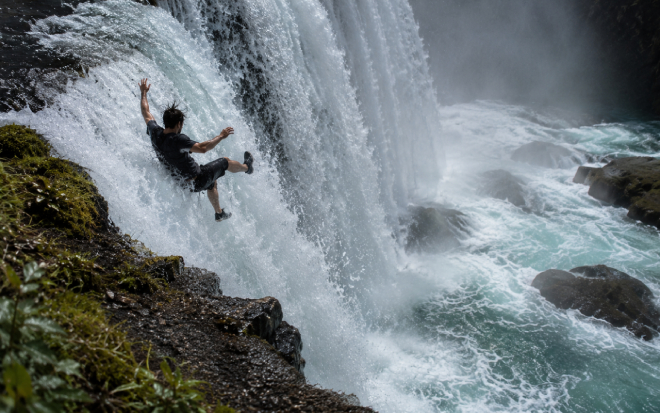
Under these conditions, hitting the water is not simply an impact but a complex physical event in which fractions of a second matter. A whole set of factors determines what happens next.
What happens when you go over a waterfall
Even relatively “short” waterfalls can send a person into the water at speeds comparable to a car crash.
From a height of around 30 meters, impact speed can reach roughly 80–90 km/h. As the height increases, so does the risk of injury—not only from striking the surface, but also from submerged rocks and recirculating currents.
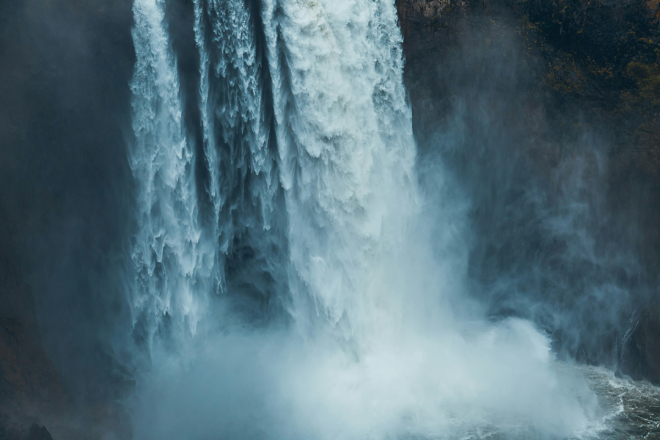
The key problem is that water stops acting like a cushion. At high speed, it behaves almost like an incompressible barrier, bringing the body to an abrupt stop.
Why the water below is more dangerous than it looks
At the base of a large waterfall, hydrologists call the recirculating zone a hydraulic jump. This powerful churn pulls objects back under the falling water, traps them in turbulence, and creates a washing-machine effect.
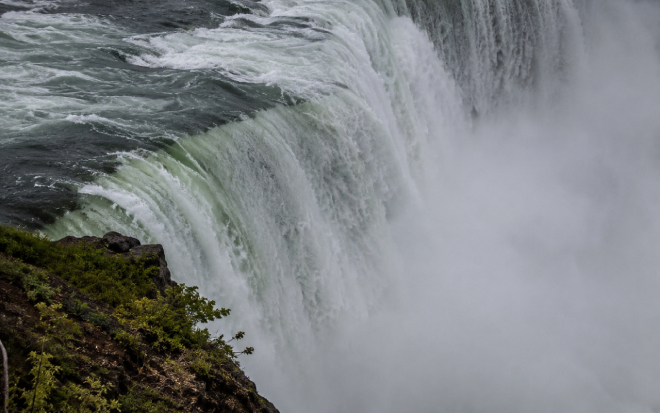
Even a strong swimmer can lose all sense of direction within seconds.
The riverbed adds another hazard. Many waterfalls hide large boulders and uneven surfaces beneath the falling water, invisible from above.
What to do while falling
If the fall cannot be avoided, the priority is to reduce the risk of catastrophic injury as much as possible.
Rescuers advise trying to get vertical and entering the water feet first. Keep your legs together and brace your core. This position helps distribute the impact and reduces the risk of head and spinal injuries.

Keep your arms close to your body or use them to protect your head and face from rocks and branches. Just before impact, close your mouth and hold your breath to keep water out of your airway.
Full control of your body is not always possible, especially if air or water is spinning you around. Even so, trying to remain vertical is the safest option.
What to do after hitting the water
If you survive the impact and remain conscious, get out of the falling-water zone as quickly as possible.
Below a waterfall, countless air bubbles make the water less dense, so staying afloat is harder than in normal water. The powerful flow may repeatedly push you back beneath the falls.

Rescuers advise against trying to swim upstream against the current. Move sideways instead and aim to escape the turbulent zone. Horizontal movement usually offers the fastest route out of danger.
If the current drags you under, try to stay oriented and look for the direction where the flow weakens. Panic burns through your strength fast.
Real survival stories
One of the best-known cases is that of seven-year-old Roger Woodward, who was swept down the Niagara River and over Horseshoe Falls in 1960. He survived and was rescued, becoming one of the most famous people to live through the drop without protective equipment.
Another documented incident occurred in 2012 near Bridal Veil Falls in Canada's Niagara region. A man fell into the lower pool and became trapped in a powerful recirculating current. Rescue services reported that he suffered injuries and hypothermia but was pulled out alive and taken to hospital.
Cases like these are exceptionally rare. Most have a far worse outcome.
What are the chances of survival?
There is no universal answer. The outcome depends on many factors: the height of the fall, water depth, rocks, physical condition, and even body position during the final seconds before impact.
That is why specialists stress that no one should count on surviving a waterfall. But once a fall is underway, staying in control, entering the water in the best possible position, and escaping the strongest current quickly may improve the odds.