You can make a hole in metal without a drill bit. Almost any material can be tackled: use a punch on thin sheet, or a hacksaw or chisel on heavier stock. The key is choosing the right method for the metal's type and thickness.
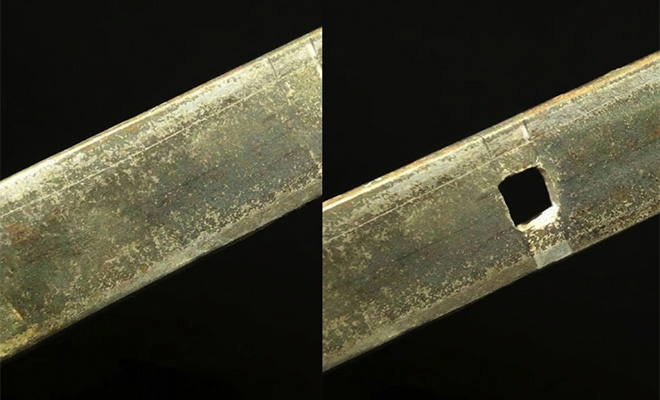
How to punch through thin metal without a drill bit
This is the fastest way to make a small round hole in sheet steel, aluminum, or copper up to 1–1.5 mm thick.
What you need: A pin punch of the correct diameter, a heavy hammer, and a wooden block or lead backing.
Step by step:
- Place the sheet on the end grain of a wooden block. Hard wood supports the metal while allowing the tool to pass through.
- Mark the center of the hole.
- Hold the punch perfectly vertical to the surface.
- Strike the end of the punch once or twice with sharp, heavy hammer blows. The tool works like a die.
- Turn the sheet over and file away the burrs.
How to make a large hole
If the hole is wider than 10–15 mm, one blow with a punch will not do it. Instead, cut it out along its outline.
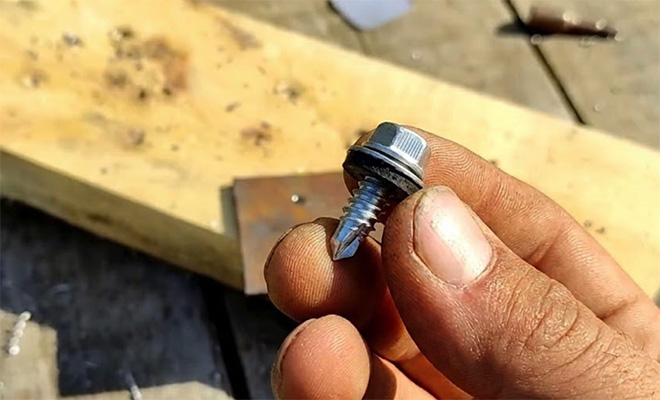
What you need: A center punch, a narrow cold chisel (or a sturdy flat-head screwdriver you do not mind sacrificing), a hammer, and a file.
Step by step:
- Draw the outline of the hole on the metal.
- Use a sharp center punch to make a chain of deep dimples around the entire inside edge of the line. Space them as closely as possible.
- Use the chisel and strong hammer blows to cut through the bridges between the punched points.
- The center will drop out, but the edges will be rough. Shape the hole with a half-round or round file.
How to punch holes in metal profiles and sheet
If you are working with galvanized steel, corrugated sheet, or metal drywall studs, an ordinary hammer can badly deform the part. The ideal tool here is a hand-operated sheet-metal punch.
What you need: A hand punch.
Step by step:
- Mark the hole location.
- Slip the jaws over the edge of the metal part, aligning the punch pin precisely with the mark.
- Squeeze the handles firmly.
The tool produces a clean through-hole without burrs or sheet deformation. Its main limitation is reach: you can only make a hole close enough to an edge for the jaws to fit.
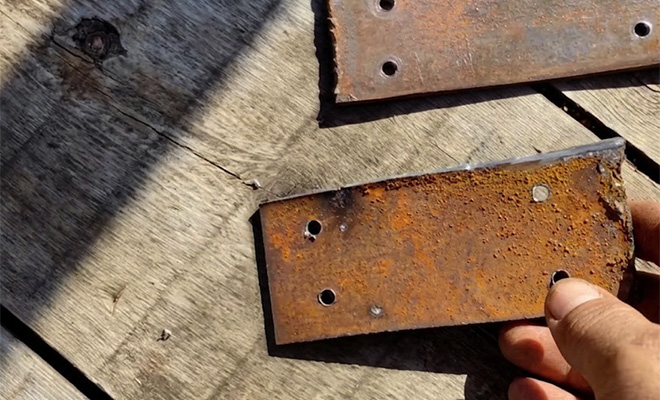
How to make a hole in thick metal
On metal 2–3 mm thick or more, basic hand tools are not enough. If you have a welder, you can simply burn a hole through it.
What you need: An inverter welder, electrodes (preferably thin ones, such as 2 mm), and protective equipment including a welding helmet and gauntlets.
Step by step:
- Set the welder to a higher current than you would use to weld material of this thickness.
- Strike the arc directly in the center of the mark.
- Hold the electrode perpendicular to the workpiece, effectively pushing the arc into the metal until it melts and runs through.
- To enlarge the hole, move the electrode in circles from the center outward.
Once the metal has cooled, knock off the slag and scale with a hammer and chisel. The edges will be melted and will need substantial finishing with a round file.
Chemical etching
This method is invaluable when you need a cutout, shaped opening, or exceptionally neat hole in thin metal—on a belt buckle or instrument case, for example—without applying mechanical force.
What you need: Copper sulfate and table salt (or ferric chloride), water, nail polish (or a permanent marker), and a plastic container.
Step by step:
- Thoroughly clean and degrease the metal workpiece.
- Cover the entire piece with a protective layer of nail polish or a heavy coat of waterproof marker.
- Use a sharp object, such as a needle or awl, to scratch through the coating precisely along the hole outline and expose bare metal. Keep the protective coating on the back intact.
- Prepare the solution: dissolve copper sulfate and salt in warm water at a 1:2 ratio, or use ready-made ferric chloride.
- Lower the part into the solution. The liquid will begin eating away the exposed metal. The process can take from tens of minutes to several hours.
- Once the etch has gone all the way through, remove the part, rinse it with water, and strip the protective polish with acetone.
Every method here produces fine metal chips, sharp burrs, or dangerous scale and spatter. Never work without safety glasses and heavy gloves.