Some palaces were never meant for daily life. In the early 1600s, the ruler of the small Indian state of Orchha raised a stone complex on the Betwa River for one political purpose: impress Emperor Jahangir. The emperor stayed a single night. The building still dominates the riverbank.
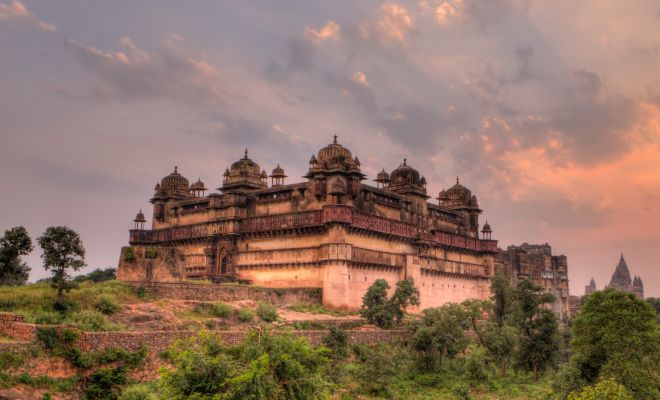
Today the complex is called Jahangir Mahal, in Orchha, Madhya Pradesh. Orchha kept a thin layer of autonomy under the Mughal Empire, but Delhi still set the terms. Bir Singh Deo, the local ruler, knew imperial favor outweighed gold. Instead of another gift chest, he ordered a palace.
Work moved at a sprint. Riverbank forest was cleared and laborers were pulled in from across the principality. Neighbors watched an empty shore turn into a monumental compound in only a few years, a flex as much as a residence.
A pleasure palace that looks like a fort
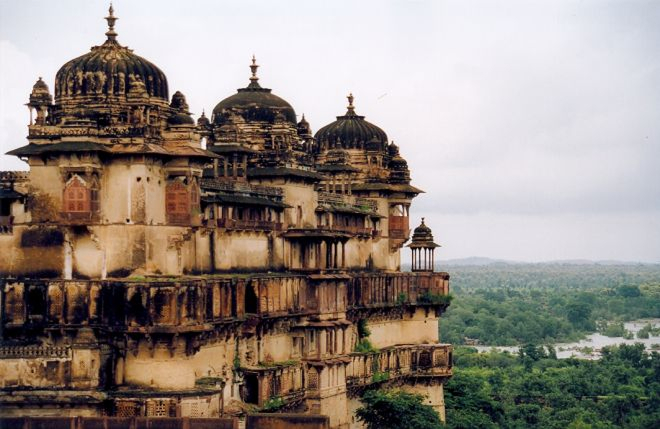
On paper it was a guest house. In silhouette it reads as a fortress: five stories, thick walls, towers sized for a siege. That was deliberate. Jahangir disliked soft stops. Luxury without security looked like a trap, so Orchha built both.
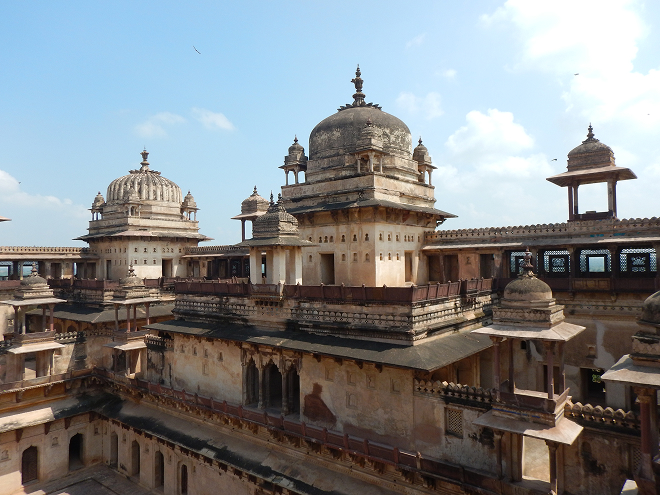
Inside, the scale keeps climbing. More than two hundred rooms once housed escorts, guards, servants, and rare guests. Under the main block runs a maze of corridors and halls. Historians argue over the mix of uses: stores, cool retreats, and possibly hidden routes.
Even now the underground levels stay cooler than the floors above, a quiet clue that early seventeenth-century builders understood natural ventilation better than many later houses.
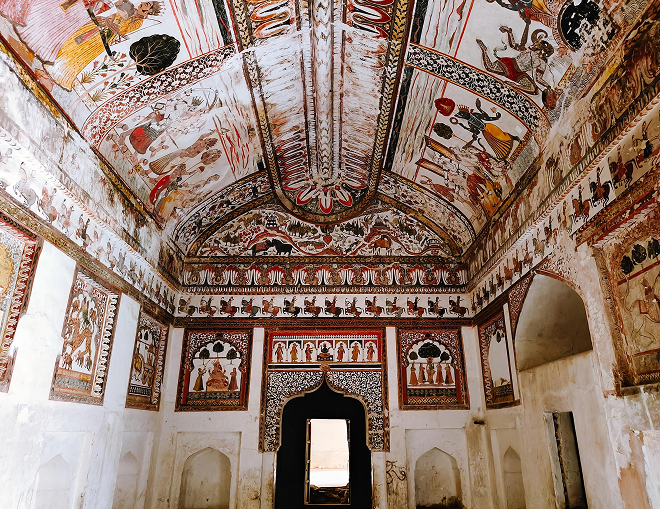
One night, then a longer afterlife
When Jahangir finally arrived, the visit barely matched the build. He slept there once and rode on. The story might have ended as the most expensive overnight stay in Orchha history. It did not.
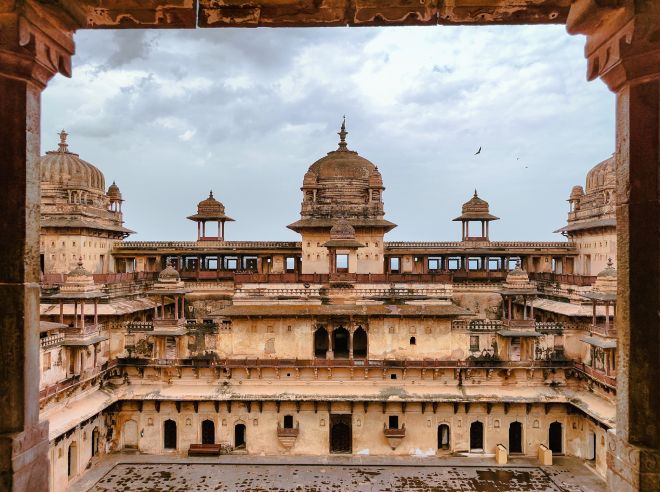
After the emperor left, Mughal courtiers used the palace as a stopover. Sources even link it to Mumtaz Mahal, later immortalized by the Taj Mahal. Whether her stay was brief or not, the association gives Jahangir Mahal extra weight.
The Archaeological Survey of India still protects the site. Tourists walk the courtyards, yet more halls close each year as stone fails faster than restorers can brace it. River damp does the rest. The palace stands anyway: proof that sometimes architecture is built for a single night that was supposed to rewrite a kingdom's luck.