Earth’s second-longest river, the Amazon, cuts about 4,000 miles (6,400 km) through dense jungle. Engineers raise cities in deserts and link continents with tunnels, yet here there is still not a single bridge. What stopped people from building crossings where they seem needed?
Hydrological chaos
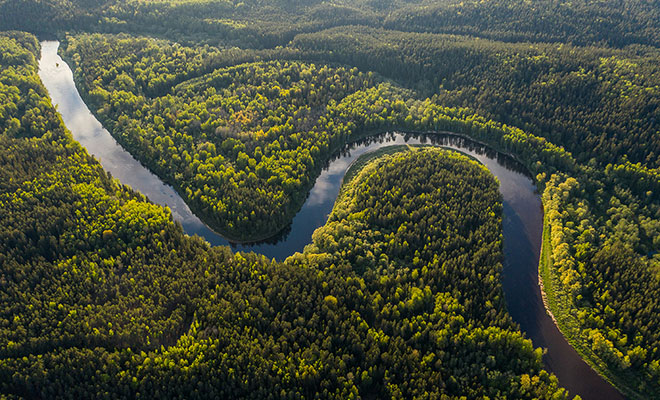
Builders’ main enemy is a wildly unstable channel. In the dry season the Amazon looks crossable. In tropical rains the water rises 9 to 10 meters. Yesterday’s bank becomes a sea up to 50 kilometers wide, and in extreme stretches up to about 190.
A bridge that long across swampy ground is not worth the build. Amazon banks are soft sediment the river keeps chewing away. A shifting fairway turns any fixed pier into a gamble: today the span sits over water; tomorrow the river simply moves aside.
Biological battering rams
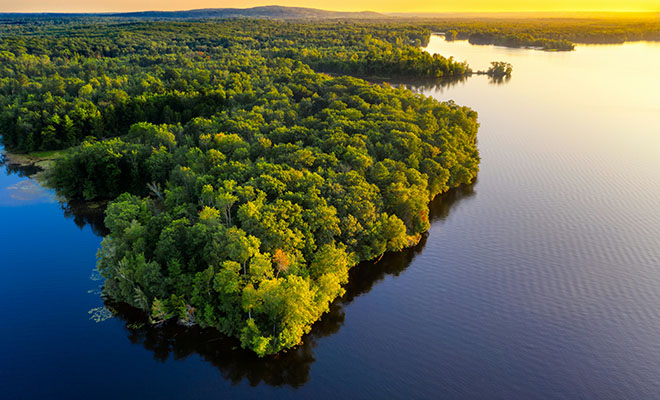
On top of engineering pain comes matupás: giant floating islands of woven plants, silt, and fallen trees. These “carpets” can span four hectares and run three meters thick. Multi-ton masses drift with the current and become wrecking balls. No standard pier is built for regular hits from a floating forest shoved by a full river.
Economic dead end and an ecological brake
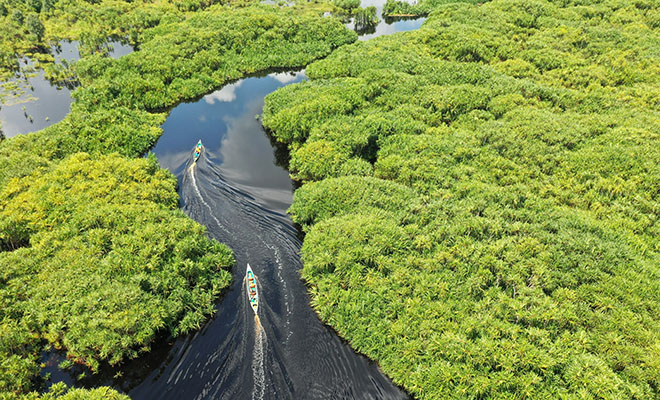
The Amazon corridor has almost no big cities tied by highways. For sparse villages, keeping a bridge alive in near-100% humidity and aggressive flora would wreck any local budget. The BR-319 highway failure, swallowed by jungle in about fifteen years, showed the point: nature reclaims faster than asphalt arrives.
Scientists increasingly call the missing bridges a natural fuse that keeps the basin from total clear-cutting and biodiversity collapse. Hard access remains one of the last reliable barriers against industrial takeover of the planet’s “lungs.”