We like to think the universe follows clean laws: stars form on schedule, galaxies ride a dark-matter scaffold, planets keep tidy orbits. Better telescopes keep finding objects that should not exist. From chemical freaks to a moon that fires electricity, here are seven cosmic oddballs that still break the models.
Przybyłski’s Star: an alien lab?
Stellar chemistry usually comes from light spectra. Most stars fit the grid. Przybyłski’s Star does not. Researchers found promethium in its atmosphere, a radioactive element with a half-life of only 17.7 years. Someone, or something, has to be making it right now.
Spectra also hint at plutonium, americium, curium, californium, and einsteinium. On Earth those superheavy elements only turn up in reactors. Either stellar chemistry is badly wrong, or this is a marker left by something far ahead of us.
Galaxy NGC1052-DF2: a ghost without dark matter
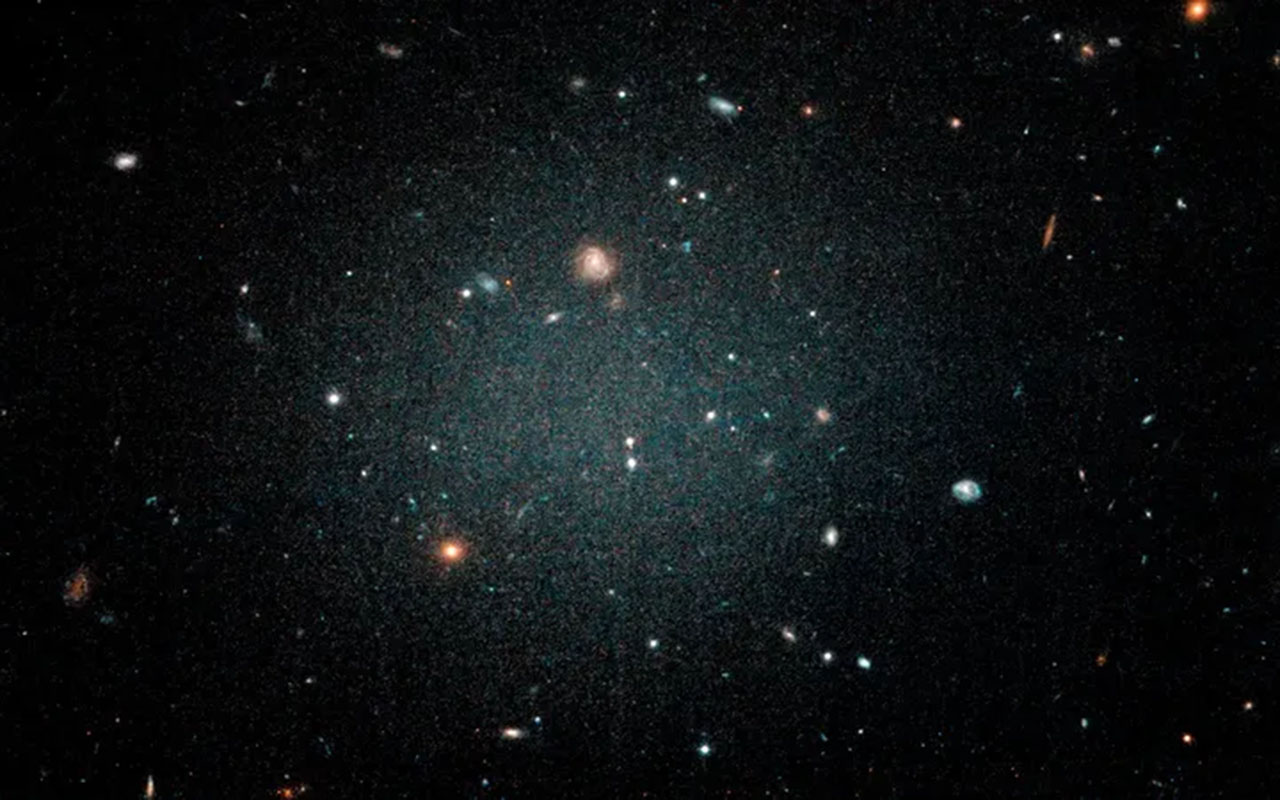
Modern cosmology rests on a claim: dark matter is the invisible gravity skeleton every galaxy needs. Its mass usually outruns normal matter about five to one.
Hubble found NGC1052-DF2. It is Milky Way-sized, yet holds hundreds of times fewer stars and about 400 times less dark matter than the math allows. It is so transparent that more distant objects show through it.
Galaxy NGC 1052-DF4: the system glitch confirmed
One dark-matter-poor galaxy could be a measurement fluke. NGC 1052-DF4 finished the argument. It is a near twin of the first anomaly. Two structures without the usual gravity scaffold show dark matter is not baked into every galaxy. The two ingredients can form apart.
The Red Rectangle: impossible geometry
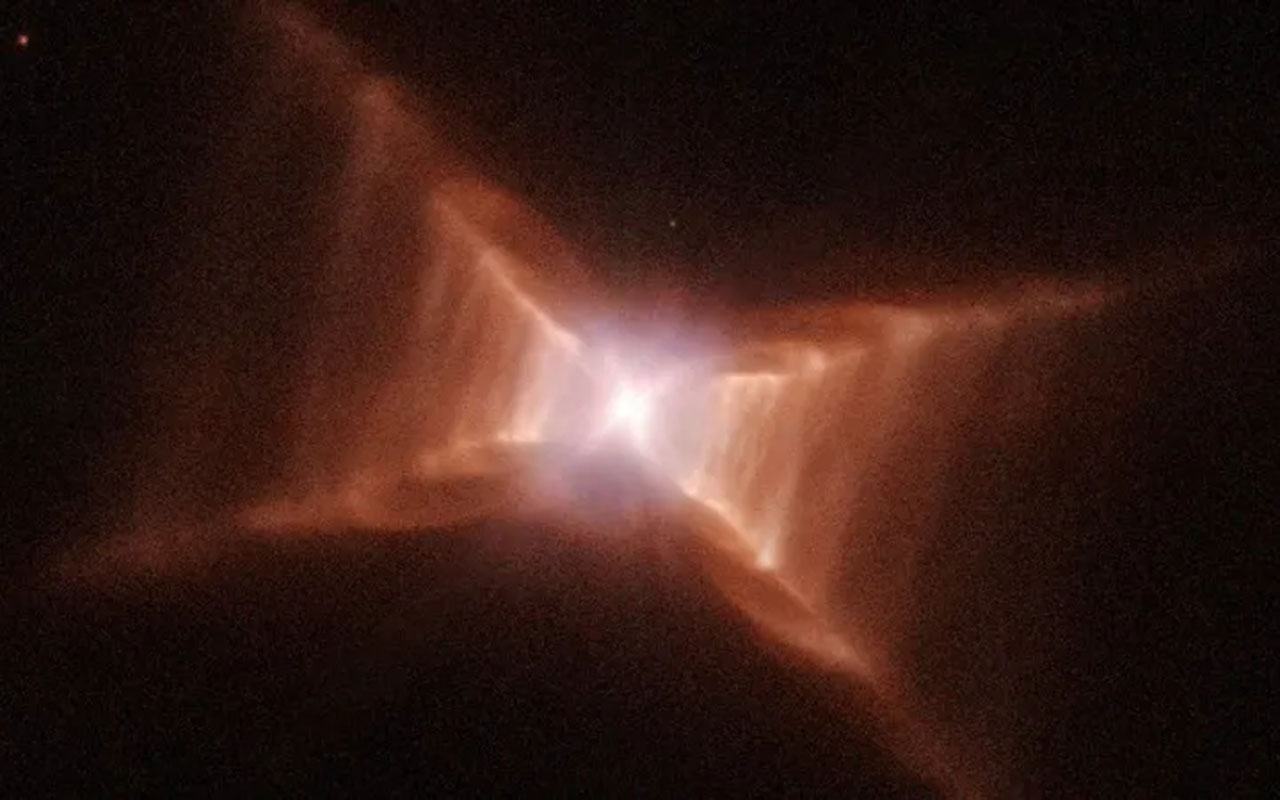
Nebulae are huge gas and dust clouds that usually look spherical, ringed, or cigar-shaped. The Red Rectangle breaks that soft symmetry.
Its structure looks like steep stair steps. Close-ups show nested gas cones, like wine glasses viewed from the side. The shape formed when a dying star shed outer layers in neat rectangular “smoke rings.”
Galaxy MoM-z14: an anomaly at the edge of time
MoM-z14 (“Mirage or Miracle”) is among the most distant galaxies known. Its light left when the universe was only about 280 million years old. Models say stars were just lighting up then and should not shine this hard. MoM-z14 is about 100 times brighter than theory allows and packed with nitrogen that should not have formed so fast.
System 2M1510: a perpendicular planet
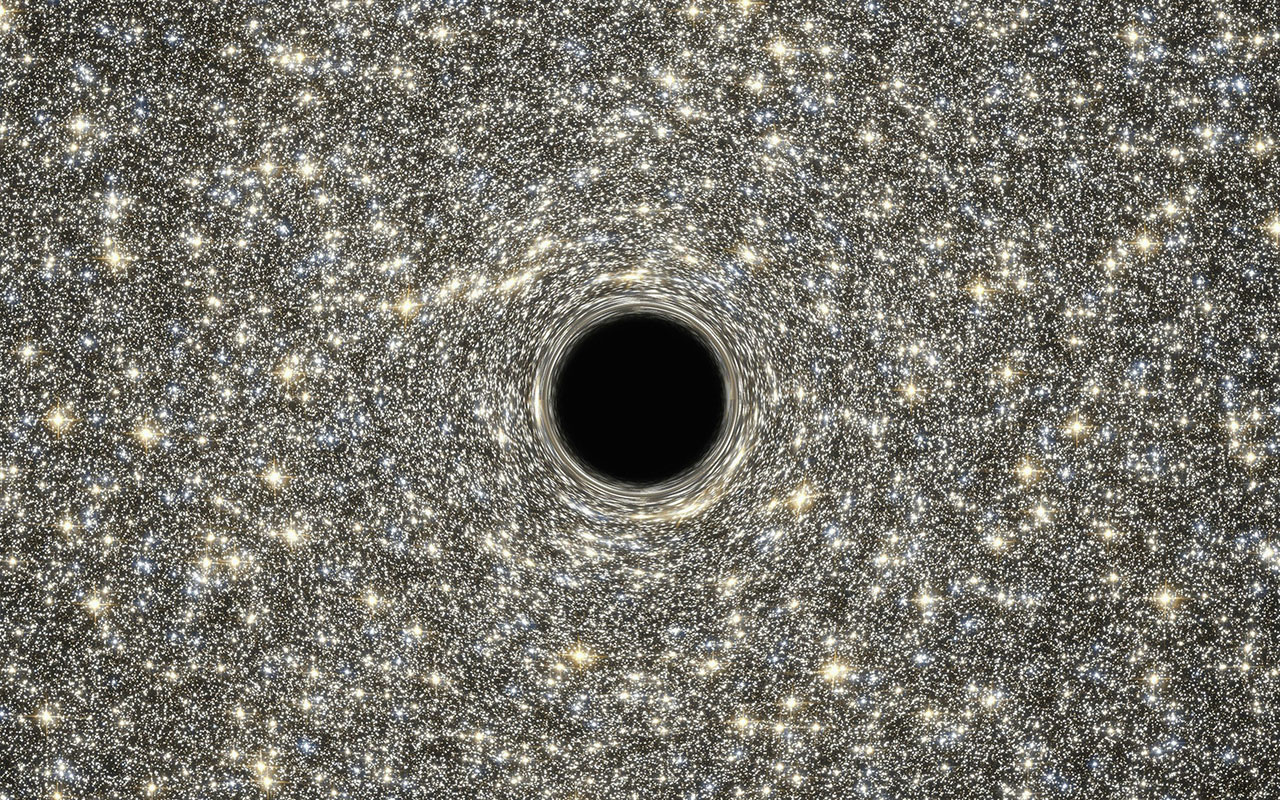
Space keeps proving the Solar System is not the template. Astronomers found 2M1510: two brown dwarfs (failed stars) orbiting each other.
Binary pairs are common. Here the stellar orbit keeps tipping under strong gravity. The only fit: an unseen exoplanet between them on an orbit locked at right angles to the dwarfs’ path.
Hyperion: Saturn’s electric sponge
Oddities are not only deep-space. Saturn’s moon Hyperion is about 40% empty space and looks like a sponge or pumice chunk. Its real trick is a fierce static charge. When Cassini flew past what looked like inert ice, Hyperion hit the craft with a 200-volt electron flood across roughly 2,000 kilometers of vacuum.