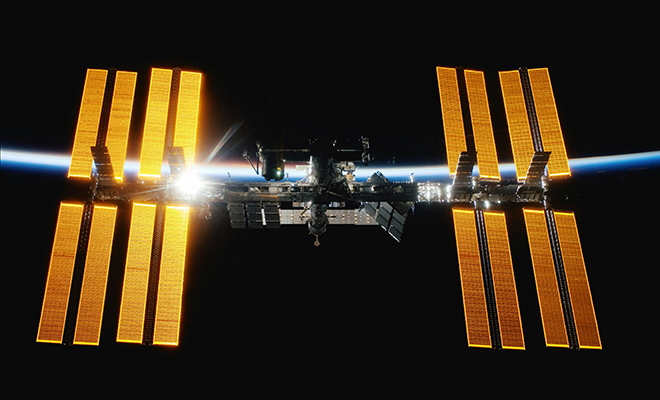
The International Space Station weighs about 420 tons and races around Earth at more than seven kilometers per second. It seems that if an astronaut on a spacewalk simply pushed it with their hands, nothing would happen. In absolute vacuum, though, physics works differently. Scientists recently ran the numbers to see whether a person could move the ISS by hand.
Simple recoil math
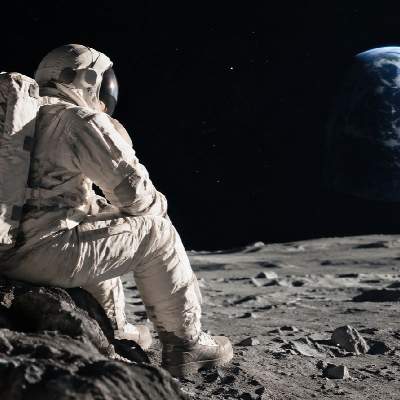
In orbit there is no air or Earth gravity to kill motion, so conservation of momentum rules. Every action has an equal reaction. When an astronaut braces against the ISS hull and pushes off, they hand the station part of their energy. The person drifts one way; the station drifts the other.
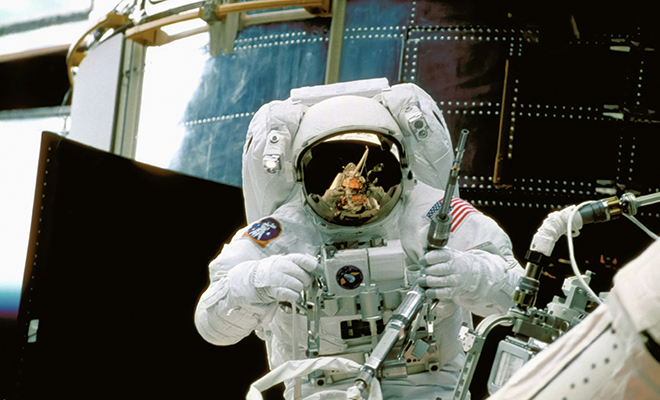
Say the astronaut pushes off at an average hand speed of five meters per second. The huge station’s speed would change by about one millimeter per second. You could not see that with your eyes, but physically the ISS has changed course. If the push is off-center, the station also starts a tiny spin.
On Earth, friction would erase that shove. In space there is nothing to damp it. After the astronaut’s push, the ISS would keep the new speed forever, slowly drifting off its original track.
In practice the station will not get lost. The ISS constantly takes small loads: thin atmosphere, solar wind, and crew walking, jumping, and training inside.
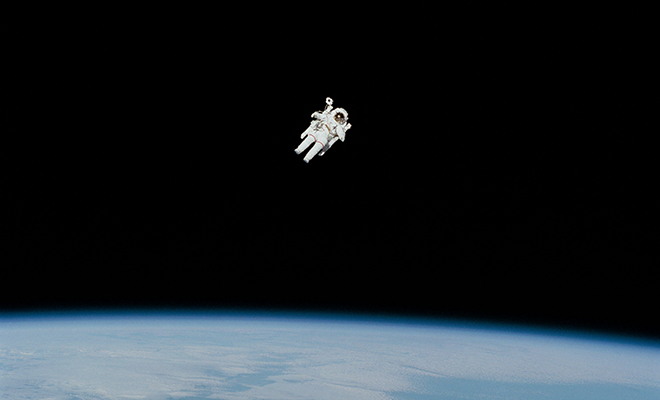
To keep it steady, powerful gyroscopes run around the clock: heavy spinning flywheels. They catch any unplanned micro-shifts, including pushes from astronauts’ hands, and cancel them.
A person really can move the ISS with their hands in space. With the station’s stabilization systems running, nothing meaningful changes.