Your alarm is set for 7:00, but at 6:59 you're already opening your eyes and checking your phone. Sometimes your body manages to be even more precise: 6:59:57. It feels as if your brain is somehow counting time in your sleep. In reality it doesn't know what time it is, but it can prepare you for waking up in advance. And scientists have even tested how well that works.
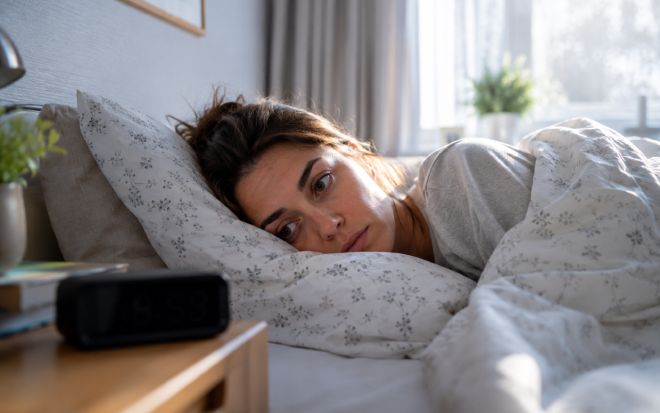
In 1997, researchers surveyed 269 adults. More than half said they never use an alarm or usually wake up before it goes off. Another 24% said they sometimes open their eyes before the sound. Then scientists took 15 people confident they could wake themselves up and monitored their sleep for three nights in a row. Five participants hit within 10 minutes of their chosen time all three nights. Another five did it two out of three nights.
So the "internal alarm clock" is not a myth. But it gets more interesting from there.
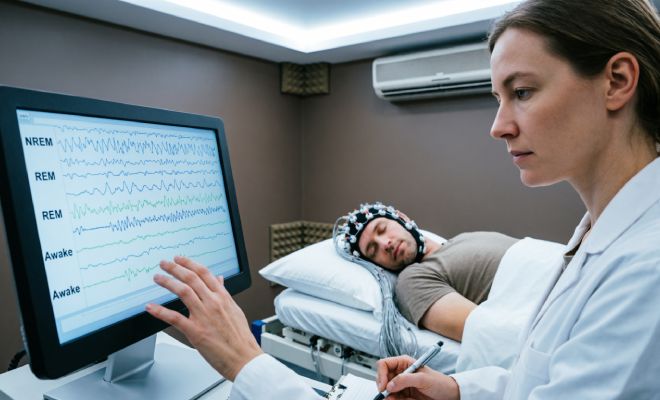
In 2023, researchers reviewed 17 scientific studies on self-waking. A total of 715 people took part, and only 125, or 17%, met the criteria for self-waking. Moreover, in most experiments scientists counted success within a fairly wide range — roughly 30 minutes around the target time. So there is no scientific proof that a person can wake up exactly three seconds before the alarm.
Then where does this almost magical coincidence come from?
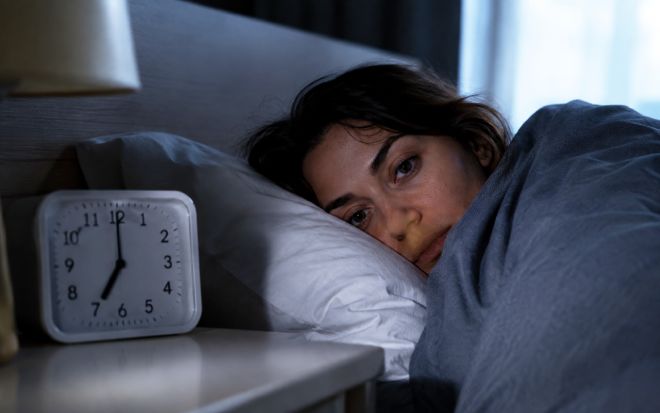
Your body has circadian clocks that synchronize sleep and wakefulness on roughly a 24-hour cycle. One of their main signals is light. If you regularly go to bed and get up at about the same time, your body gets the same cues day after day. So by your usual wake-up hour it can shift your physiology toward alertness in advance.
And sleep changes toward morning. Over the night we usually go through 4–6 sleep cycles, each lasting about 80–100 minutes. Deep sleep dominates in the first half of the night, while closer to morning the share of REM sleep and lighter stages increases. Brief awakenings between cycles are possible — ones you may not remember at all in the morning.
And here comes the trick. If your body is already approaching its usual wake-up time, sleep becomes less deep, the brain gradually prepares for alertness, and you may open your eyes before the sound signal. In that case the alarm doesn't so much wake you as check how well your body has learned its own schedule.

And second-perfect accuracy may also be a memory trap. You woke at 6:43 and fell back asleep — you forgot. You woke at 6:59:58 and saw the phone ring two seconds later — you remembered and told everyone.

So the next time you wake a minute before your alarm, don't rush to call yourself psychic. Your brain probably didn't pinpoint the time to the second.
It simply knows your routine so well that sometimes it manages to wake up before your phone does.