Over the last 500 million years, Earth has survived several mass extinctions. The planet itself changed, and even dinosaurs could not hold on. Only five of the most «invincible» creatures endured — and they still look much as they did at the start.
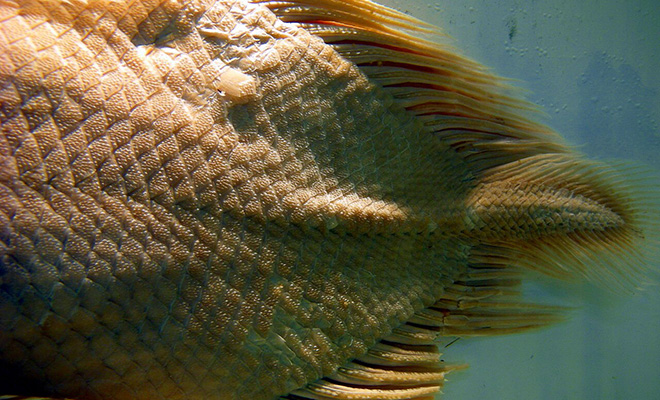
Horseshoe crab: an armored visitor from the past
Horseshoe crabs appeared on Earth about 450 million years ago — long before the first dinosaurs and even before animals came onto land.
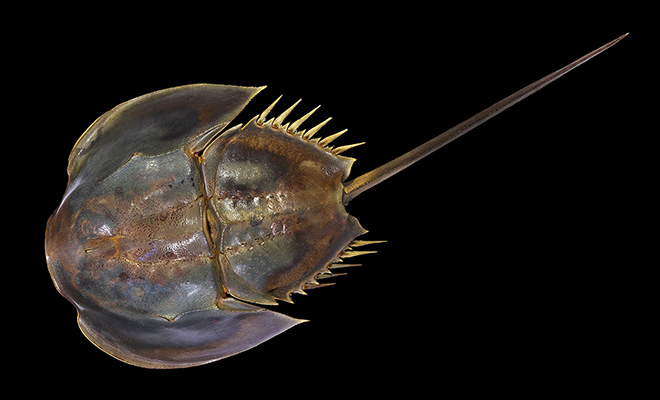
What makes the species special:
- Tough armor: A massive dorsal shield reliably protects the animal from any predator.
- Unique blood: Horseshoe crab blood is blue because of its high copper content and has a remarkable immune property — it clots instantly on contact with bacteria.
- Perfect design: The horseshoe crab's anatomy proved so successful that hundreds of millions of years of evolution barely required any changes.
Coelacanth: the fish thought to be extinct
This genus of lobe-finned fish is more than 400 million years old. For a long time scientists were convinced that coelacanths had died out entirely along with the dinosaurs.
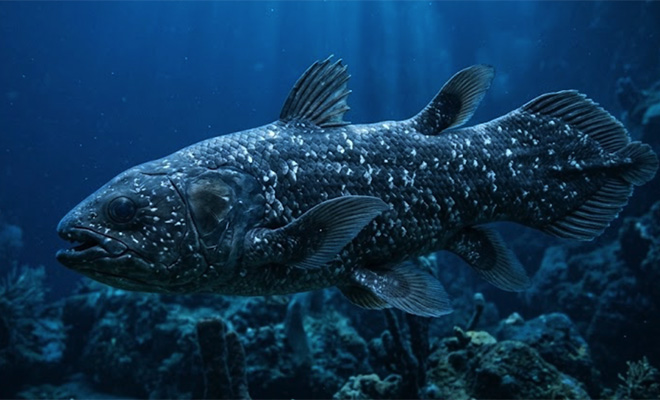
In 1938 a live specimen was accidentally caught off the coast of Africa, becoming the century's greatest zoological sensation. The coelacanth retained an ancient heavy skeleton and distinctive jointed fins that resemble the limbs of the first land animals.
Tuatara: the only surviving beak-headed reptile
The New Zealand reptile known as the tuatara appeared on the planet about 220 million years ago. Outwardly it looks like an ordinary lizard, but it belongs to an entirely separate order of beak-headed reptiles, all other members of which are extinct.
The tuatara preserved a unique anatomical legacy — a true «third eye» on top of its head. Covered by thin skin, equipped with a lens and retina, it helps the reptile orient itself in space and regulate daily rhythms.
Nautilus: a mollusk in a mother-of-pearl shell
Chambered nautiluses have existed on Earth for about 500 million years. They witnessed the rise and fall of thousands of species without changing their outward structure in the slightest.
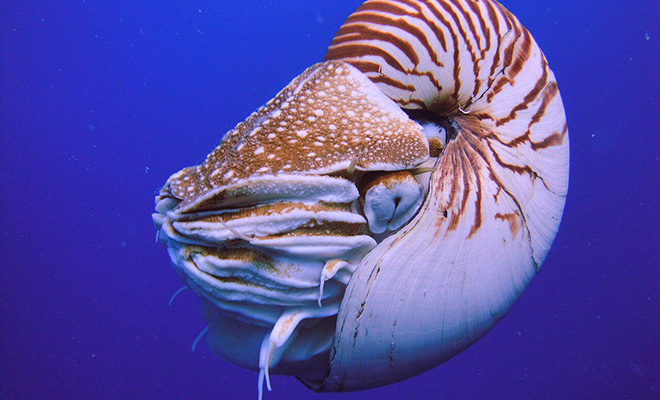
Nautiluses live in coiled spiral shells divided into internal chambers. By changing the ratio of gas and liquid in these chambers, the mollusk adjusts its buoyancy and dives to depths of several hundred meters.
Triops: a contemporary of the first dinosaurs
Small freshwater crustaceans called triops have lived in temporary ponds and puddles for more than 220 million years.
The secret of their survival lies in the extraordinary endurance of their cysts (eggs). They can enter deep dormancy and remain viable in dry mud or frozen soil for decades. As soon as a dried-up puddle fills with water again, triops hatch from the eggs looking exactly as they did in the Triassic period.