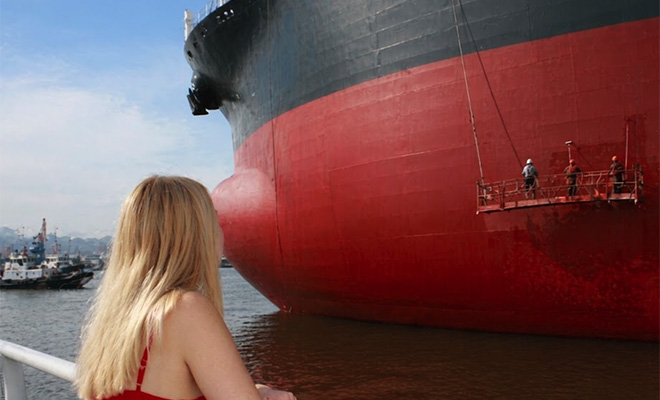
All ships except military ones share one unifying detail — a red-painted hull. The color change comes right at the waterline, and many see it as a nod to maritime tradition. There is no aesthetics in this paint job at all: it is purely about practical benefit, fuel savings, and the laws of chemistry.
The Ship's Main Enemy — Marine Parasites
The main problem for any vessel in the water is instant hull fouling. Colonies of mollusks, shells, and algae quickly settle on the metal.
Such an underwater «carpet» makes the surface rough, increasing water resistance during movement by 30–40%. As a result, the ship loses speed sharply, and expensive fuel consumption rises several times over.
The Chemical Secret: Toxic Copper
Even in the age of sail, wooden hulls below the waterline were sheathed in copper sheets so shipworms would not destroy the timber. With the shift to steel hulls, sheathing was replaced by special «antifouling» paint.
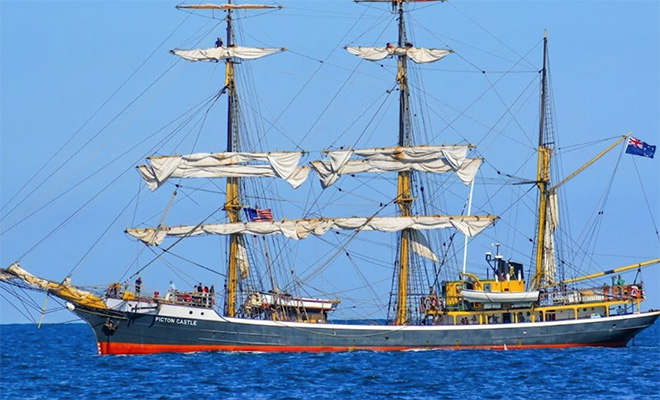
The main active ingredient in these formulas became copper oxide. It acts as a powerful biocide: copper leaches into the water in microdoses and prevents mollusk larvae from attaching to the hull. Copper oxide also gives the paint its characteristic deep red-brown hue.
Visual Control and Draft
The contrasting red color at the boundary with the black or blue topsides helps the crew and port services visually monitor the ship's draft:
- Waterline: Special white marks (draft marks) are applied on the red background.
- Loading safety: The more cargo on board, the deeper the red section sinks below the water. This makes overload or dangerous list visible at once.
Why Red Is Still Used Today
Modern chemical technology can make protective paint any color — green, blue, whatever you like. Yet shipbuilders worldwide keep ordering red.
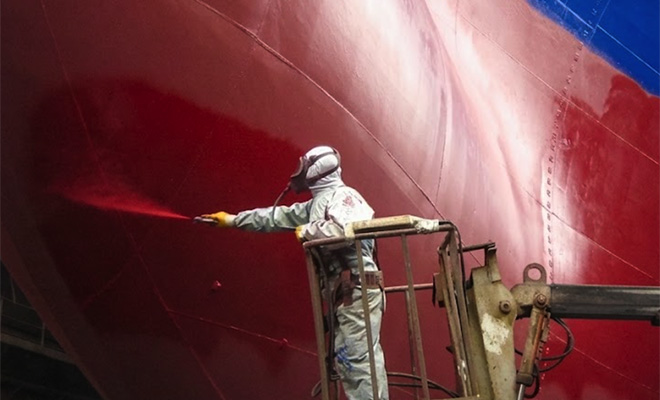
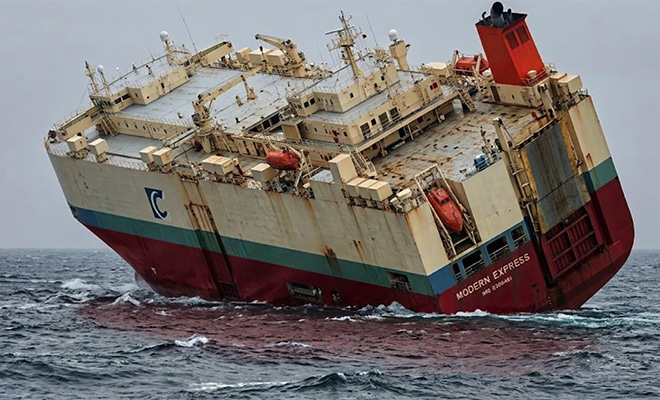
First, copper-based pigments remain the cheapest and most effective in production. Second, the bright red inverted hull of a distressed vessel is far easier for rescue helicopters to spot from the air.
A bright red ship hull is not a bow to tradition but a functional engineering solution. It protects the hull from the destructive effects of the marine environment, saves tons of fuel, and helps monitor the vessel's safety on every voyage.