On the evening of December 31, 1978, Soviet citizens were busy chopping salad and getting ready to watch Irony of Fate. No one could know that within a few hours the entire country would be hit by a brutal frost — a completely unexpected anomalous cold snap of incredible force.
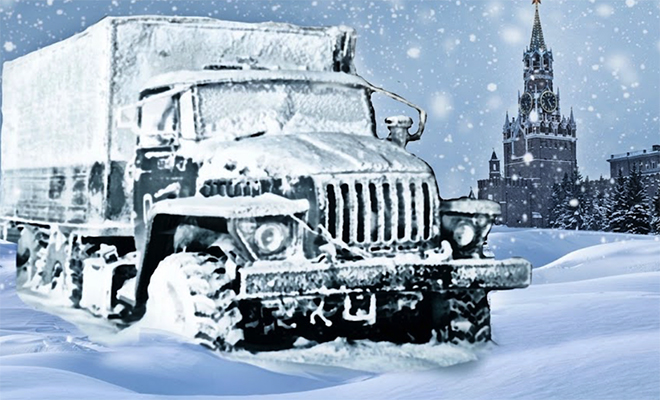
Why the Winter of 1978 Became the Coldest
Frosts covered the European part of the RSFSR around mid-December. The temperature kept dropping, and a powerful Arctic anticyclone formed.
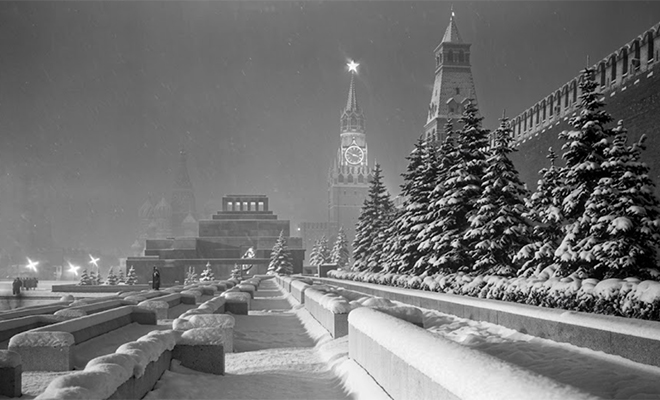
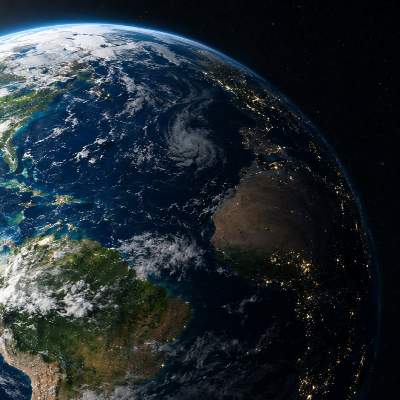
This led to an extremely rare meteorological event: an ultra-polar invasion began. In late December 1978, giant masses of icy air from the Kara Sea and Taimyr rushed southwest at enormous speed.
- Temperature fell at incredible speed — 20–30 degrees in a single day:
- In Moscow, thermometers on New Year's Eve dropped to -38...-40 °C, and in the Moscow region to -45 °C.
- In Kazan and Izhevsk, record lows of -48...-52 °C were recorded.
- In the Urals and the Komi Republic, thermometers fell below -55 °C.
Storm winds made things worse. For people out on the street, the cold felt like a record -60 °C.
New Year in Fur Coats and Felt Boots: How People Lived
The blow of the elements coincided with the moment when millions of Soviet families were preparing to welcome 1979. Within hours, holiday mood gave way to a fight for survival.
Heating-pipe failures: Extreme cold made main pipeline metal burst. In thousands of apartment blocks, hospitals, and kindergartens, central heating systems froze. Cast-iron radiators in apartments cracked and split.
- Battle for electricity: To stay warm, people massively switched on electric heaters, kitchen stoves, and homemade coil devices. Power grids could not handle the load: whole districts plunged into darkness and cold.
- Holiday at the gas stove: Many welcomed the New Year in jackets, fur coats, felt boots, and hats, huddled around burning gas burners. Water in buckets and bathtubs froze, and windows were coated with thick frost on the inside.
Utility Collapse and Transport Gridlock
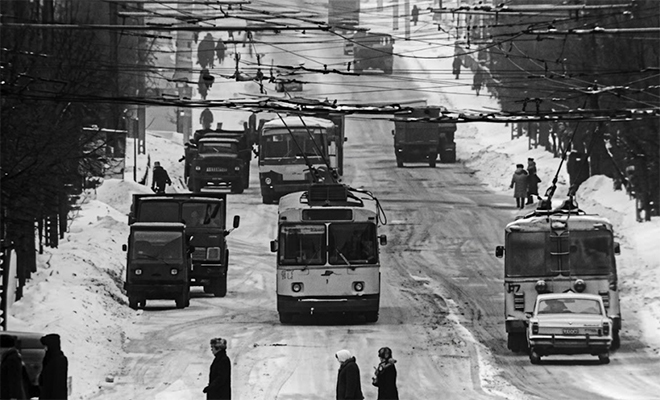
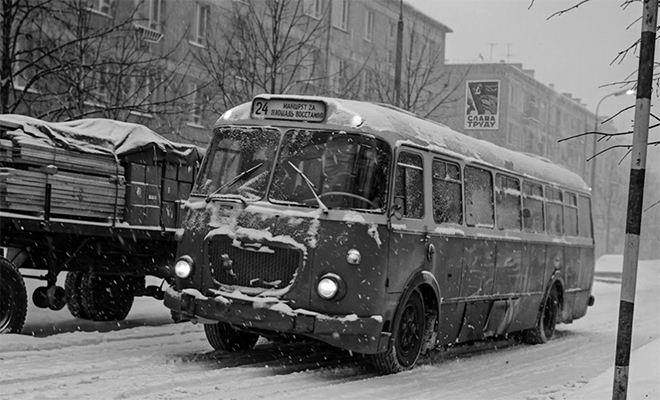
The frost paralyzed infrastructure in major cities. Diesel fuel in bus and truck tanks turned to jelly, trolleybus wires snapped, and railway tracks cracked. Capital airports froze, and hundreds of trains were stranded between stations.
Food supply problems arose as well. Potatoes, vegetables, and eggs froze in stores. There was no way to deliver bread and milk — transport had stopped.
City services worked around the clock. Plumbers and welders spent days thawing frozen utilities with blowtorches, working outdoors in extreme temperatures.
Lessons of the «Anomalous Invasion»
By early January 1979, the Arctic cyclone began to retreat, but clearing the aftermath took months. In hundreds of buildings, heating systems had to be fully replaced and streets dug up to swap burst mains.
The winter of 1978–1979 became a harsh lesson for Soviet urban planning. Afterward, GOST standards for heating-pipe burial depth, residential building insulation norms, and network pipe strength requirements were revised. This New Year forever entered the memory of the older generation as the toughest test by frost in peacetime.