For a long time, geneticists assumed that people who live exceptionally long must have unusual bodies that keep functioning for more than a century. A scientific analysis of biomaterials from 117-year-old Spaniard Maria Branyas Morera upended that view. Record lifespan, it turns out, doesn't require a body free of age-related wear: in this supercentenarian, deep physiological decline and powerful biological defense existed side by side.
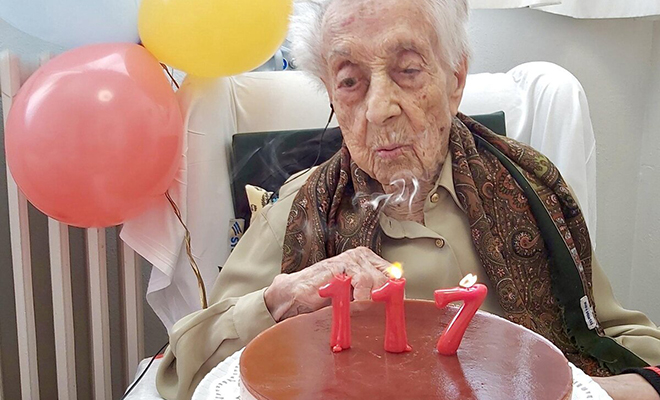
Maria Branyas Morera was born in 1907 and held the title of the world's oldest person from January 2023 until August 2024. Average life expectancy for women in Catalonia, meanwhile, is 93 years.
An international team led by Professor Manel Esteller took on the task of studying the supercentenarian's samples. The biologists ran the largest multi-omics analysis ever performed on specimens collected during a long-lived person's lifetime.
A Surprising Paradox
The results were far more complex than a simple, uniform slowing of decay. The lead author described the woman's body as a striking duality — opposite processes unfolding at different levels at once.
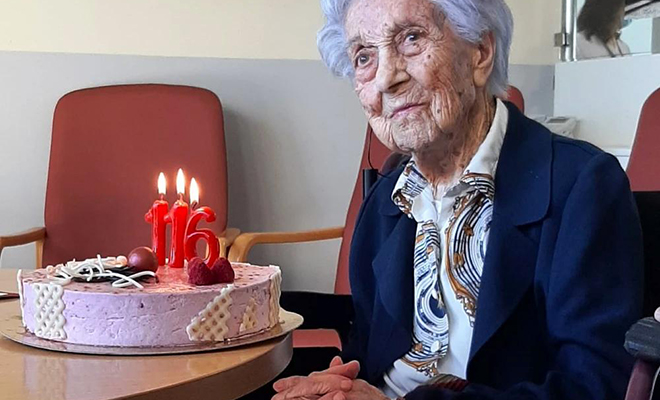
- Markers of deep old age: Branyas showed critically short telomeres (the protective caps on chromosome ends that shorten with each cell division), a high concentration of senescent B lymphocytes, and the pro-inflammatory immune activity typical of advanced age.
- Factors of unique protection: Her epigenetic biological age lagged substantially behind her chronological age. Her DNA carried rare genetic variants that guard against neurodegenerative and cardiovascular disease; beneficial bifidobacteria dominated her gut; and critical inflammatory processes were held at a safe level.
A New View of Human Longevity
The scientists' main conclusion: for a record-breaking life, you don't need a perfect body absolutely shielded from every age-related change. What matters is a balanced internal defense that can compensate for cellular wear.
Researchers also found that Branyas's genetic shield was reinforced by simple external factors: traditional healthy eating, no harmful habits, and an active social life among close family.

Maria Branyas Morera's case showed that the human body can remain viable even when basic cellular resources are critically depleted.
The finding points gerontology in a new direction: instead of trying to block aging entirely, future medicine may focus on strengthening natural defense systems that preserve health across long decades.