A Formula 1 driver flies down the track at about 350 km/h, takes corners under huge g-forces, and makes decisions in fractions of a second. The most interesting part is not the car, but the driver’s head. Research shows that professional drivers use brain areas for spatial navigation, movement, and prediction differently. They do not only react faster: their brains try to forecast what comes next.
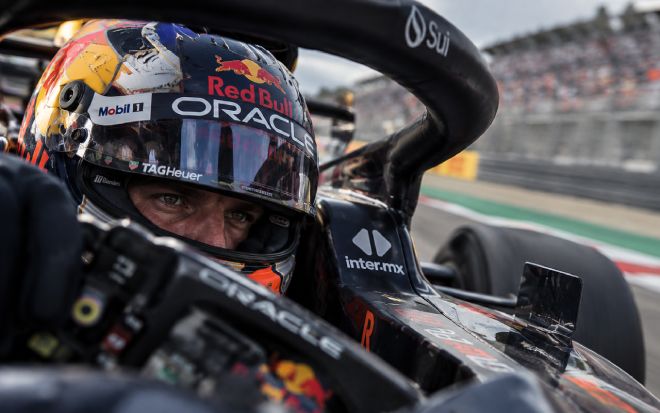
Why fast reflexes are not enough
At 350 km/h a car covers almost 97 meters per second. If the brain has to notice an object, assess the scene, and only then send a muscle command, that sequence simply runs out of time.
That is why a pro driver’s real edge is not lightning reaction, but anticipation.
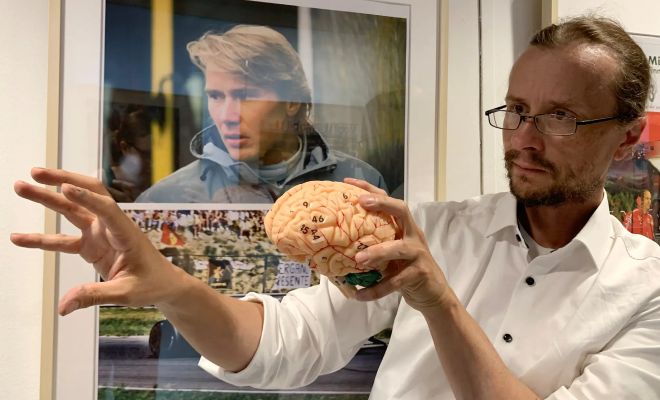
Otto Lappi, a cognitive researcher and senior lecturer at the University of Helsinki who studies drivers’ visual strategies and the brain in expert driving, puts it simply. A professional racer does not so much react to the road as predict it. The brain models what should happen next and effectively “buys” extra time.
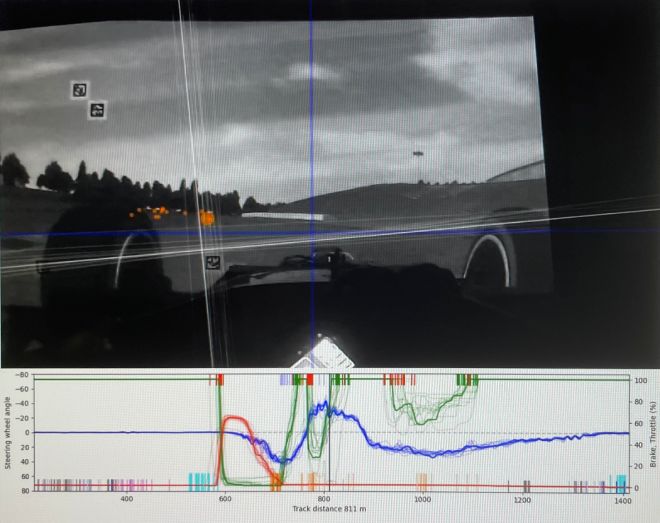
Gaze behavior is one measure scientists track. Colored dots show where the driver looks in the simulator at each moment: the road before a corner, the exit, the instrument panel, and other zones.
The driver knows the circuit so well that preparation for the next event starts before it fully enters view. Where the car will be a moment later, when to brake, where to point it on exit: much of that is formed in advance.
What researchers found in pro drivers
In a study with 11 professional drivers and 11 ordinary volunteers, a team including University of Pisa specialists used MRI while participants did visuospatial and motor tasks.
Professionals showed differences in several brain regions linked to movement and spatial orientation. Especially interesting was the retrosplenial cortex, which helps bind a person’s position in space to stored memory.
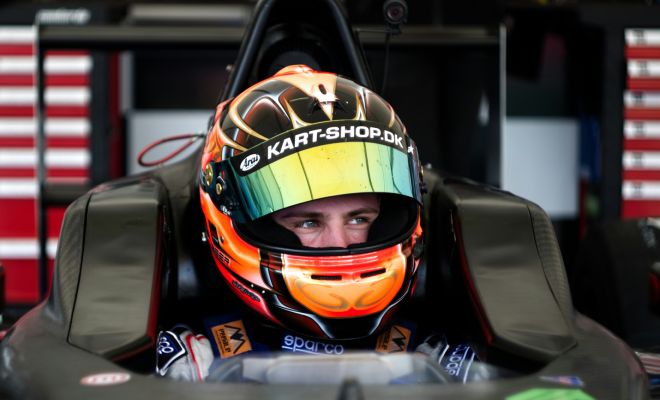
Pro drivers had denser gray matter in that area. The measure also correlated with results in official competition.
In short, an experienced driver does not see the track as a stack of separate pictures. The brain builds a detailed spatial model and matches what is happening against it fast.
Why a champion may need less brain work
There is another paradox. A professional can perform complex actions while using fewer neural resources than someone without that experience.
Researchers call this neural efficiency. Moves a novice must control consciously become automatic for an expert. Freed capacity goes to the decisions that matter.
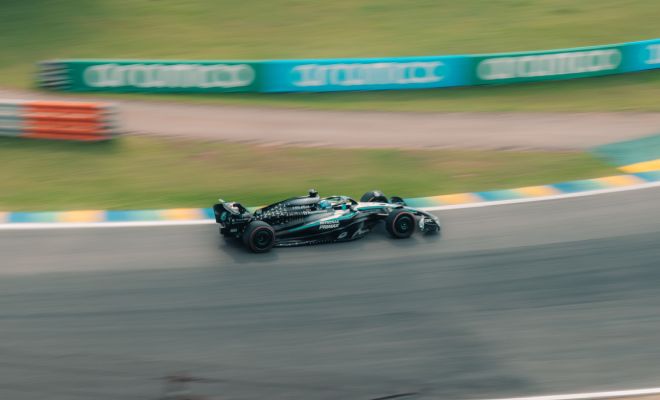
So the ideal driver does not look like someone trying to track everything at once every second. The higher the skill, the more thrifty the system.
Even among pro drivers there is a split
In 2026 Italian researchers published in Frontiers in Psychology a comparison of psychological traits in F1 and F2 drivers. Five Formula 1 and five Formula 2 pilots took part.
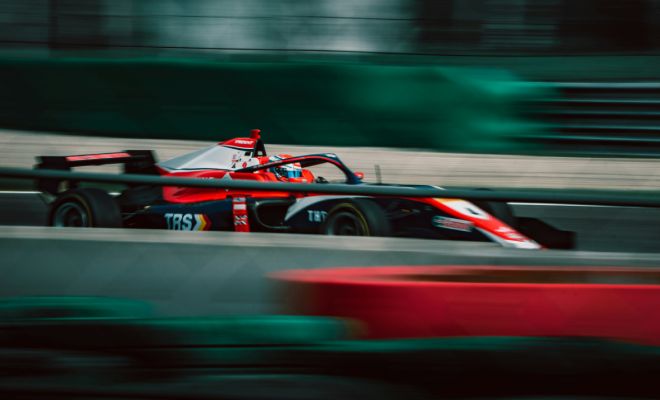
The F1 group scored higher on concentration: 9.4 versus 6.8. Confidence and achievement motivation were also higher: 11.2 versus 9.6. The authors stress the sample is tiny, so the findings need more checks.
The picture is curious. Formula 1 needs more than good eyesight, reflexes, and fitness. A driver needs a brain that can recognize a familiar situation fast, predict the next moment, and skip surplus information.
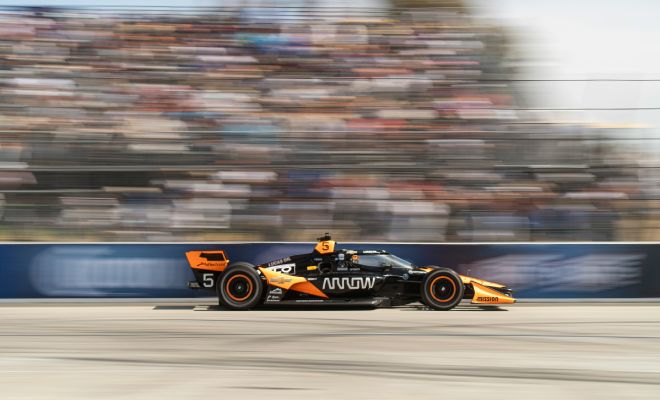
That is why a racer can look at a corner that is barely visible and already know what comes next. To an ordinary person it looks like impossible reaction. To a pro driver’s brain it is closer to a well-rehearsed prediction.