During World War II the British Royal Navy seriously pursued Project Habakkuk: a giant unsinkable aircraft carrier made of pykrete, a mix of ice and wood sawdust. The material matched concrete for strength, but the idea was dropped. Eighty years later researchers returned to the same concept and built a radical update: BioPykrete, or «super ice».
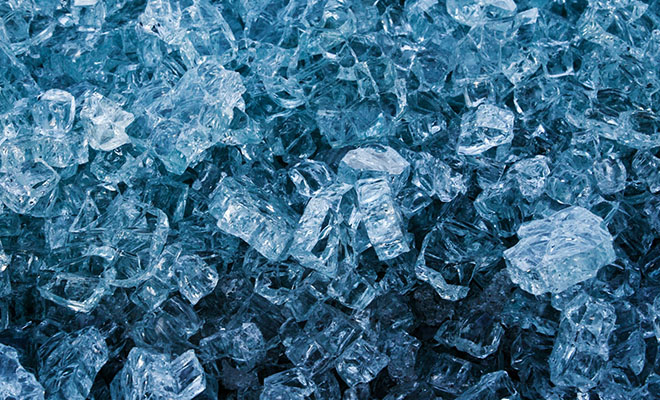
How super ice is made
Wood fibers in pykrete were too coarse. Over time the material lost integrity and delaminated. Israeli scientists approached the problem at the molecular level.
- Cellulose nanocrystals: Instead of sawdust, microscopic plant crystals were added to water. Inside the frozen water they form a strong reinforcing frame and stop cracks from spreading.
- A special bio-glue: So the nanocellulose and ice crystals bond tightly, the mix includes an artificial protein, CBM3a-AFPIII (a combination of an antifreeze protein and a carbohydrate-binding module). It works as a molecular glue that locks the structure into a single monolith.
Lab tests beat every expectation. The new material can absorb 70 times more energy before failure than ordinary ice.
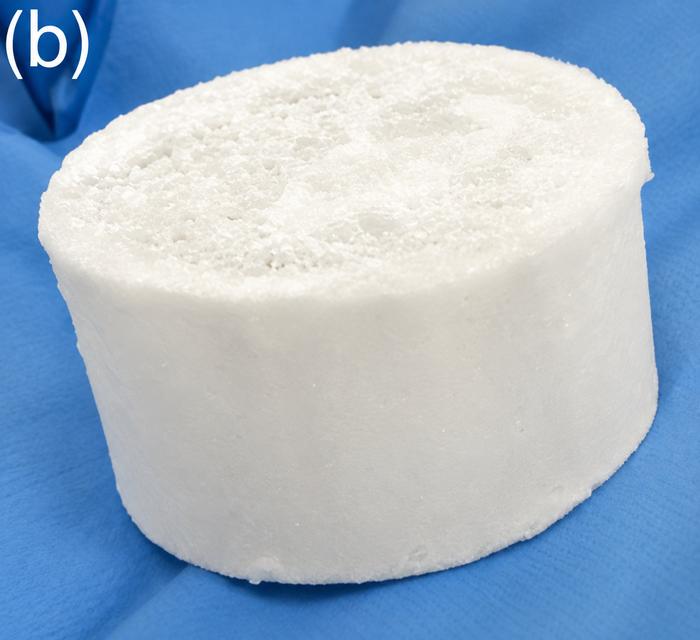
Under critical load BioPykrete does not shatter into pieces like a normal ice block; it deforms smoothly. On mechanical metrics «super ice» outperforms standard ice by a factor of ten. Its properties are comparable to the strength of modern concrete.
What super ice is for
Nobody plans to build ice aircraft carriers anymore. But BioPykrete has huge potential for extreme cold regions: the Arctic and Antarctica.
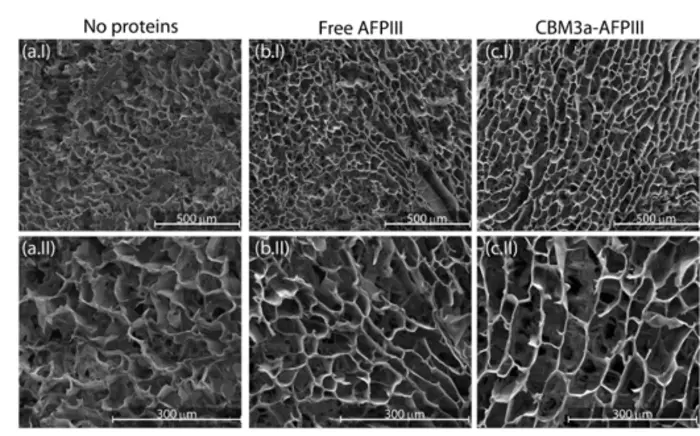
Shipping cement, rebar, and gravel to polar stations costs astronomical sums. BioPykrete needs only ice, plant cellulose, and a small amount of protein. The material is fully biodegradable.
The technology is still at proof-of-concept in the lab, but scientists already expect that in the future this method will let them build eco-friendly bases, warehouses, and infrastructure in the harshest corners of the planet.