Wood-burning trucks in North Korea are not the everyday default for all transport. They are a forced part of freight logistics that survives under fuel shortages. On the country’s roads you can still see vehicles with wood-gas generators: they have not fully replaced diesel, but they remain a working option where ordinary fuel is scarce or unreliable.
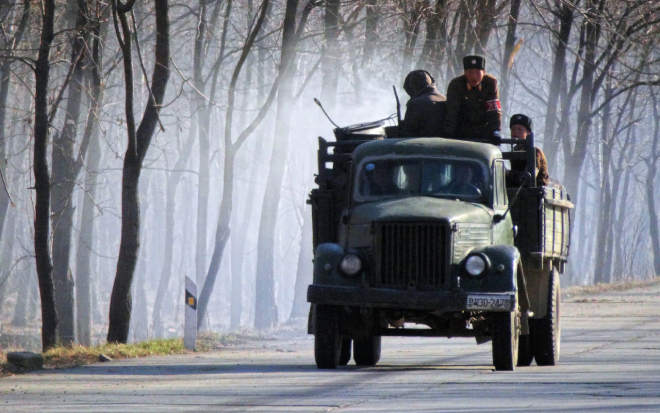
Photo Bjørn Christian Tørrissen, CC BY-SA 3.0, Wikimedia Commons
The system is not steam power, as some retellings simplify it. It is wood gasification. With limited oxygen, solid fuel is heated and releases combustible gas that then feeds an internal combustion engine. In practice the truck still runs on wood, converted into a kind of syngas.

The technology goes back to the 19th century, when wood gas lit streets in Europe. In the first half of the 20th century, generators became a mass answer to fuel crises. They were especially common in World War II: thousands of cars across Europe and Asia were converted when gasoline turned scarce or strategic.
The USSR used the idea widely too. From the late 1920s came experiments and series gasifier trucks; in the 1940s they worked hard behind the front. For a country with long supply lines and fuel gaps, they kept freight moving, at a cost: constant wood loading, slow starts, and regular cleaning of the system.

North Korea inherited the line in another era, as a necessity rather than an experiment. With limited fuel imports, gasifiers still run on part of the truck fleet. Usually they are external metal units where wood burns first and the gas cools before entering the engine. By modern standards the trucks are slower, weaker, and need more care, but they still work where ordinary fuel is missing or rationed unevenly.

Wood gas never vanished completely, but it left mass transport long ago. Now and then DIY energy enthusiasts and small engineering groups revive it, less as a real gasoline rival than as a way to test an old idea that still works.
In North Korea the picture is different. Open sources through 2026 show no serious civilian fleet renewal that would wipe these units out. With tight access to oil products, gasifier trucks still appear as a practical, if outdated, fix: more a result of conditions than a tech preference.