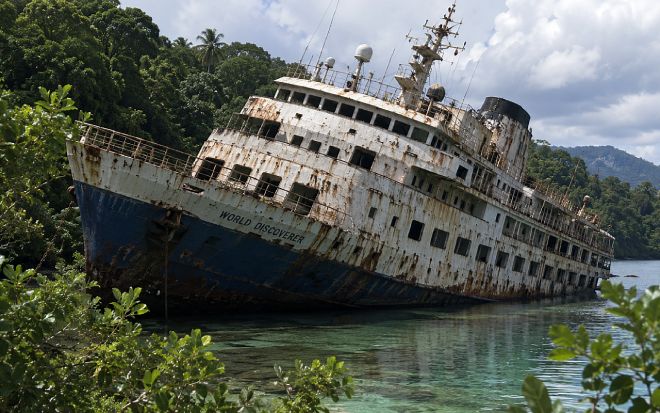
World Discoverer was built for expedition routes through polar waters. It carried passengers through the Northwest Passage and sailed to Antarctica and Alaska, only to end its story somewhere entirely different: the Solomon Islands. After an accident, the ship was run aground, but it could not be saved. Its rusting hull is now being slowly swallowed by the tropics.
A Cruise Ship That Was Never Really About Cruising
World Discoverer was built in Germany in 1974. By modern standards it was a small vessel: about 88 meters long, with 76 cabins and space for 137 passengers. Its hull was strengthened for icy waters, earning the ship a 1A ice class.
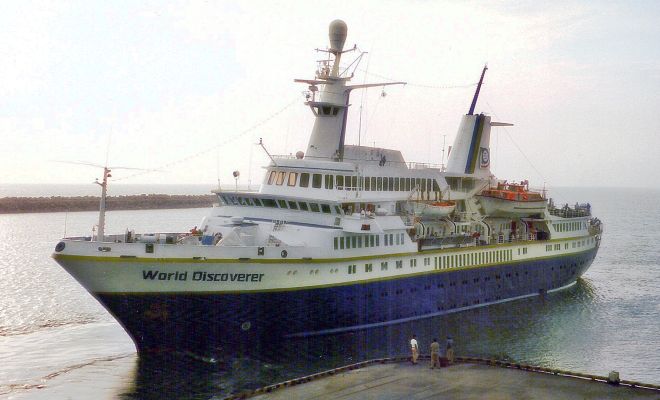
Photo: Aah-Yeah - MS World Discoverer, CC BY 2.0, Wikimedia Commons
But the hull specifications were not the most important thing. World Discoverer was designed for expedition travel, still a highly unusual form of tourism at the time.
Passengers went ashore by small boat on remote coasts and islands. Historians, geologists, naturalists, and marine biologists joined the voyages, accompanying shore expeditions and giving lectures. Several landings could take place in a single day.
-3.jpg)
Photo: Aah-Yeah - MS World Discoverer, CC BY 2.0, Wikimedia Commons
It was a style of travel for people less interested in spending a vacation aboard a ship than in seeing places an ordinary cruise liner simply could not reach.
It Carried Passengers Through the Northwest Passage
The defining voyage came in 1985, when World Discoverer transited the Northwest Passage with passengers aboard. The current transit database records the 1985 journey as an eastbound passage by an ice-strengthened passenger vessel.
That was not World Discoverer's only demanding route. The vessel operated in polar regions, sailing to Antarctica, the Falkland Islands, and Alaska before heading to other remote destinations.
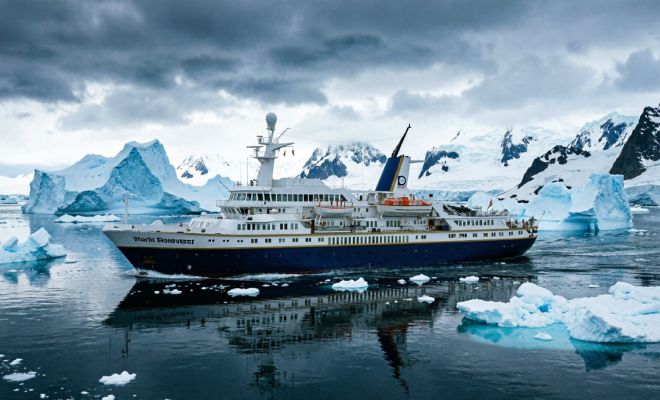
Expedition cruises like these seem unremarkable today. But World Discoverer appeared when the idea of taking ordinary passengers to such places was only beginning to emerge. That makes its final chapter all the more absurd.
The Final Voyage Ended in the Tropics
On April 30, 2000, World Discoverer was sailing through Sandfly Passage in the Solomon Islands. At about four in the afternoon, the vessel struck a large submerged rock or reef that was not marked on the chart.
The hull was damaged, the ship began taking on water, and it developed a list of roughly 20 degrees. Captain Oliver Kruss sent a distress call, and the passengers were evacuated onto a responding ferry.
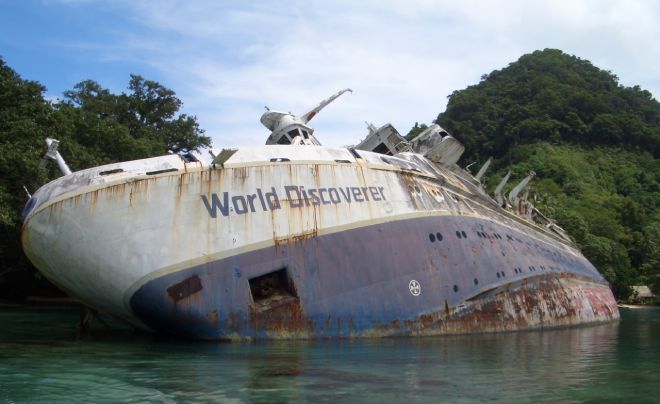
Photo: Philjones828, CC BY-SA 3.0, Wikimedia Commons
The captain steered the ship into Roderick Bay and grounded it. The decision prevented the vessel from sinking in deep water.
At first, there was hope of a salvage operation. After inspection, however, World Discoverer was declared a constructive total loss. Attempts to return it to service failed.
Why the Ship Never Left the Bay
Conditions in the Solomon Islands also played an important part. An internal conflict was still under way there in 2000, making a full-scale salvage effort extremely difficult to organize.
World Discoverer was later looted, with some equipment and interior fittings stripped from the vessel. After that, the ship was left in Roderick Bay for good.
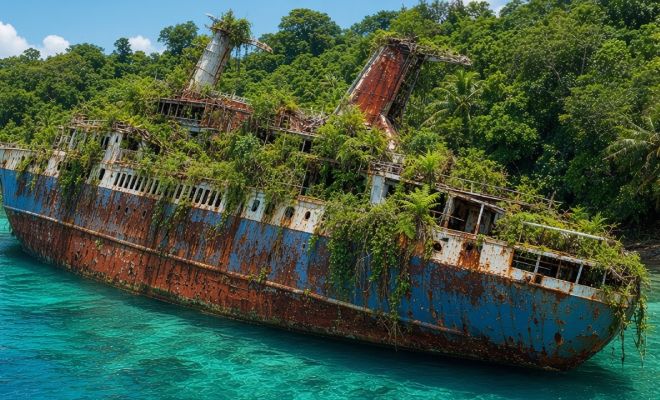
More than a quarter of a century has passed. The hull still lies in the bay at a severe angle, gradually deteriorating under the effects of water and the tropical climate.
Nature Is Now Doing to the Ship What It Once Shielded People From
Today, World Discoverer looks nothing like it did during its expedition years. Vegetation is gradually taking over the vessel, its metalwork is rusting, and almost nothing remains of the interiors.
That is the central paradox of World Discoverer. It was built to carry people to the planet's most remote places and show them the wilderness. In the end, the ship itself became part of that world — only now without passengers, crew, or a route home.