On a globe, it looks simple: between some countries in the Southern Hemisphere, the shortest flight path runs straight toward Antarctica. Aircraft are technically capable of crossing the continent and do fly over it. Yet scheduled passenger routes across the frozen landmass are almost nonexistent. The reason is not a ban, extreme cold, or the magnetic field. Antarctica simply cannot offer what matters more to a normal flight than saving a few miles.
Planes Are Allowed to Fly There
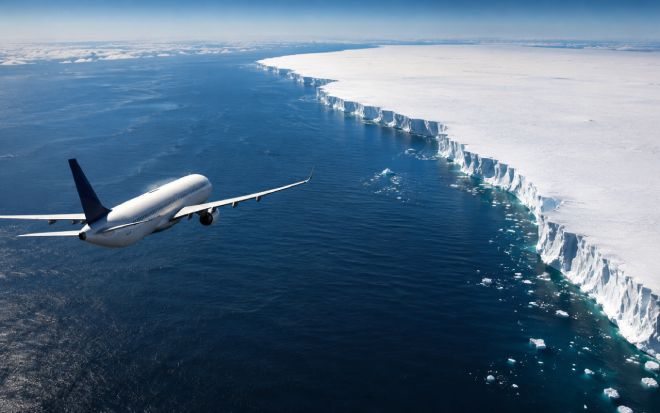
Let us start with the biggest myth: flying over Antarctica is not prohibited.
Aircraft serving scientific and logistics programs regularly operate on the continent. Australia, for example, uses an Airbus A319 for flights from Hobart to Wilkins Aerodrome, which sits directly on the ice sheet. The US Antarctic Program also routinely flies within the continent and between Antarctica and other countries.
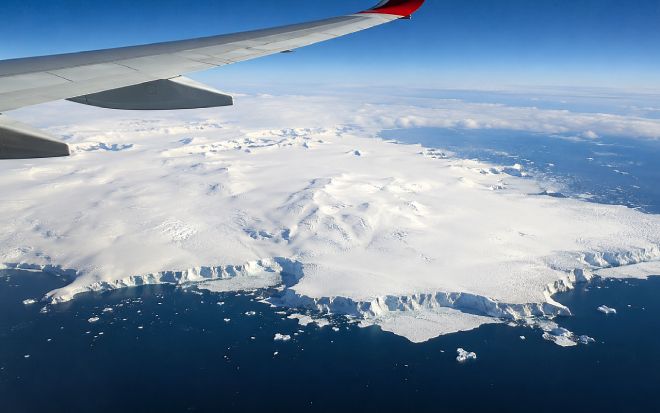
Passenger jets have also flown extremely southerly routes. Qantas operates services between Australia and South America that, because of the Earth's geometry, swing far south and may approach Antarctica.
So the issue is clearly not that a modern airliner cannot fly in the region.
Then Why Not Fly Straight Across?
Because the shortest route on a globe is not necessarily the best route for an aircraft.
Airlines must consider more than distance. Weather, wind, airspace and, above all, the ability to divert when necessary all matter.
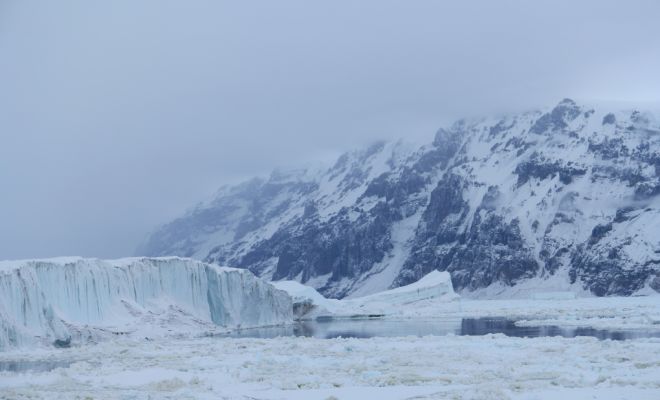
And this is where Antarctica loses out to almost every other part of the world.
The vast continent has virtually no conventional civil aviation infrastructure. It does have specialist airfields and ice or snow runways, but they operate under unusual conditions, many are seasonal, and they primarily support Antarctic programs.
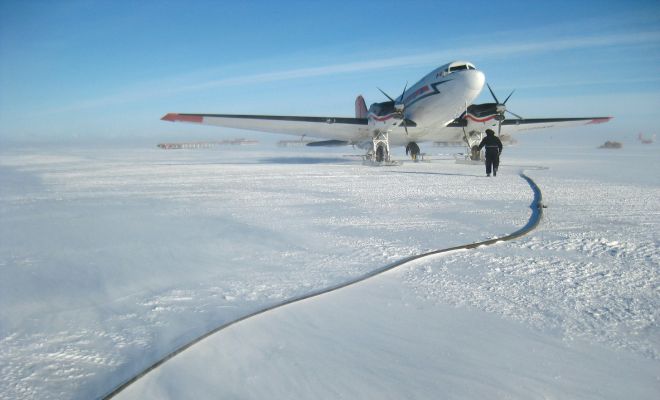
Photo: Eli Duke / flickr / CC BY-SA 2.0
Wilkins, for instance, does handle Airbus A319 aircraft. But it is a seasonal aerodrome on a glacier, not a conventional international airport where a passenger Boeing arriving from the other side of the world can divert at any time.
A Few Hundred Miles Can Matter More Than a Perfectly Straight Line
This is especially clear on long-haul flights between Australia and South America. Geometrically, the shortest line between certain cities runs far to the south. In practice, however, a flight may deviate from it to remain within an operating environment that gives the crew reasonable diversion options.
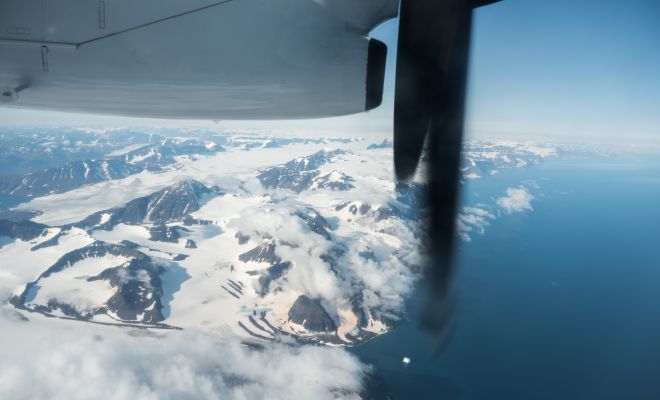
That is why an aircraft may head toward Antarctica without trying to cross it at the point where the mathematically shortest line runs.
The result is a paradox: the route is slightly longer, but much easier to operate.
Why Not Simply Build Airports There?
It could be done. But what for?
Antarctica has virtually no permanent population and no major cities capable of generating passenger traffic. Building costly, year-round aviation infrastructure merely to shorten a handful of routes therefore makes little economic sense.
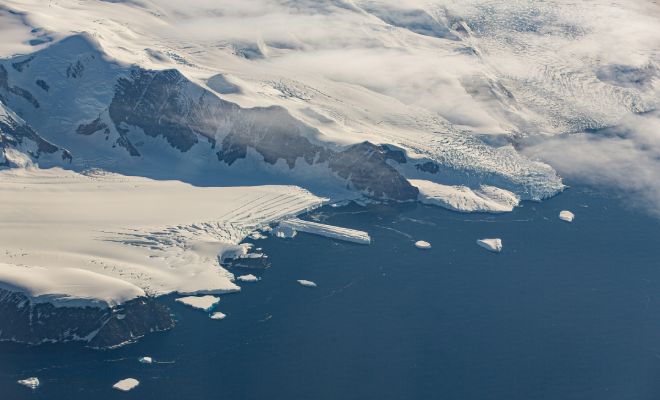
This is an important detail often lost in stories about "forbidden flights."
Airlines do not avoid Antarctica because someone has forbidden them to fly there. There is simply almost nothing for them to carry to or from the continent.
Antarctica is essential to scientific aviation. For the global passenger network, it is neither a destination nor a major connecting hub.
But There Is One Genuinely Unusual Detail
Antarctica can still appear beneath the wing of a normal passenger aircraft. Sightseeing flights operate over the continent, while long-haul services in the Southern Hemisphere may pass very close to its shores. Some routes follow southerly tracks precisely because, on a spherical Earth, they are more efficient than the familiar "straight lines" drawn on a flat map.
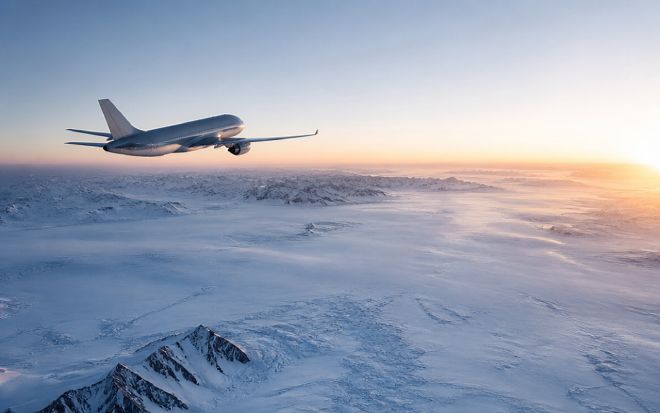
In other words, the famous Antarctic no-fly ban does not exist.
The real reason for the lack of a dense route network is far more mundane: Antarctica lies where geometry sometimes offers airlines a shortcut, while economics and flight operations point them toward an easier route.
That is why it looks like a blank spot on flight maps, even though aircraft do fly over it.