The press called the supertanker Seawise Giant the last Leviathan. The vessel entered history as the largest ever built by human hands — even an aircraft carrier would envy its dimensions. The ship physically could not fit through the Suez or Panama canals or pass the English Channel; its length exceeded the Eiffel Tower.
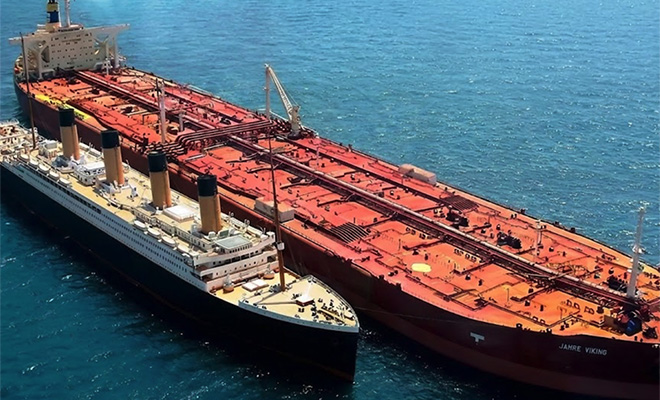
Why the World's Largest Ship Was Built
The supertanker was laid down at Sumitomo Heavy Industries in Japan in 1979. During construction the owner decided to substantially increase its size. To do that, an extra 81-meter steel section was inserted into the middle of the finished hull.
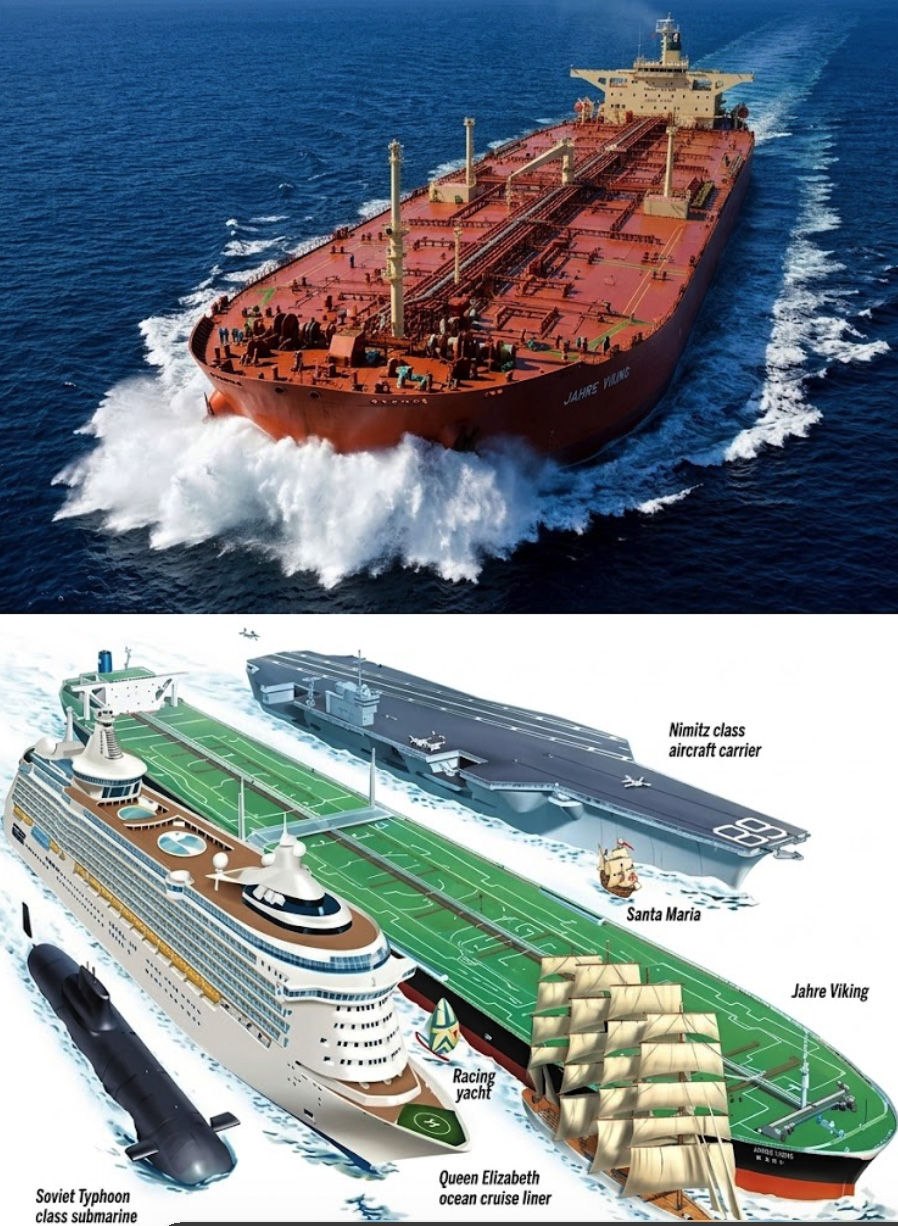
The result was a record length of 458.45 meters — taller than the Eiffel Tower and New York's Empire State Building. Deck width reached 68.8 meters; fully loaded displacement exceeded 657,000 tons.
The tanker was built to 1970s standards with a single steel hull. The giant cargo hold was divided by bulkheads into 46 separate isolated tanks capable of holding more than four million barrels of crude oil.
Upper deck area was an incredible 31,500 square meters. The distance from the stern accommodation block to the bow was so vast that crew moved around the deck on bicycles and mopeds.
How the World's Largest Ship Worked
To move that much steel and oil, engineers installed a Stal-Laval steam-turbine system rated at 50,000 horsepower, fed by two boilers. All that power went to a single five-blade propeller nine meters in diameter.
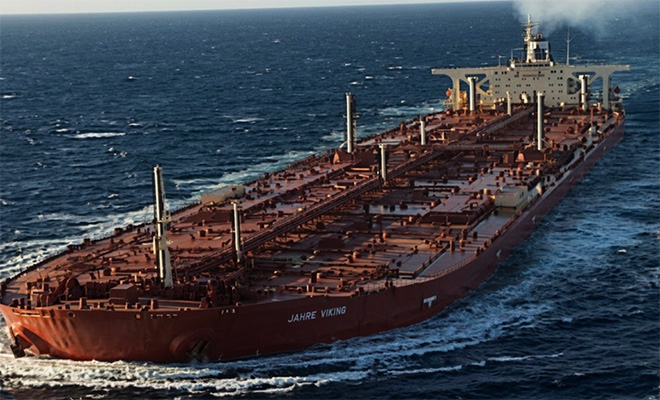
At cruising speed the vessel made about 16.5 knots (roughly 30 km/h), burning more than 200 tons of heavy fuel oil per day. Steering the giant required pinpoint precision and calculations dozens of kilometers ahead. Fully loaded at working speed, Seawise Giant's stopping distance was a record 9 kilometers; coming to a full stop took about 30 minutes from the moment the propeller reversed.
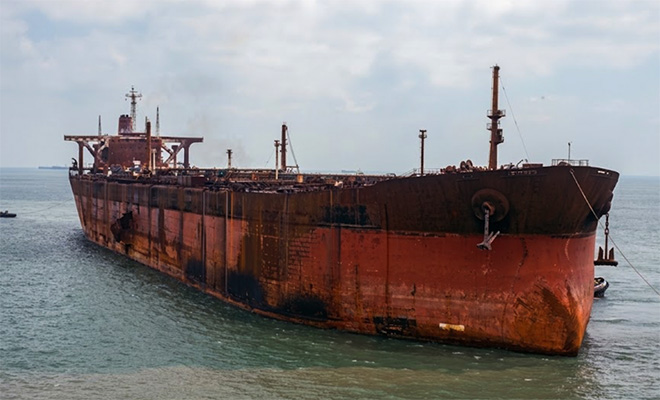
Turning 360 degrees required open water at least 3 kilometers across. Two bow anchors, each weighing 36 tons, helped hold the ship at anchor; special high-capacity hydraulic winches raised them.
What Happened to the World's Largest Ship
The sea giant was written off after an incident in 1988. It was then raised from the seabed and restored, using thousands of tons of new steel.
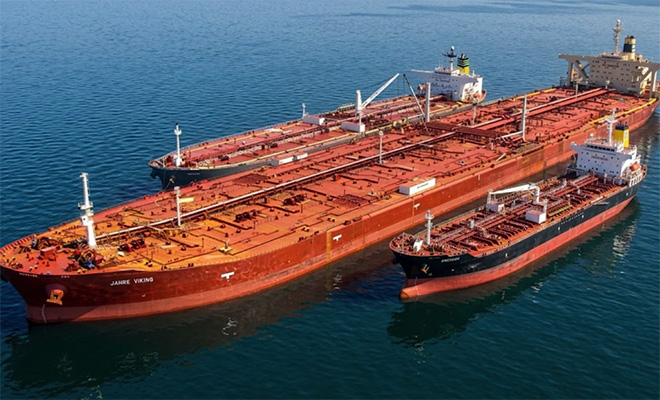
After repairs the vessel returned to service as Jahre Viking and sailed for another decade and a half. By the early 2000s, operating such a huge single-hull tanker had become economically unviable and risky under new environmental rules. In 2004 the giant was converted into the floating storage unit Knock Nevis; in 2010 it was towed to India and scrapped.
The only surviving piece of the record-breaking ship is its 36-ton anchor, now kept at the Hong Kong Maritime Museum.