Soviet intelligence did not need cars that advertised their purpose from a distance. So the KGB's most unusual vehicles often looked like ordinary Pobeda and Volga sedans. Under the hood they could hide a Chaika V8, an automatic gearbox, and reinforced running gear. Here are five such machines most people would never recognize on the street.
The history of Soviet special vehicles began with a fairly simple task: a production car had to go faster while staying as inconspicuous as possible. The solution was not a brand-new body, but reworking familiar models.
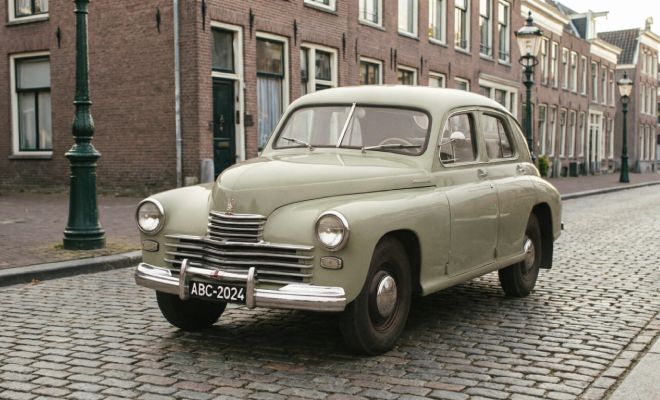
The GAZ-M-20G was one of the first such cars. Outwardly it was an ordinary Pobeda, but instead of the standard engine it received a six-cylinder unit from the GAZ-12 ZIM. Power was raised to 90 hp, the transmission and suspension were reinforced, and the fuel tank grew to 100 liters. In testing the car reached 132 km/h, while a regular Pobeda was significantly slower. Series production on special orders began in 1957.
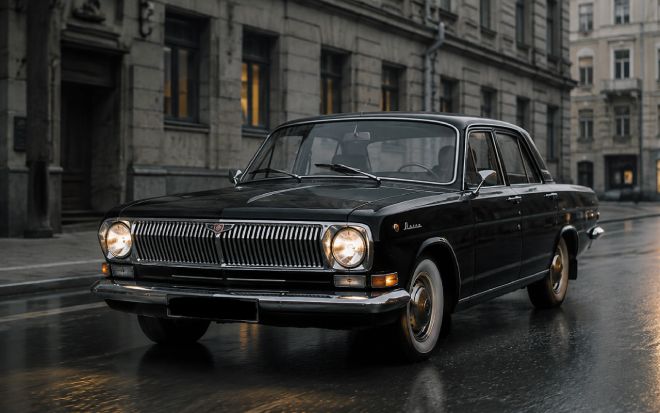
But the next Volga became the true symbol of KGB special cars.
The GAZ-23 looked almost like a standard GAZ-21, yet received a 5.5-liter V8 based on the Chaika engine and a three-speed automatic. Mass had to increase, and the brakes and other chassis parts were adapted for a heavier, faster machine. Top speed reached about 160 km/h, and 0–100 km/h took roughly 16 seconds. From 1962 to 1970 only 603 were built.
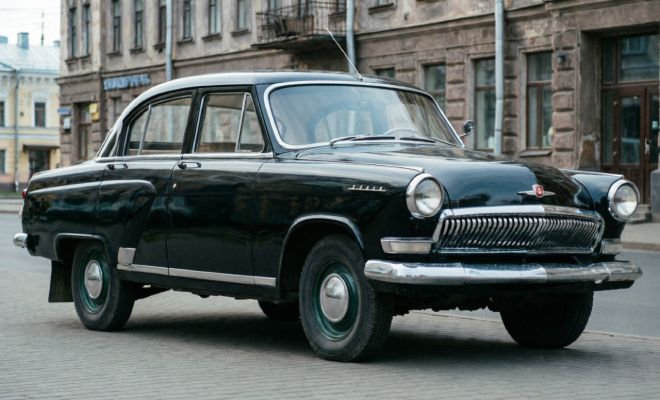
That was the whole point of the GAZ-23: on the outside, a familiar Volga; inside, a car of an entirely different class. It was built for the KGB and other state agencies and never went on ordinary sale.
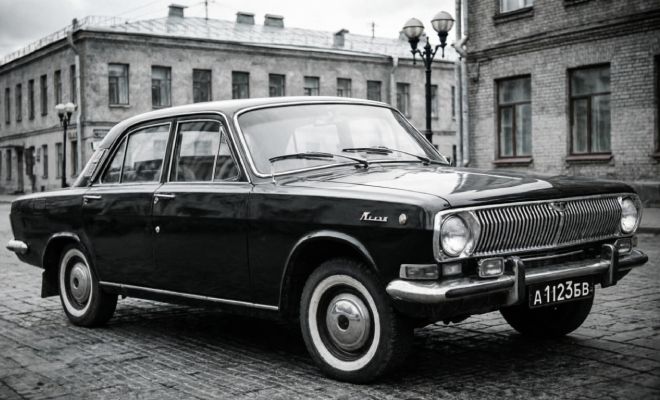
When the GAZ-24 arrived, history repeated itself. The GAZ-24-24 used the same formula: a standard body, a V8, and an automatic gearbox. Under the hood sat a 195-hp ZMZ-24-24 engine derived from the GAZ-13 unit, and the suspension was reinforced. The cars served the KGB, including covert surveillance of foreign mission staff vehicles.
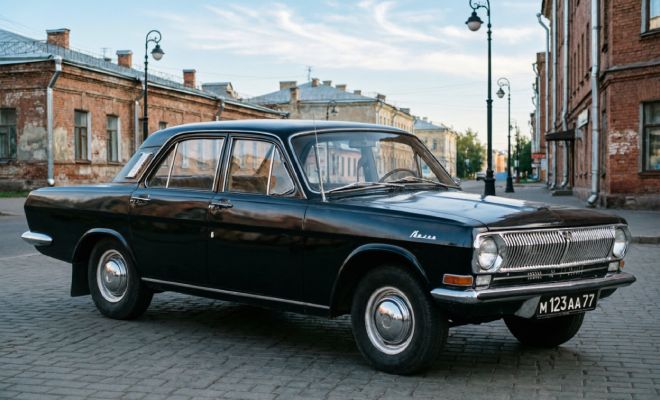
And the special role was not limited to the interceptor. Based on the GAZ-24 there was also the GAZ-24-25 «Double», built to escort government motorcades. Outwardly these cars remained ordinary Volgas, though technically they differed noticeably from mass-market models.
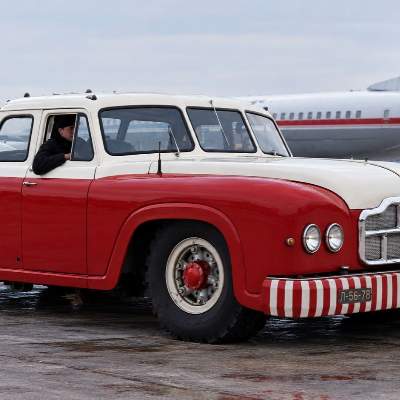
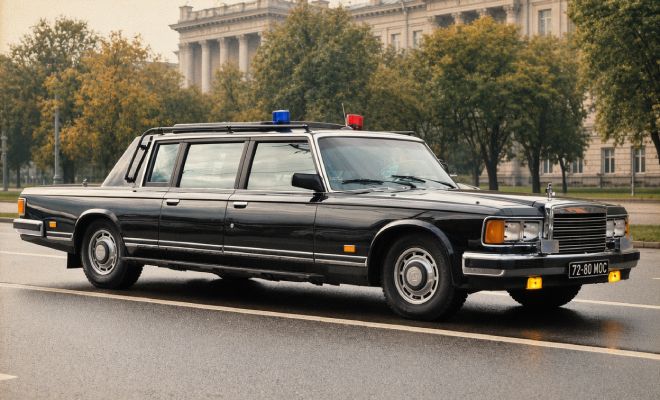
By the late Soviet era, protection duties required more than a powerful Volga. For that role they created the ZIL-41072 «Scorpion», a dedicated escort vehicle. It gained wide running boards and handholds so security officers could work outside the car, swivel seats in the cabin, a roof hatch, and a mechanism for quickly opening the rear window. Weighing more than three tons, the car with its 315-hp V8 could reach about 190 km/h.
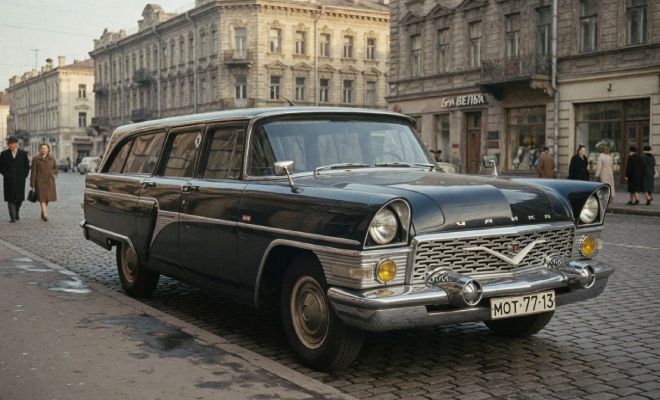
And one of the most unexpected special vehicles was the RAF-GAZ-13S, known as the «Black Doctor.» It was an ambulance based on the GAZ-13 Chaika executive sedan. In Riga they were converted one by one for the USSR Ministry of Health's 4th Directorate, which served top state and party leadership. From 1968 to 1982 about 20 were built. The black paint let them blend into a government motorcade.
These cars shared one trait: the most interesting parts were almost never visible from outside. A Soviet special vehicle could look like an ordinary Volga yet carry an executive-class engine, an automatic gearbox, and a chassis reworked for entirely different tasks. That is why some of them seem more intriguing today than obvious armored cars: the secret was not an unusual body, but what lay beneath a familiar shell.