Look at a modern Ural and it seems to have rolled in straight from the last century — the 1940s, to be exact. Sidecar, flat twin, shaft drive. But behind that brutal retro shell lies a design with a surprisingly long biography. How did a Soviet motorcycle built from the German BMW R71 in wartime survive the USSR and turn into a cult machine in the West?
It all started with someone else's motorcycle
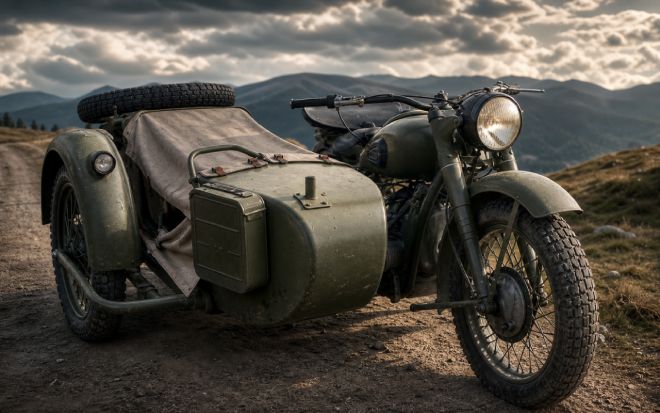
The story is almost spy-novel material. In the late 1930s, Soviet military planners wanted a heavy motorcycle for the army and settled on the German BMW R71. Five machines were acquired through Sweden, torn down, studied, and reproduced for Soviet production. That is how the M-72 appeared — the ancestor of the future Ural.
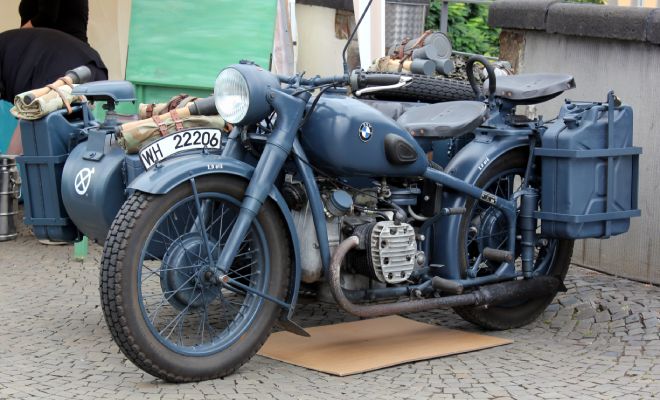
Photo: Lothar Spurzem, CC BY-SA 2.0 de, Wikimedia Commons
By August 1941 it was already in production for the Red Army. After the war began, manufacturing was evacuated to Irbit, and the first bikes assembled from Moscow parts arrived there in February 1942. The USSR built 15,089 M-72s during the war years, with nearly half coming from Irbit.
A military machine born in extreme conditions proved so sound in concept that it outlasted the war itself.
The sidecar was never a temporary fix
Today a three-wheeled motorcycle looks almost exotic. In the USSR the logic was more practical. The M-72 had to carry not only the rider but also a passenger, weapons, or cargo. So the sidecar was part of the design from the start, not a cosmetic add-on.
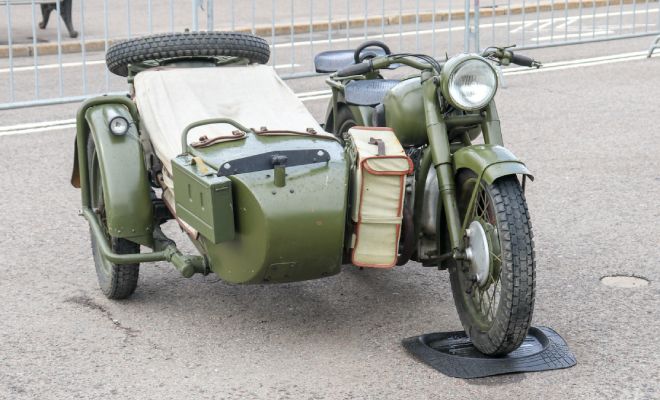
Photo: Stolbovsky, CC BY-SA 3.0, Wikimedia Commons
Later, Ural turned that trait into almost a philosophy. Modern models still have a sidecar, and 2WD versions can send torque to its wheel as well. For a normal motorcycle that is a strange thing: the third wheel is not just a passenger seat but part of the drivetrain.
That is why Ural never became a conventional two-wheeler. It kept a format most manufacturers abandoned long ago.
Everything changed except what mattered most
Calling today's Ural an old M-72 would be wrong. The technical gap between them is huge.
The current Ural uses a 749 cc flat-twin with an overhead-valve layout and electronic fuel injection. Modern versions got disc brakes, updated suspension, and contemporary electronics.
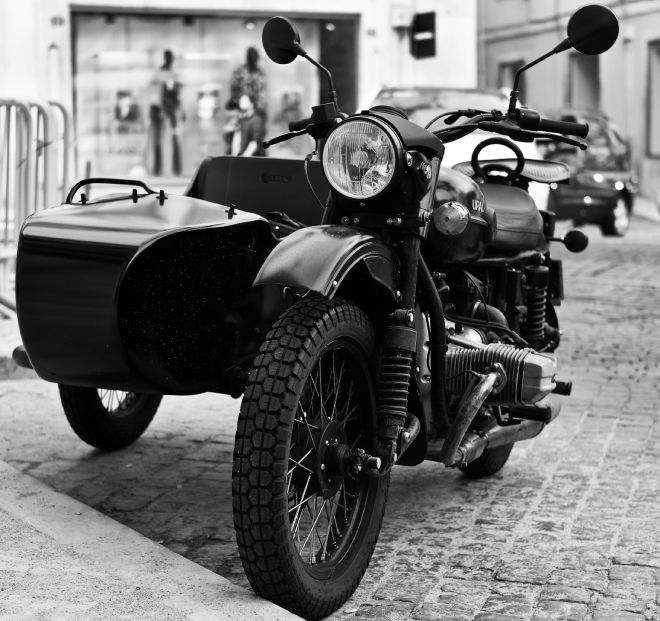
Photo: Pedro Ribeiro Simões, Side car motorbike "Ural", CC BY 2.0, Wikimedia Commons
In other words, Ural learned a clever trick: update the motorcycle so it never stops being an Ural.
You can replace the engine, brakes, suspension, and electronics. But remove the sidecar, the flat twin, and the whole idea of a heavy three-wheeled bike, and the reason it exists disappears.
That is why it outlived its era
After the war, the M-72 gradually shifted from military hardware to civilian transport. Production continued for decades, and total sidecar-motorcycle output for the brand passed three million.
Over time it became clear that Ural did not have to compete with ordinary motorcycles. It found its own buyer: someone who needs not top speed but the ability to ride with a passenger, haul gear, and reach places where pavement ends.
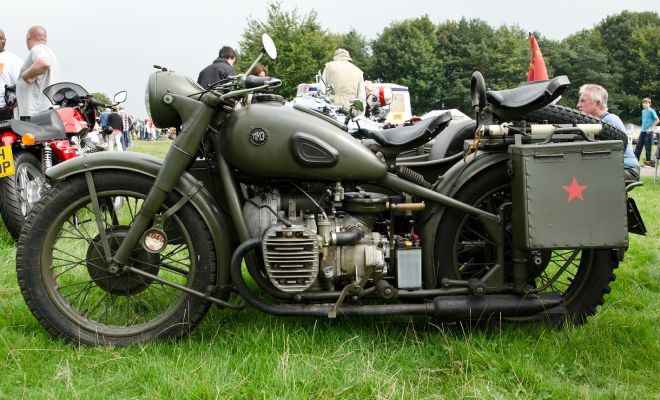
Photo: Steve Glover, flickr, CC BY 2.0
So the secret of Ural is not that it never changed. On the contrary. It changed just enough to keep doing the same thing.
For more than eight decades, Ural never became a normal modern motorcycle. It kept its own formula — and with it a rare ability to look as if time around it simply moves a little slower.